


















Source Local
Is A Record Label In Your Future? What You Need To Know Before Signing

Is a Record Label in Your Future? What You Need To Know Before Signing

By NationWide Source Estimated reading time: 9 minutes

An artist friend of mine likes to say, “If you choose to self promote your music, it’s probably because you aren’t good enough to get signed by a label.” This same artist has been signed by several labels over an extended music career… but he has nothing good to say about record labels. After two decades as a professional musician he has very little money to show for his career in music, doesn’t own the rights to a large portion of his own music (so, no royalties are coming in), and he still has to tour to make ends meet. He blames record labels and their practices for his situation. Such is the dilemma that musicians face.

Record Labels Poor Reputation – It’s Not All Deserved

Let’s face it. Record labels seem to have a bad reputation, and much of it is deserved. But you should not be too quick to lump them all into the same category. A large number of indie labels have emerged over the last several years and they have filled a real need for the indie artist. These smaller labels have successfully guided countless artists through the maze of the music business with great rewards.

On the other hand, countless artists have sounded off about their failed relationship with a record label, and, for the most part, these labels do not defend themselves. Why? Because they are behaving exactly as the artist describes; they really are doing all of the things that artists complain about. So, what is there to talk about? How can a record label defend themselves if all the negative comments are true?

Record labels tend to do exactly what their contract allows them to do. The rub comes because an artist doesn’t really understand the relationship before signing on the dotted line. The artist is agreeing to a contract that allows the record label to do what they do—and possibly own everything an artist creates—without really knowing what it all means. Specifically, the artist needs to know how the relationship will work, how much money the label is putting up, how that money will be spent, who is financially responsible for what, who approves marketing and production expenses, and which party owns the rights to what is produced.

Most of the time, record labels are not the devil. They’re simply businesses that are designed to make as much profit as possible. Artists, on the other hand, are usually the furthest thing from a profit-driven business. They are creative souls, not accountants. An artist who is also a great business person is a rarity… just like my doctor friends who are great physicians but, for the most part, terrible business people.

Why Sign with a Record Label?

So, why in the world would an artist sign with a record label? That’s easy: the artist wants the business experience the label has to help launch or grow their career. Artists need partners with vast experience, impressive connections, and lots of money to promote their music. A good label will help with everything from song selection to recording, booking, marketing, and distribution of their signed artist. When I say help, I really mean that the label may have complete control over these things.

After all, an artist is asking for help from the label, and no label is going to invest time and money into an artist without securing some control. The label wants to get paid back and make money. Big money, if possible. Most performers signed by a label do not pay off; they just lose money. Someone has to pay for the flops, and the only way to do that is get the highest possible rate of return on the performers that do succeed.

It may not seem fair, but a successful artist has to pay for other artists’ failures.

Think of it this way: Suppose you receive a mail order catalog. You didn’t request the catalog, but there it is, in your mail box. The company that sent out the catalog knows that 98 of 100 of those catalogs will be thrown in the trash—no purchase will be made. The two people out of 100 that do make a purchase have to pay for all of those catalogs that were thrown in the trash. It is called marketing expense. When the company prices its products, it adds enough profit to cover the expense of creating and mailing those catalogs that go in the trash. Otherwise the company would lose money and fail. Record labels are no different.

A good record label is selective about who they sign; the ratio of successful signings to failed signings is crucial to their success as a label. A label should know which artists it can help and which do not fit.

A smart artist is also selective about who they sign with. Why would an artist sign with a label that has a bad track record of signing successful artists? Make sure the label has prior success promoting artists who have a similar style to your own. Don’t be afraid to ask tough questions, and don’t accept general statements. After you become convinced that the label is a good fit, do your homework and read the contract carefully. Have a professional look at it on your behalf. Make sure you know what you are signing up for.

Some artists really need a label to help them make crucial decisions about their career, not to mention the money to ensure a successful launch. Without that help, a talented artist may end up failing and giving up on a career in music. Most of the decisions the label makes will be focused on creating a long-term money-making success of the artist. Yes, a label is in it for the money, but there is nothing wrong with that. Let’s just make sure that the artist understands what that means.

My Friend Lionel

Lionel had a band back in the 70s, and they were a regional success. Great music with lots of exposure in good venues and a loyal fan base that was growing weekly. A local radio station approached Lionel and asked if he would like to hear his music played on the air; of course, Lionel was excited at the prospect and jumped at the chance to meet with the radio station executives. An agreement was reached quickly, and Lionel was on the air that same day.

Success!

It was not until years later, when Lionel went to record his hit song and self release a CD, that he discovered that he no longer owned the rights to his own music. The radio station owned his music. Finding this hard to believe, Lionel contacted the station to follow up. He was told that the station did in fact own the rights. The people he originally spoke to no longer worked for the station, but when he authorized the station to play his music on the air, Lionel had signed a document that gave away his rights. He hadn’t read the entire document. He didn’t realize he was giving up his rights. He thought it just granted the station the rights to play the music over the air. After all, that’s what the station execs he’d met with had told him.

Four Things You Must Do

1. Find a Good Fit. Check out the record label and make sure they can demonstrate past success with artists similar to you. Ask for documentation.

2. Get details. Labels have engaged in signing bands countless times, so I can promise you that record labels are much better at the signing process than artists are. Have the label outline a detailed plan for your launch and continued growth. Get them to explain why they think this partnership will work. What are they bringing to the table? What are you bringing? You should also understand how much control you will be giving up.

Ask who has control over expenditures, where are the funds for expenditures coming from, who owns the rights to the songs and recordings, how are marketing decisions made, and how much input you have on the decisions that are made. When does the contract expire and who has an option to renew? What rights does the label have after the contract expires? Most of all, require transparency and detailed reporting on all financial expenditures.

Do not be afraid to take your time, and don’t allow anyone to rush you. Don’t become infatuated with the idea of getting signed and quickly agree to whatever is offered.

3. Negotiate. Interview with at least two labels and compare what they have to say. If you’ve asked the right questions, you’ll be able to tell a good deal from a bad one. You’ll also be able to pick out bad terms and negotiate for better ones. A small indie label may be a better fit than a traditional industry giant, quite often smaller is more flexible with the terms of the contract and quicker to move on your project.

4. Get advice from an industry professional. Hire an entertainment attorney who has experience with labels and contracts. It would also be a good idea to talk directly to other artists that this label has signed in the past and get their feedback. Who better to tell you how the label has performed?

Remember Lionel. He signed a contract with the radio station much like artists sign today with record labels. If he had slowed down and taken the contract to an entertainment attorney to get an explanation of what he was signing, he would not have agreed to the deal. He trusted his gut and that was a big mistake. One additional day of negotiation and a little advice would have made all the difference for Lionel.

My friend no longer thinks that self promoted artists are going it alone only because they are not good enough to get signed by a label. For the first time in his career, he is doing his own promotions without the help of a label. Times have changed. A label is no longer necessary to succeed as a performer, but there are many pitfalls. Self promotion has it’s advantages, and it’s easier to accomplish today than it has ever been in the past, but don’t assume that going it alone is easy. On the other hand, record labels can create tremendous value… just make sure you know what you are agreeing to.


...Keep Reading

Five Tips for Designing Your CD Packaging

Five Tips For Designing Your CD Packaging

By NationWide Source Estimated reading time: 8 minutes

As an experienced musician, you know your instrument like the back of your hand. You’ve spent thousands of hours with it, memorizing every last detail, exploring every feature, and learning every sound it can possibly produce. You know how to care for it, how to tune it, and how to make it produce the right sounds at the right times.

That knowledge produces some pretty incredible results, and after hundreds or thousands of hours, you’re almost ready to order your new album. All that’s left is creating your album artwork… while that’s something you haven’t spent hours mastering, there are steps you can take and tips you can learn to make the process easier.

If you’re thinking about designing the album artwork yourself, here are some quick tips you should know about setting up your design files.

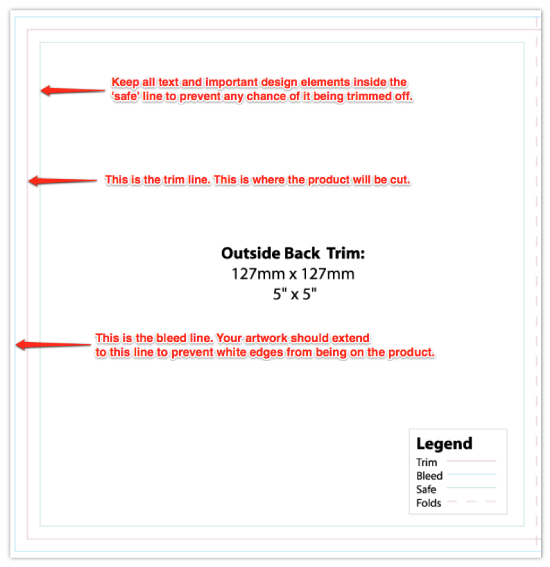
Bleed is Important…

When you print one copy of something, it’s easy to take time to ensure that it is trimmed precisely. When you have hundreds (or thousands) of the same something to cut, the task of cutting out individual sheets, with precision, becomes daunting.

Commercial printers do have equipment that speeds up the process—either by using pre-programmed measurements to cut each piece, or by cutting large quantities all at once—but even the best pieces of equipment aren’t 100% accurate all of the time (due to the limits of technology and paper stretch). The discrepancy is usually small, but, without bleed, even being half a millimeter off on cutting produces a noticeable white line down the edge of the paper. That’s not what you want for your jewel case insert or digipak. The solution? Extend the artwork slightly beyond the desired cut line—i.e., add bleed. This gives the print shop a margin of error when trimming. That way, if they happen to be slightly off when cutting, the continued artwork shows up instead of the white paper.

In the printing industry, .125” is a commonly requested bleed setting; this means the artwork extends .125” from the cut line on each side. This will be cut off, so do not include anything like text or titles in this area; please see the next comment about safety margins for more details.

Bleed and Safety Cushion

… As Are Safety Margins

While bleed extends artwork out from the cut line to provide a margin of error, safety margins move inward from the cut line for the same purpose. If critical elements—such as your song titles, lyrics, album credits, or a portion of a photograph—are lined up right on the cut line, they run the risk of being trimmed off. To prevent this, it’s a good idea to leave a gap or cushion between essential design elements and the desired cut line.

The size of the margin changes from one print shop to another, but .125” from the edge is a great place to start.

Colors Are Not Created Equally

If you’re not immersed in the design or printing worlds, you might not have heard of CMYK or RGB, let alone know the differences. But if you’re designing your album’s artwork, it’s an important distinction to know.

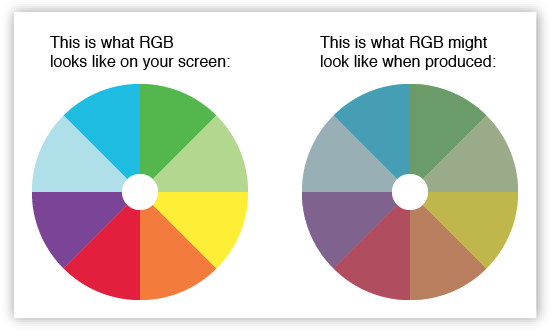
RGB colors—where each shade is created by combining red, green, and blue pixels—are used by thousands of electronic devises: televisions, phone screens, computer monitors, and cameras. Higher quantities of the contributing colors result in lighter tones, and lower quantities create darker tones. RGB colors can appear to be very vibrant, but this is in part because they are lit on a screen. It’s also important to note that different displays and devices can have different RGB profiles.

On the other hand, CMYK colors are the standard format for the printing industry. With CMYK printing, the Cyan, Magenta, Yellow, and Black inks are combined to create colors. Because physical surfaces like paper don’t generate light like screens, less ink means lighter colors (less ink covering the white paper), and more ink mean richer or darker colors.

These two different color profiles can create issues when designing your album artwork. Not every RGB color has a CMYK counterpart, and vice versa. The two profiles also represent very different technologies—a back-lit computer screen vs. ink on paper. This means two things:

  1. Files designed in RGB can look very different when converted to CMYK for printing. Some CD manufacturers offer digital proofs of your order. If your proof file looks different from the file you submitted (for example, the colors are off, or the blacks look gray), it’s probably because your submitted file was created with RGB and it has been converted to CMYK for printing.
  2. The color you see on your computer screen will not match the printed material. Even if the file on the screen is CMYK, it’s still back-lit. There will always be some discrepancy in appearance between the screen image and the printed product.

RGB vs CMYK

To reduce the chance of a drastic color shift, it’s best to design and export your file using CMYK settings.

Understanding Resolution

Resolution is described in terms of pixels per inch (ppi) or dots per inch (dpi). When fewer dots are needed to fill a space, the resolution is lower/worse. This is because the dots have to be larger, making them more distinguishable.

Think about a fence. If the boards are eight inches wide and seven feet tall, you’ll be able to pick them out fairly easily from twenty feet away, and it won’t take many boards to span a section of fencing. However, if the fence is made from tiny wooden sticks—the size of toothpicks—all lined up perfectly, identifying individual sticks from twenty feet away becomes difficult, and it’ll take a lot more sticks to cover the same section.

It’s important to design your album artwork at a high resolution and at the proper dimensions. For example, if the image will be used at 4″ x 5″ in the printed material, then it needs to be that size and high resolution in its original form. Trying to increase the resolution of a low-resolution image (say, resampling from 72 dpi to 300 dpi) causes a loss of quality, since it just samples nearby pixels to meet the desired resolution settings. Likewise, taking an image that is high-resolution and scaling its dimensions up (from a 1” square to a 5” square, for example) results in a lower resolution, since each pixel is stretched to meet the file’s new dimensions. Taking a large image and scaling it down in dimension can result in a higher resolution image if you don’t change the number of pixels.

Image Resolution

For printing, 300 dpi is the industry standard for photographic images; higher resolutions are acceptable for other types of artwork.

The Right File Type

Saving your album artwork file in the right format is important, but the right format will vary from one CD manufacturer to the next. Submitting the right file type can prevent errors and delays on your order.

Some print shops will accept design files (IDML, INDD, or PSD files, for example); however, since these file types are not usually readable by the printers themselves, they’ll need to be opened and exported into readable file types. This creates a chance for error, especially if links and fonts aren’t submitted with the design file.

To avoid potential errors and the extra step of exporting files, other print shops will only accept already-exported files. These include PDF, TIFF, JPEG, and EPS file types. Some will even request that you use specific export presets.

To know for sure which file type is right, check with your print shop or CD manufacturer.

Bonus Tip

When you’re ordering your CD and CD packaging, the CD manufacturer wants your order to be as right as possible. It’s true. They don’t want to bug you about missing files or fonts, text that’s cut off, or low-resolution pictures, and they don’t want to ship you finished product that has all of these issues or more. They do want to manufacture your order in a timely, efficient manner and ship you quality product with beautiful artwork—something they and you can be proud of.

To help achieve this goal, many manufacturers have a design team ready to create artwork for the musicians who can’t do it themselves.

For musicians who want to tackle this step on their own, the CD manufacturer might also offer templates for a variety of design programs. These templates are set up to include the correct bleed settings, guide marks, and dimensions. Be sure to use the right template for your project—there is a difference between a 4-panel digipak and a 4-panel jewel case. You’ll also need to open them in the right color profile and resolution settings and save or export them correctly. Using the provided templates will greatly reduce the odds of production issues on your order.

And that’s it! Five tips, plus one, to help you create your own album artwork. Now, get back to that instrument you love!


...Keep Reading
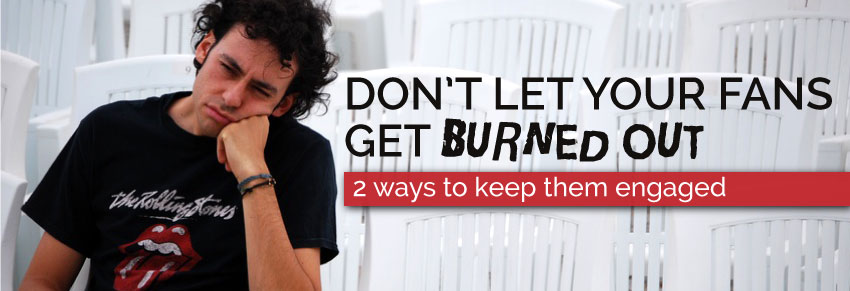
Don't Let Your Fans Get Burned Out--Two Ways to Keep Them Engaged

Don’t Let Your Fans Get Burned Out—Two Ways To Keep Them Engaged

By NationWide Source Estimated reading time: 9 minutes

Are you worried about fan burnout due to often-repeated gigs in the same venue? Are your fans tiring of you? While they seem like nice problems to have, they are legitimate concerns we’ve heard artists bring up. Read on for our take on this topic.

Dinner With Bob

I remember being out on a couples’ dinner date recently and watching with amusement as my friend Bob began to tell a funny story about his past. Bob is a great storyteller, truly gifted at communication. He has a knack for including just the right amount of detail in the story, and his timing with the punch line is excellent. Bob seems to have a million stories, and he enjoys sharing them.

Everyone was having a good time listening to Bob. Well, almost everyone. Teri, his wife, was not quite as enthusiastic as the rest of us, and she rolled her eyes back as Bob began the story. Now, Bob and Teri have been together for years; they get along really well, are a very compatible couple, share common interests, and love being together.

So, why was Teri less enthusiastic than the rest of us? Well, Teri has heard all of Bob’s stories many times, and she considers them counterproductive for the group discussion. She thinks Bob is funny—it was one of the reasons she was attracted to him so many years ago—but his material needs updating. Bob does tend to repeat himself, and not just to Teri; the other couples with us had also heard many of his stories. Nonetheless, Bob enjoys performing, so the show goes on.

Like Teri, I can only hear the same thing so many times before it begins to wear on me. It might have been engaging, interesting, or funny when I first heard it, but after a while I yearn for something new. The excitement is gone. When we go to dinner with Bob and Teri now, we have to prepare ourselves to endure some of Bob’s repeat performances. I hate to admit it, but I’m starting to feel just like Teri.

Overexposure to music can have the same effect. A hit single is incredible the first time I hear it. It’s fun to listen to or share for a few weeks. But then, when I hear it on every radio station, on the evening news, and as I do my grocery shopping, it becomes downright annoying. After a while, I just want it to stop.

As an independent musician, you face the same challenge Bob faces. Great material helps win loyal fans, but performing that same material over and over, without adding new material, can help you lose those fans. Fans want more new music. Otherwise, repeating your limited library of hits will wear on them. Your success as an artist can be impacted negatively if you do not produce new music consistently.

New music creates new sales and keeps things exciting and fresh, for you and for your fans. When I get a notification from a favorite musician that they’re releasing a new single or album, the anticipation of hearing their new music for the first time gets me excited. Depending on the artist, I’m ready to purchase the album from the first mention of it, without waiting for reviews and previews. Your fans are the same way. Don’t frustrate them with outdated, stale material.

A Story About Ashley, One Of Our Musician Clients

Ashley and I were having a discussion recently about her career. She had been performing in our area for some time and had some concerns about fan enthusiasm at shows… mainly that it seemed to be waning.  She also felt that her connection with the audience was less than what it used to be.

Ashley had a revelation. “You cannot be a prophet in your home town,” she told me. Ashley felt that the local fans were too familiar with her and her music. They no longer recognized her talent the way they used to. They were not engaging with her. In addition to her revelation, Ashley had a plan. The plan was to move into new markets where people did not know her, book new venues, start a new promotional campaign… you know, change things up a bit. She would be fresh and new; the old buzz would be back.

Sounds great!

Well, maybe not just yet. Let’s back up just a little.

Ashley is a good songwriter and quite a talented performer. But the new digital age of music, with all of its opportunities and overhead, was overwhelming her. She was doing everything. Shooting high-quality music videos, expanding her merch line, updating her websites, tweeting regularly, signing up for social media accounts left and right, and posting her music on every possible digital download store and streaming service. She even traveled to SXSW to hear what the ‘next big thing’ would be. Ashley spent 30 to 35 hours per week on the ‘business side’ of her music and the rest of her time traveling to and performing at her gigs. In short, she was doing everything she could think of to feel and look like a successful performer, hoping that it would make her one and bring hordes of fans in to purchase her music.

The reality was different. Most of her fans didn’t visit her website, since there was no new music, and her social media posts vanished into fans’ feeds as soon as they were typed. Her video, which looked great but cost thousands produce, only had 220 views on YouTube. And, instead of buying her music, most of her fans were streaming it online for free. Ashley was dedicating way too much time and energy to things that didn’t really matter—or, worse yet, hurt her. Ashley looked great and was busy doing stuff, but nobody noticed.

Does this sound like you? Doing everything you know how to do and implementing a strong plan but coming up short? Have you figured out why? We have. Ashley was so busy doing the ‘business of music’ that she forgot about the music itself.

When Ashley was first starting her music career, she spent 90% of her time working on her music and developing material. Now the tables have turned. Ashley has not released a new album in over three years. She wasn’t developing new material with any regularity because her schedule was too busy. I remember a recent four-day period where she performed seven times in five different cities and spent 16 hours on the road for travel between gigs. I don’t know how she had any energy left to perform! The point is, she now spends 90% of her time either performing or engaged in the ‘business of music’… and she hasn’t even noticed the change.

This happens quite often with talented, creative people who also have to run their own business. They get into music because they have talent and love writing, playing, and performing. But before long, their focus has shifted to building their career, and they end up doing everything but creating new music.

The result? Your music and your career suffer.

Two Changes Ashley (And You) Must Make

Number One: Ashley is full of creative ideas but has allowed her schedule to rob her of time to work on them. This MUST change.

Think of the fan response to Ashley if she had released 3 new albums over the last three years along with several singles, EPs, release parties, and some promotional products. She would have done much better with her fans! Fan excitement and engagement would have been much higher, let alone the income generated.

Ashley needs to spend more time on the creative development of her music. We’d recommend at least 1/3 of her time to developing new material, which means her schedule should look something like this:

Ashley’s Schedule (45 – 60 hours per week)

  • 1/3 of time spent on business/marketing matters
  • 1/3 of time spent on developing new material
  • 1/3 of time spent on performance and travel

Of course, we know that life is not that clean-cut. If one week or day demands more time for gigs, she should balance things out when she can. Maintaining a balance is key.

It would also be helpful for Ashley to set a minimum goal for creating new music. One new single to release every 6-8 weeks and one new album each year would be a good place to start.

Number Two: Ashley needs to look at her current venues and determine what is or isn’t working.

Let’s look at that four-day tour. Her income on one of those gigs was just $250, and she had to travel two hours each way to make it. As it stands, it’s really not worth the trip. Her other out-of-town gigs were further away but paid significantly more, making them worth her time. And her gigs in town paid well.

Once Ashley has determined which venues aren’t working, she can decide if they need to be cut altogether, or if they just need to be booked differently. The low-paying out-of-town venue on her four-day tour needs to go, or she needs to book additional venues in the same area to make the trip worth her time.

If Ashley cuts venues from her list, she can think about replacing them with new venues, as long as they pay well and expose her to a receptive audience. Touring is another option, but she’ll need to be strategic and selective about where she plays.

This might be a good time for her to hire a professional booking agent. If they can open doors to the right venues and help her organize her performance schedule, a good agent is well worth the money. She should try to negotiate an agreement that keeps her involved in the relationship with the venues, allowing her to personally handle the relationship after an agreed-upon period of time.

In the end, Ashley was partially right. She did need to change things up by expanding her venue options and purging those that don’t work for her. However, she was also missing something that was even more important: the need to make creating new material a priority. Ashley needs to dedicate a significant portion of her time to creative development.

Going on tour with old material will not solve her problem, at least not long term. Getting back to her creative roots will.


...Keep Reading

An Open Letter to Fans: Enjoy the Music, but Remember the Artist

An Open Letter to Music Fans – Enjoy the Music, but Remember the Artist

By NationWide Source Estimated reading time: 5 minutes

Music has changed more in the last 10 years than in any other time in history. More specifically, how you listen to music has changed. A wave of great new listening experiences has flooded the market, starting with CDs in the 90s, iPods in 2001, iTunes in 2004, and mobile phones that stored and played music shortly thereafter. These new formats allowed fans to listen to music everywhere they went, and we all spent a lot of time and money building our music libraries.

Now, we have progressed to streaming music. In the past few years, we’ve seen a surge in streaming services: Pandora, Spotify, Rdio, Google Play, iTunes Radio, Deezer, SoundCloud, Grooveshark, and so on. The list keeps growing.

Streaming Was Made For Fans

For many fans, music is uplifting, and it evokes emotions in ways nothing else can. Just like the smell of cinnamon rolls baking still reminds me of Grandma’s kitchen, certain songs take me back to relive some great memories. I know others feel the same way. Music can also be exciting and fun; many fans eagerly anticipate the next musical discovery that blows them away, whether it’s from a musician they already know or from someone entirely new.

As a fan, streaming music is incredible. You can choose from an unlimited library of music and gain exposure to new artists that you would not have found otherwise. Streaming allows you to play music on almost all of your devices—from mobile phones to smart TVs—with just one account. Streaming music also lets you to listen to a huge variety of music without ever purchasing anything, as long as you don’t mind hearing a few commercials. If commercials bore you, then pay as little as $3.00 per month to listen commercial free.

Surely somebody brilliant came up with this idea. It’s an experience designed entirely for fans, and it’s almost impossible for you to say no. I get it, really.

Sound like everything is perfect in the world of music? For fans, it nearly is.

What The Changes Mean To Artists

Not everyone is benefitting, though. Streaming music, digital downloads, CDs—the music you listen to might be the same, but the delivery method is considerably different. That difference has affected how you listen and what you buy, which in turn has affected the musicians that create the music you love and their ability to make even a modest living. I can’t say this about all musicians, but the vast majority of independent musicians—I’m not talking about superstar performers or the kids still in high school, but about professional, independent musicians (like me) who rely on their creative work to make a living and support a family—struggle with this new model of compensation in the music industry.

iTunes began changing the monetary model for musicians in 2004. At that point, fans learned that you could purchase any song you wanted for $0.99. No need to pay $12 for an album. Yes, you’ve downloaded a lot of singles since then, and some albums, too. But because you no longer had to purchase the album for $12 to get the hit single, the value for an artists’ most popular work dropped more than 90%. The typical payment to an artist for a single download from iTunes is about $0.65. Since singles are in such apparent demand, if they’re going to be sold, they should sell at a premium. This would help musicians cover the production costs and still make a living. Sadly, that is not the case.

But things don’t stop there.

Streaming music has been around for a long time, but it was not really mainstream until four or five years ago. Now, it is everywhere, and it seems to be impacting download sales. In 2013, iTunes had its first ever decline in digital download sales of music, likely due to competition from streaming music. That trend will continue. What’s worse is that artists generally make much less from streamed music than they do downloaded singles.

Music is just as creative and demanding of talent as other forms of art, but admirers of sculptures or paintings don’t expect to take their favorite piece home with them without paying for it. That would be crazy. Yet musicians, who put just as much effort into their work, are often expected to give their creations away for free (or practically-free).

I know that you, as a fan, love streaming music. But for me, and for my fellow musicians, the picture is not as promising.

Here’s How You Can Help

If you think you’re powerless to change things, think again.

An artist who had 100,000 streams of his music in a year might make $300 to $400. I don’t know anyone who can live on just $400 for a year, which means that artist would have to find alternate forms of income, maybe giving up on music altogether. But… what would have happened if 50,000 of those people had downloaded a single, or 15,000 had downloaded an album from that same artist? His income would have been $35,000 to $65,000. Wow, what a difference! The income would have been even more if the artist sold CDs, but the price to fans would remain the same.

None of this would matter except that fans streaming music tend to download or purchase less of the music that they stream. Remember what I told you about iTunes sales in 2013? If you don’t buy my music online or at shows, the income I need to make a living is being cut to almost nothing. Streaming music does not pay the bills.

I can’t expect you to give up streaming music. The experience is too good. But you can help your favorite musicians by seeking them out online and purchasing their music. Buy their album. It may sound a little crazy to pay for something that you can get for free, but it’s not. You could also choose to purchase their merchandise online. Better yet, check out their event schedule, attend a show, and purchase their products in person.

If you truly enjoy music and want to keep those memories coming, you need to go above and beyond the norm of streaming. Support your favorite artist. Support music. Support me.

See also: Rethinking iTunes: It’s An Expensive Cash Register for the Indie Artist, Spotify, Pandora, and Streaming Music: Should You Post Your Music?


...Keep Reading

Fans Not Seeing Your Posts? Two Things You Should Be Doing

My Fans Never See My Posts On Social Media – What Should I Do?

By NationWide Source Estimated reading time: 12 minutes

It really is a problem. Between social media, email, texting, and phone calls (let alone snail mail) there are numerous conversations going on with your fans all the time. If you want to be heard, your communication needs to fly above the fray. The key to doing that, thereby cementing your fan relationships, is quality content and an effective delivery tool. Otherwise, even though you’re talking, no one can hear you.

If you want better solutions for reaching your fans, keep reading.

The Battle For Your Fans’ Attention

We remember when industry pundits predicted that digital communication would make us all much more productive. It turns out that the opposite is true. The constant bombardment of information is distracting, and not at all productive.

In terms of information overload, social media platforms like Facebook are often the worst offenders. You may think that, since you are a performer and these are your fans, your voice somehow filters to the top.  Not true.  Performers get the same priority as everyone else who has something to say. The reality is most of what you say scrolls off the page before anyone has a chance to see it, which means you remain unheard, even if you have a large number of people following you. Why is that? Too much competition for your fans attention.

It may come as a surprise, but the average person on Facebook has over 335 “friends”. That’s like being in a room with 335 people simultaneously talking to you and trying to show you something.

Stepping slightly off topic for a second: Who really has 335 close friends? And even with your actual close friends, would you want to hear every single thing they think or see, every mundane thing they do?  No.  Sure, you want to know the big, even the medium, things: life milestones, how their relationship and careers are going,  what their interests and hobbies are, what they’ve been up to. But the little things?  Not so much.

It is like being a slave to a crazy person’s impulse to over-share all the things that stumble into their brain at any moment. This is what you face as an artist if you intend to communicate with fans on social media. Just more noise.

Let’s look at an actual, typical fan. This fan has 453 friends on Facebook (not counting pages liked or groups joined), has 68 connections on LinkedIn, and follows 259 users on Instagram, 129 users on Twitter, and 152 users on Pinterest. That makes five networks used regularly by this fan, and accounts on two other platforms that rarely get used. Plus a personal email account. And that doesn’t even factor in work-related accounts.

When faced with accounts on multiple social media platforms and hundreds of interactions to wade through daily, the thought of seeing everything becomes a bit daunting. The result is that, despite creating accounts to stay in touch, their connections actually weaken.

It’s easy to see how users can be inundated with information, and it’s clear that you’re fighting an uphill battle. Yes, some of your fans are seeing your information. And yes, there are ways to better your odds, such as paying to boost your posts, or strategically timing your posts. But, in the grand scheme of things, you’re still competing with all that other noise.

Good Content Creates Loyal Fans

While we are on the topic of noise and over-sharing, let us make one point that is critical for your career: do not over-share. When you speak to fans, make sure you have something important and relevant to say, something they want to hear. Otherwise, your fans will classify you as someone who wastes their time. It is like a good relationship that has gone bad; fans can close the door on your relationship as quickly as they opened it.

You may have a better chance of creating a connection with your audience if your communication focuses outward more often than inward. For example, if you are constantly talking about yourself, it might sound too much like self promotion or bragging. Quite often, when I get an artist communication it seems that they are “shouting” at me with their announcement – “Hey, come buy my new album!” Remember that you are talking ‘with’ people, not ‘at’ them. Have something interesting to say that gives insight into who you are, and try to engage fans in a conversation. That’s hard to do if the entire conversation is one-liners from you about your accomplishments, so stay away from “sales speak”. Inspiring fans with real conversation will get them engaged and talking, to you and to their friends about you. Other people talking about you is much more powerful than you talking about yourself.

Now that we have covered over-sharing, we want to emphasize the importance of good consistent communication. It is not our purpose to convince you that less is more. While you do not want to over-share, it is very important to share good quality content on a regular basis. Do not ignore your fans.

There are plenty of topics that are good for sharing, here are a few examples:

  • Announcements. This could be a new album release, concert date, tour, products, promotions, crowdfunding opportunity, last minute texts, etc.
  • Insights. These reveal what it’s like to be a musician or offer a behind-the-scenes look at the industry and your career,  etc.
  • Personal comments about your music, how you write music, what inspires you, your passion for music, how you started as a musician, which musicians are your role models, etc.
  • Fun, short features. Shoot a simple video, tell a funny story, post a picture from a live performance with relevant comments, etc.

Whatever you offer, make sure it is thoughtful and well-presented. It does not necessarily have to be polished and professional looking; sometimes informal and impromptu create a better connection with your fan base because it feels more personal.

As long as we are discussing social media, we encourage musicians to maintain separate social media accounts: one for personal friends and family, and one for their music career. Friends and family can choose to follow both accounts, but fans should not have access to all of your personal comments and shares. Do you really want everyone to have access to the details of your personal life: a list of your family, photos of your kids, embarrassing posts from aunt Nicole and your sister Anna?

The Most Effective Communication Tools

What if there was a way to cut through that noise and truly stand out, to have your message pop up where your fan notices it (in other words, outside those social media platforms)? In our book, there are two methods that help you do just that. 

Method One: EmailsEmail allows you to personalize the communication, control the conversation, and convey a complete message without length limitations. Try to automate this process as much as possible. For example, a fan signing up for your mailing list should auto-generate a welcome email. This is also a great time to offer them a free download for signing up. (If you’re wondering how to capture their email, manage your contacts, and run campaigns, we’ll cover this topic in an upcoming article.)

Method Two: Text MessagesCommunicating via text message with your fans (using an SMS service) is a great way to convey important information. This is the only communication (other than printed material or a phone call) that does not require your fan to log-on to their account to view it. This is completely different from Facebook, Twitter, and most other forms of social media. Text also carries a sense of high priority. When you get a message alert, don’t you check your phone and that message as soon as possible? Most people do.

(See the end of this article for tips on responsible mobile marketing practices.)

If you’re interested in mobile marketing, keep reading as we discuss several text marketing options.

Using An SMS Service

We scoured the internet looking for SMS service providers that offer good features and flexibility at a fair price. Of the services we found, we narrowed it down to two options that we would use.

Mozeo is our frontrunner. You can use keywords or a website widget to allow your fans to opt-in to your SMS contact list, or you can enter contacts manually or by uploading a spreadsheet. Mozeo allows you to enter a lot of fan information besides their name and phone number: address, email, gender, date of birth, and a half dozen optional fields. This is probably because it offers services, like email solutions. For accurate feedback on sent messages, Mozeo provides real-time reports. There is not a monthly fee for Mozeo’s SMS services; it’s simply 3 cents per outgoing message, and incoming messages are free. Keywords are sold separately as one-time fees ($25 for 1, $70 for 3, or $111 for 5). Mozeo also offers email solutions (half a cent per message—you can manage your contacts, design your emails, and send your marketing messages out to subscribers) and mobile web design (at $10 per month, with no limit on pages or sites). Web design includes the option of adding a mobile merchant/shopping cart to your page. Click on this link for a free downloadable guide.

Click here for downloadable guides!

We chose our runner up, Ez Texting, because it operates on its own or as a plugin to other popular platforms (such as MailChimp), and it’s one of the most popular SMS service providers available. Ez Texting allows you to import contacts or add them manually and then sort those contacts into as many groups as you need to. If you need help gathering contact data, you can use the keyword, widget, or QR code features that Ez Texting offers. You can incorporate merge tags to personalize your messages, and you can send text or voice messages to your contacts either when they are written or at a future scheduled time. The site provides you with analysis of sent messages so you can see which messages and acquisition methods are effective. Ez Texting does not charge for incoming messages, which are stored in your account’s Inbox or forwarded to your email address; messages forwarded to your mobile phone do require a credit. Plans range from $29 to $2000 a month, depending on how many messages and keywords you need. There is also a pay-as-you-go option, where messages cost 5 cents each (unless purchased in quantities of 20,000 or more, when a discount begins to apply). Click on this link for a free downloadable guide.

Other SMS Options

While our downloadable tutorials focus on Ez Texting and Mozeo, they are by no means the only options. Here are some details on other SMS service providers:

For MailChimp Users Planning Events: Gather is an event-focused SMS tool available to MailChimp users. MailChimp recognizes that email is ideal for sending event invitations and information ahead of time and for following up afterward, but less ideal for communicating with attendees—sending reminders and updates or receiving live feedback—right before or during the event, when they might not have email access. Gather also provides texting security (by keeping phone numbers private) and ensures that attendees won’t be spammed with text message marketing down the road. As a musician, you could use Gather to communicate with your core fans about exclusive after-parties. What fan doesn’t like that idea?

For SMS Campaigns with MailChimp: Call Loop is another SMS option that operates independently or as a plugin for MailChimp. Your contacts—which are unlimited—can be uploaded in a spreadsheet, synced from MailChimp, or inserted individually. Call Loop offers many of the same features that Ez Texting offers, including Merge Tags, scheduled messages, and auto-respond triggers. There is a pay-as-you go plan at 5 cents per message, or plans range from $30 to $150 dollars a month (depending on the number of messages and keywords you want).

For SMS Campaigns and a Little Extra: ProTexting also offers a variety of SMS features. Subscribers can sign up through mobile keywords or web signup forms, which you can create and add to your website or social media profiles. The site then stores their contact information in your subscriber database. Messages—which can include audio, video, and/or text—can be sent to individual subscribers or to groups, and they can be scheduled or sent immediately. ProTexting encourages paying personalized attention to your fans, such as targeting recipients by location or sending birthday wishes. It also provides analytics on your messages’ performance, so you can see which messages are effective and which aren’t. ProTexting also offers a mobile website builder, letting you create a simple and functional interface for your fans, as well as an app for you to access your account on the go. For self-managed accounts, pricing starts at $70 a month and reaches up to $899 a month; as with the other SMS service providers, the packages vary in terms of how many messages and keywords they include.

Responsible Mobile Marketing

Now, before you go rushing off and start texting all your fans, you should know that there are some rules that apply to text marketing:

  • You must get recipient consent first (i.e., they have signed up to receive communications from you in this manner, and you’ve provided them with information on messaging rates, frequency, and purpose). Note that, if they’re under 13, they’ll also need parental consent.
  • You should not overwhelm fans with irrelevant or redundant information—don’t spam them!
  • You should make it clear who is sending the messages.
  • You should provide opt-out information with your messages and/or on your site.

For more information, we recommend reading this Best Practices guide assembled by the Mobile Marketing Association. You’ll also want to check state laws, both where you live and where your recipients live, to make sure there aren’t further restrictions.

If you’ve decided that SMS marketing is the right step that will give you an advantage in reaching your customers, and you’ve done the research to understand the best practices and laws regulating text marketing, it’s time to start looking for a way to get your messages out where they belong: in front of your fans.


...Keep Reading

Not Gathering Fan Data? Are you Crazy?

Not Gathering Fan Contact Data? You are Missing Out on a Great Opportunity.

By NationWide Source Estimated reading time: 12 minutes

Fans are the lifeblood of your music. Learn how to keep them happy, and you will profit from the relationship. Ignore them, or trust your fan relationship to someone else, and you will suffer. Simple, but true.

We have a few suggestions to help you work through how to do this, including a free iPad app that helps to make it easy—read on.

The Right Stuff For A Career in Music

Remember when you were a kid, daydreaming of being a rock star? If you were anything like us, you were singing your heart out while picking out your clothes for the day, or vacuuming the house with the stereo blasting your idol’s tunes, or going all Risky Business while jamming on your air guitar. As a kid, it was so easy to become what you wanted. You just pictured your dream and—BAM—you were livin’ it.

As an adult, you might have realized it’s not as easy as just imagining. You now know that, to be a rock star, you need to have some talent as a singer, songwriter, musician, or performer. Ideally, you’ll be talented in each of these fields, but being extremely talented in just one field might be enough to gain some traction. You may also have realized that not everyone with talent has a successful music career, which means it takes a bit more than talent to make things really happen. That “bit more” includes some pretty mundane—but important—things, like collecting and reviewing data.

When we were growing up, we didn’t know anyone who wanted to collect data or review statistics for a living. It wasn’t exciting or thrilling. It still might not be… but it’s important, even to rock stars. Actually, especially to rock stars. Boring things like collecting data can make the difference between success and failure in your music career. Just remember, in this case, boring equals profitable.

Data Collection and Your Music Career

Let’s explore just one of those boring things today: what are you doing to develop your fan base? You know, your fan base. The people who like your music, attend your performances, visit your webpage, purchase your CDs, download your music on iTunes, and hopefully do more than stream your music online for free. Those people. Do you know who your fans are? What are you doing to develop your connection with them? We hope your answer is more than “ummm…” or “nothing”, because fans are the lifeblood of your music.

We know that musicians can be funny about fans. Everyone seems to have his or her own take on the musician/fan relationship. Some performers prefer to operate in a higher circle than their fans, creating a sense of mystique about their persona; others are quite friendly and enjoy personally interacting with fans. Whichever method works for you is fine… as long as you establish and maintain connections with fans. Don’t be the performer that ignores fans and then wonders why their career is suffering.

Why Knowing Your Fan Base Matters

We had the opportunity to visit with a musician client recently. He noted that he was struggling to sell merch to fans at performances, and he had decided that the fans attending his gigs already owned most of what he had to sell. Since a significant part of his income was coming from merch sales, this presented a problem for him. He told us that he had not released any new music in over 20 months. When we asked him why, he confided that he had material ready, but the expenses associated with releasing a new album were high. He also wondered, given recent low sales, if he would recoup the investment in a new release, yet alone profit from it. Lastly, our client said that he wasn’t doing much beyond social media and the merch table to connect with fans that attended his shows.

His story, especially that last statement, really resonated with us. He noticed that sales were down, he assumed it was because of product saturation, and he struggled with investing in new material. All of that is understandable. But, without solid connections with fans, he couldn’t confirm product saturation, couldn’t reach out to those not attending shows or who didn’t have his existing merch, couldn’t advertise shows effectively, couldn’t test the waters on interest in a new project, and couldn’t use his existing fan base to help fund a new project. He was up to bat, but blindfolded, deaf, and dizzy.

Had he connected better with his fans and owned that relationship, his story could be quite different.

Social Media Does Not Cut It

Don’t get the wrong idea. Our musician does have fans. People come to his shows and buy his music—just not as much as he’d like or as they used to do. And he has followers all over social media. In fact, Facebook was his main source of communication with his fans. He’d post about a gig, and they’d like the status, or share, or comment. He even recognized a few of them at gigs from their profile pictures.

Despite that, he didn’t have a good connection with them. The fans were largely anonymous, his posts didn’t get the reach he hoped, and—most importantly—he did not have direct contact information for them.

Here’s the downfall to counting on social media (or any third party) for your fan connection: it will always let you down.

With social media, you cannot control the conversation or its reach. Sure, you write a post, but you can’t really control who sees it or how they respond. You become just another voice in a long list of voices trying to communicate with your fan. After a short while, your post drifts off to the bottom of the fan’s feed. Even on your own page, it is very hard to control the conversation.

Also, what happens if your fans do not get on Facebook very often or are no longer active at all on Facebook? Anybody remember MySpace? We know of another musician that had over 90,000 people following her on MySpace in the site’s early years; when MySpace fell out of favor, the fans stopped signing on, and she lost the ability to communicate with them. It is a bad idea to base your entire fan experience on a site that may not even be popular in 2 years.

So… what can artists do?

Start Capturing Contact Information From Your Fans

Remember our other articles, where we pointed out that iTunes, Pandora, Spotify, and other services wouldn’t tell you who downloaded or streamed your music? They know how valuable that information is, and they keep it for themselves. Social media is the same: no direct contact information, just an interface that is shared with everyone else trying to communicate with your fan.

Instead, you have to actively work at gathering information from fans. Fortunately, there are steps you can take that make the gathering part easier.

Chimpadeedoo for iPads

At gigs, you should have a sign-up sheet for fan names and email addresses. Better yet, save yourself a step and have fans sign up electronically. If you have an iPad and a MailChimp* account (which we recommend), we suggest using their free app, Chimpadeedoo, for in-person mailing list signup. We tested this software, and it performs well. We’ve even written a guide to walk you through the setup process, including a link to stands that prevent iPads from being loss or damage.

Having a signup list sitting on the merch table probably isn’t enough, though. You need to make its presence and importance known; point out the merch table and your must-have items, and ask people to sign up. Be witty and humorous. Play around with it to see what works.

If this still isn’t enough, you might offer an incentive. You’d be surprised how many people will give you their email address if you give away a t-shirt, CD, or signed mug at every gig. Our musician friend tried this the other night and got 106 people to give him their contact information. Not bad for one night.

Outside of gigs, you should add a signup form to your band’s website and social media profiles. While social media sites are not good for direct, consistent communication, they can be a great place to let fans know about your mailing list. Again, MailChimp makes this easy. If you need help with this, let us know and we will send instructions.

Of course, you don’t want a stack of sign-up sheets sitting in a corner. You’ll need to find a system to keep track of the data on them, and then you can put that data to use. Use your emailing service to help set this up.

Start Communicating

As you collect names and email addresses from fans, you should begin communicating with them on a regular basis… but only when you have something to say. You don’t want to spam them by filling their inbox with repetitive information or meaningless ramblings. Don’t be like so many people on Facebook who have nothing to say but say it quite often.

Instead, you want your fans to feel special, like they are part of an exclusive club. The communication can and should share your current schedule, especially if you make it feel like a personal invitation to those shows, but it can also offer more. Share something revealing about your career, pictures from behind the scenes, or funny stories from performances. Post a “teaser video”; it doesn’t have to be anything complicated, either. One artist we know posts a 20 second video weekly; all he does is play his guitar off-camera for 15 seconds, then ask the fans to guess which guitar it is. The response to these videos is pretty impressive. Be creative and get your readers to respond.

In short, you should focus on communicating with fans regularly and with quality content. If this means you email once a week instead of daily, that’s fine. Just be consistent and be active. Your ability to communicate with your fans on a regular basis develops the relationship. You have to reach out to them.

Also, if you have the cell phone number of your fans, then texting can be a great way to communicate as well. (Hint One: get their permission first. Hint Two: this method might work best for specific messages, such as reminders about a show, instead of every message.) Although not as flexible in format as email, it puts your message right in front of your fan. They don’t have to sign in to an email account or social network to see what you have to say.

Does It Really Work?

Let us share our business experience with you. If fans have a relationship with you and have purchased your music in the past, they are over 30 times more likely to purchase your music in the future. This means existing fans are the biggest supporters of your music career, which in turn means you want to connect with them.

As with any form of marketing, not all recipients will read your material. However, email is one of the more personal and flexible forms of communication you can have. Some email programs allow you to thank fans for signing up or sharing your email by offering a free download, or you could tailor emails to each recipient by including their name in the subject line or message. You could (should) separate your list into groups, emailing grouped fans only about shows in their area (instead of shows elsewhere that aren’t relevant to them) or about product they don’t have yet (if you’ve tracked that). Short of receiving a hand-written letter, emails tailored to each fan is about as personal as marketing gets.

You should also be tracking fan data. When fans sign up for your email list, be certain to include details like the date and event information. Over time, as you interact with your fans, you can develop more detailed fan profiles. Don’t pass up an opportunity to capture more information about your individual fans. In addition to an email address, sign up forms can request or require a fan’s address (or at least a zip code), phone number, age, gender, how they found out about you, and more.

Ideally, some of your fans will become “super fans”. These are the people that absolutely love what you do. When organized effectively, super fans can form a network or street team that drives your success. They bring people to your events, help you promote your merch products, even volunteer to do some of the boring things that you might otherwise have to let slide by. Do not miss the opportunity to engage them.

Back To Our Musician

His past lack of data collection is hurting him, but it’s not too late for his story to change.

He needs to engage his fans in the markets where he is well known. While he thought that those fans were his least valuable audience (because they already have his merchandise), in fact the exact opposite is true. Because they already know him well, they represent a great opportunity for him. If he releases new music, these are the fans that will buy it. They might even fund the project. They just have to know about it first.

Taking action now can turn things around for him. It can work for you, too.

* This post is in no way sponsored by MailChimp. We simply think that it’s a valuable tool for musicians to consider when managing their fan databases and communicating with fans. And in some cases it is free, so it fits almost any budget.


...Keep Reading

Spotify, Pandora and Streaming Music: Should You Post Your Music?

Spotify, Pandora and Streaming Music: Should You Post Your Music?

By NationWide Source Estimated reading time: 10 minutes

How charitable are you feeling?

You see, neither Spotify nor Pandora is making any money, and they could really use a little bit of yours. So, if you are feeling charitable and believe in their cause, sign right up, and let the giving begin!

If you heard the real numbers, though, you might change your mind about that donation. They’re quite staggering. Pandora’s stock price has tripled in the last 12 months, and they have a stock market valuation of over $7 billion dollars. At the same time, they have yet to create a profit. Spotify has not yet gone public, but it is anticipated to do so in the near future. Initial estimates put Spotify’s valuation at close to $10 billion dollars.

Don’t feel sorry for them, though. This is the new model for becoming a Wall Street darling. In effect, both of these companies have created a business model that offers a great product to music fans but fails to charge those fans a reasonable amount for the experience. Therefore, the companies lose money. Then, they use their losses as an excuse to pay musicians virtually nothing for their music. By the way, the best music streaming interface in the world is useless if it has no music to play.

These companies might feel that they cannot get fans to pay a fair amount for streaming music—probably a correct assumption, by the way—so instead they offer it for free and let the musician pay for it, not the listener. Sound crazy? Some people would argue that the listener pays by listening to commercials, or by paying a fee to hear commercial-free music. But, if you examine the pitiful payout that musicians receive, it will become clear who is footing the bill.

Somewhere along the way, the indie music community bought into the idea that streaming music is a good thing. After all, can’t a person listen to traditional (terrestrial) radio for free? How could streaming be any different? The answers are both subtle and significant.

Traditional Radio vs. Streaming

In the past, when we heard music on traditional radio and really liked it, off to the music store we would go. Why? We wanted control over our listening. A listener has no control whatsoever of what plays on traditional radio. The most they can do is change the station. Purchasing the music allowed us to control how often we were able to listen to it.

Streaming changed this. With streaming, there is no reason to purchase the music. On Pandora, users have substantial control because they can use the tools that Pandora provides to tailor the station to fit their taste. With Spotify, the listener has complete control. Play what you want, how you want it, when you want it, and as often or little as you like. This is nothing like traditional radio.

What’s worse is that traditional radio stations are jumping on the streaming bandwagon, just like everyone else. Platforms like iHeartRadio have the potential to be just as damaging to musicians as any other music streaming services. Don’t get us wrong; we are in favor of listening to traditional radio stations online; however, we are not in favor of traditional radio stations streaming music self-crafted to anyone’s personal listening preferences.

Worse still is this: Pandora is making the case with Congress to lower payments to musicians. Pandora says they cannot compete with terrestrial radio because radio pays a lower royalty. In fact, Pandora is asking for legislation that lowers their payments by 50% or more. This is ridiculous! Traditional radio and music streaming are two entirely different things.

Let’s call streaming music what it really is: a financial failure. Generally, when a business model fails because it is not financially viable, the business closes and declares bankruptcy. The only way that streaming music survives is if someone picks up the financial shortfall; right now, that someone is the musician.

What Does This Mean To You As A Musician?

A streaming music company’s success is realized at the expense of the musicians who unwittingly contribute to the corporate craziness with their music and receive very little in return. As a musician, the best move you can make is to put money in the stock market and invest in Pandora stock (Spotify, too, when it’s available). You should not contribute your unique sound to their portfolio of music.

Let us tell you why: if companies like Pandora and Spotify continue to make it big, you will not receive any of the benefits, and they will ruin the music business. Sure, they offer to expose you to large numbers of people who will listen to your music. But at what cost?

Some musicians believe using these companies results in additional sales of their music along with increased exposure, which is ultimately good for their careers. We believe this to be far from the truth. Our own experiences seem to demonstrate the complete opposite of these claims.

Confessions Of A Streaming Junkie

When we play music on Pandora, we enjoy the experience. Their technology does a nice job of playing music that we like, and it comes up with new artists that we have never heard of before. We have no control over who plays next, but we can select an artist or song that we want Pandora to consider when choosing what music to play. It also allows us to skip a song, hit thumbs up, hit thumbs down, etc. The software learns more about what we like and makes adjustments to better fit our listening style. All good, so far. (Good for users, that is).

This is what makes Pandora so compelling. Free music that is tailored to our listening tastes is much better than a traditional radio station! In fact, if we are willing to invest just $0.10 per day (that’s 10 cents), we can get the music without any commercials. Wow, what a deal!

Spotify is a little different. It offers more overall functionality through its apps, artist radio, library function, messaging, etc. The biggest difference for users is that they can create playlists and choose exactly what they want to listen to. Spotify will also make artist recommendations, but not in the same way as Pandora. Spotify offers a free service for a limited time but you can pay just $0.334 per day (that’s 33.4 cents) to get full access without commercials. Some people we know, in an effort to avoid paying anything, keep signing up for the 30-day free trial after the initial trial period expires by using a new email address. Spotify also lets paying users download playlists to listen to offline.

Truthfully, both services are great for the listener, and that is what makes them so popular. Several other streaming services are also available that offer similar features. Every one of them is focused on the listener experience, and most do an acceptable job. This is where the problems begin for musicians. Fans love these products for what they offer: your music the way they want it. Most importantly, it’s free (or almost free) and it enhances the listener experience.

Since we began using streaming services, our purchases of music have dropped considerably. In fact, we no longer open iTunes to listen to our library of music. There is no need. Why would we do that when we can access everything we want on a streaming player? Plus, the players offer features that iTunes does not. (While we might be unique, our conversations with others suggest that we aren’t the exception.)

The Tale Of The Tape

An artist friend of ours recently showed us her statement of income from digital streaming services. Over the past 12 months, she had a total of 14,932 streaming downloads and was paid $71.02. This is an average of $0.004756 per stream.

During the same period, she sold 2,200 CDs at her gigs. The income from the CD sales was $20,300.00. It is only fair to note that she had to pay something for the CDs to be manufactured, but that cost was only $2,046.00, making her net income from the CD sales $18,254.00.

In addition to the sales of physical CDs at gigs, our friend did have some sales from digital downloads of music on iTunes. iTunes is her only way to sell digital downloads; because she mentions it frequently at her shows, she believes that most of her sales on iTunes come from people who attend her shows. For the same period that we mentioned above, her album sales on iTunes were 113 albums for a total of $668.57.

Let’s run those numbers. She made 257 times more money selling CDs at her gigs than she did with streaming her music. That’s impressive… or, it might be more appropriate to say that the streaming income was dismal. Either way, she would not have survived without the physical CD sales at gigs. (She also made money on other merchandise sales and a fee from doing the gig, but we are not including that income in our example.) She could have gone to the gigs and not sold any product, but who would choose to do that?

You might make the argument that she had to gig to sell physical CDs, whereas with streaming services you don’t have to do anything other than sign up, and you would be mostly correct, but…

We want you to consider one thing: the expense to create quality music is significant. Even if you do not place a value on the time it takes to write music, write lyrics, practice, etc., the production costs are still high. (Just for the record: we think you should consider all time and effort necessary to produce your music. Even if you don’t write yourself a check for your time, it doesn’t mean it’s free.)

It would be fair to say that a solo indie artist could easily spend $3,000 to $5,000—excluding the cost of CDs or paying other artists—to produce one album, if they stayed on a tight, tight budget. How do the numbers work? Let’s suppose you spend $3,000 to produce your album and then posted it with several music streaming companies. If you used our artist friend as a test case, it would take 40+ years just to recoup your initial investment. Even if you are an incredible success and experience 10 times as much play as she did, it would still take more than 4 years to get your investment back. That’s 630,782 streaming plays just to break even. Of course, you haven’t made any money yet.

So, What Can Artists Do?

Clearly, streaming music complicates things, and it’s not the best business plan for an independent musician to adopt. If you feel that streaming is a necessary part of your music marketing plan, then try posting just a single song or a small sampling of your work. Hopefully, this will help you gain exposure with a larger audience, who will then purchase your music.

Is the future of the indie music business bleak? Absolutely not. There is a great deal more to it than streaming downloads. The future holds great promise, and as an artist you have to be prepared to grab it. For indie artists, the biggest challenge remains the same: how do you, as an independent artist, build a sustainable career?

 We’ll continue addressing that question in future articles.


...Keep Reading

You Need Professional Help

You Need Professional Help

By NationWide Source Estimated reading time: 8 minutes

… getting gigs, that is.

There are two ways you can take this—the way your wife says it when she thinks you’ve lost your mind, or the way a well-intentioned friend offers you some career or relationship advice. The truth is, neither way is particularly favorable.

Most people in the music world would assume that this headline (and the subsequent article) is related to using the professional services of a record label or booking agent. It’s not. A record label might be a necessary part of furthering your music career, but that’s not what we’re talking about here.

So what are we saying? Maybe re-phrasing it would help:

You need help from professional friends

Let’s back up a little here.

Early last year, a talented young musician came by our office. She told us what she was doing to make it as a performing musician; she was full of creative ideas (so much so that we had some trouble keeping up), and it was an informative discussion. She plays gigs often, and she’s recorded quite a bit. She has a website, a product manager, music videos, CDs, and merchandise. She has a street team of dedicated fans that help out. She has profiles and content on all the right social networks: YouTube, Twitter, Facebook, MySpace, Instagram, LinkedIn, Google+. She has her music for sale on iTunes, and it is also available on Pandora, Spotify, and Last.fm. And then there’s…well you  get the idea.

It didn’t take long to figure out that she has a lot going on. Maybe a little too much.

Part of our discussion covered how she gets gigs. Now, she stays busy, performing three to five times per week (on average), and her music is her only source of income. She knows gigs are important, she makes most of her income from gigging and selling CDs and other products from her merch table.  Her challenge was finding venues that worked—meaning, the money was good, she connected with the audience, the venue fit her style and skill level, and the venue was happy with the night. When these gigs turned into regular repeat dates she was able fill out her schedule with rewarding performances. When all these stars aligned, she felt like she’d hit a home run.

Earlier in her career, she had worked with promoters and managers who had booked gigs for her. However, she hated that they monopolized the relationship with the venue, so she made an effort to start networking directly with the venue owners. As she dropped the managers and promoters, she worked her existing venue relationships to keep booking her regular gigs. To this day she still believes this was a good move for her career. She is in complete control of the booking process and it has paid good dividends.

The drawback to this method is that, when her go-to venues were booked up and she needed to connect with new ones, the new venues didn’t know her, and they didn’t know if booking her would work out for them. Remember, she no longer had access to a promoter or agent to introduce her to new venues. These professionals spent many years building a reputation for providing the talented artists that a venue needed to survive. If the manager or promoter vouched for the musician they were putting their reputation on the line. A trust relationship with the venue is very important.

Since she no longer had someone to vouch for her, our artist would quite often spend hours making cold calls trying to book a gig, and nine times out of ten the answer she heard was “no”. This soured our artist with this method of finding gigs. (We can’t really blame her; we have past experience with cold-calls in the business world, and it’s absolutely no fun to hear a dozen or more rejections before someone finally says yes.)

To make things even more challenging—when she got a “yes” it was really a “maybe,” and that was just the beginning. She had to send over a press kit that included a complete workup showcasing her talent. Once she passed this initial review (sometimes it would take weeks to get a response), she might be invited to audition in person—another hurdle. Sometimes she got no response at all. Now her success changed from one-in-ten to one-in-twenty. It wears us out just to think about the process.

With everything this girl had going on—all her talent, all her drive, all her gigs, all her outlets and channels and efforts—she still had trouble with getting by. She knew she needed to find a better way to get gigs, and that she needed better gigs.

Time out.

Can you relate to her situation? Are you, despite your talent and hard work and creative ideas, still struggling to get by as a musician? Do you need a more-effective long term method for finding gigs? We see artists like you every day. We hear your struggles. We want to help.

Now, back to the story.

We shared a story about another musician with her.

When he was starting out, he was full of promise and talent but had little money or name-recognition. He had not played professionally as often as he would have liked, and he was not making enough money. He was contemplating giving up on his dream. His part time job had became more than a distraction – it was not fulfilling, it paid very little, and got in the way of focusing on his music. Part time work was supposed to help bridge the income gap while he pursued his music career in the off hours. It was not working.

Going out on a limb, he bid for a job at a music festival several states away from where he lived. Time was running out, he had to make something work quickly or give up. As luck would have it, he got the gig. Well, not so much luck as his willingness to work for nothing, plus the fact that the festival was short on his musical style or genre and needed him to play. With only $50 in his pocket, he drove 630 miles to the festival, hoping for the best.

He went, and he played. After the performance, he had the opportunity to visit with some other musicians backstage. They liked his sound. A professional friendship was formed, and the other musicians invited him to sit in on one of their performances. He agreed (again, playing for no money). The relationship flourished. After the festival, they introduced him to several of the local venues where they would be performing in the near future and again asked him to sit in. They also took an interest in his career and gave him the input and support he needed to improve his game. Even though they were not much older than he was the results were significant.

Because his new professional friends vouched for him, he was able to book gigs at those venues as well. He ended up staying in the area for several weeks, padding his pockets with good gig money and helping further his confidence and music career. Over time he was able to expand his circle and meet even more musicians. He continued to work with these relationships and created a good reputation of his own with the venues and other artists in the area. Almost overnight his career began to turn around. What had happened?

Now, his success didn’t come from luck. It didn’t come from hiring a booking agent, making cold calls, or signing with a label. His success came from being open to opportunity and from his focus on relationships. That professional friendship with the other musicians is what got him the good gigs, which made him the money he needed. He leveraged up—perhaps unintentionally and without knowing it, but still.

This is what we mean when we say “professional help”: creating genuine relationships with other musicians as often as you can. We offer you the same advice we gave that talented, hard-working, struggling artist: work hard to create as many professional fans backstage as you do in the audience. Look around you for musicians who are more experienced and try to learn from them. Ask for advice and help. Use these relationships to leverage your career, and be willing to offer the same help to others.

There is no reason go it alone.

This is one of the things that we truly love about the independent music business. Unlike the business world, where companies constantly compete directly against other companies selling similar products, one musician does not compete with another musician. Music is not an “or” commodity, which can only be consumed in exclusion to the alternatives. Instead, it’s an “and” commodity.* A fan’s affinity for one band doesn’t mean he can’t also like your band. Fans don’t go to concerts hoping one act is great and the other two suck. The better each act is, the happier the fan is. The better the music available, the happier the fan.

The next step for you is to look into opportunities to perform where your exposure to other musicians will be the greatest, like the music festival our artist went to or an open mic night in your area. Visit a venue where you want to perform and see if you can connect with musicians that are already performing there. Don’t be overly concerned if you have to play for free or less money than you’d prefer,** since building these relationships is a long-term investment in your career. Remain open-minded and reach out to other musicians to create connections. Leverage up.

* We know this is a generalization, and that there are instances where you compete against other bands for a fan’s time and money. We still feel it’s a different type of competition.

** To keep the bills paid, try working these low-paying, opportunity-laden gigs into your schedule among the paying gigs.


...Keep Reading

Rethinking iTunes: It’s An Expensive Cash Register For The Indie Artist

Rethinking iTunes: It’s An Expensive Cash Register For The Indie Artist

By NationWide Source Estimated reading time: 7 minutes

It’s a story we hear often. An artist thinks that if she can just get her music onto iTunes, it will launch her music career to the next level. After all, she reasons, iTunes is the largest digital music retailer out there, with more downloads than anyone else, isn’t it? Listing my music on iTunes is bound to bring me my big break, or at least a surge of sales, right?  Wrong.

We know that this might fly in the face of everything you’ve heard or believed to be true. Hear us out, and listen to this story.

An Indie Artist Full Of Hope

We know an accomplished artist who released a new album a few years ago. He’d spent a year perfecting the lyrics and rehearsing the music; then, he went to a recording studio and worked until the sound was perfect. Next, he had it mastered by professionals, who did a wonderful job putting it all together. He hired professional, experienced designers to create the right “look” for the album. He was willing to put in the hours and effort, take all necessary steps, and spend the money to put out a top-notch product. He was thrilled with the results, and his hopes were high.

He hired a company to put his music on iTunes. When the album was available, he told all of his existing fans to go buy it on iTunes. Then he sat back and waited for success. Initially, downloads were strong, and he even moved up the iTunes charts. His fans commented that they loved the release, and everyone he knew seemed to own the album.

Soon, though, his sales dropped off. He began to be pretty concerned. After having his new album on iTunes for a year, he compared his sales to the expense of putting together the album. The results were bleak. The increase in exposure that he had expected was not reflected in the sales numbers. Despite the initial surge of sales (which was likely due to his promotion of the album with existing fans), the album had not sold well on iTunes. His profit from the sales on iTunes would not have been enough to recover the cost* of listing the album on iTunes, yet alone the cost of putting the album together. Fortunately, he had not relied solely on iTunes, and he had sold some CDs at gigs. Overall, though, the experience was extremely disappointing.

What Went Wrong?

In our friend’s mind, something had gone wrong. iTunes hadn’t exposed him to a large number of new fans who would purchase his album. Instead, it had functioned as an expensive cash register for his existing fan base. Additionally, he had no way of knowing who had bought his music, which meant he had no way to contact them about future releases. The same is true for most indie artists using iTunes.

So what actually went wrong? Nothing. His initial expectations of iTunes were wrong. It is a familiar place to purchase digital music; it’s not a marketing engine. If you’re expecting iTunes to market your music, you’ll probably wind up as disappointed as our friend. If you expect it to be the cash register that it is, you’ll fare a little better.

However, there are still issues you should be aware of.

Two Questions to Ask Yourself Before Selling Your Music On iTunes

Question #1 – “Am I willing to pay 25% to 40% in fees to sell my music through iTunes when most of the sales are from fans that I send to iTunes?”

We hope your answer is no. Not because you are unwilling to share your success with those that brought you, but rather because you cannot afford to waste money on an over priced cash register that did nothing to bring you along. If you’re taking on all the work and expenses of writing, rehearsing, recording, performing, and promoting the music, why is a third party who sits back and doesn’t do much to promote you worth at least a quarter of your sales? (Remember, you sent most of those fans to iTunes!)

Question #2 – “Will iTunes tell me who purchased my music so I can create a relationship with these fans and hopefully engage them in the future?”

After all, you did just pay iTunes a large percentage of your income, and most of your sales probably came from people you sent to iTunes in the first place. On top of that, it is critically important for artists to know who their fans are. This is a much bigger issue than price. These customers are the people who are most likely to purchase your music in the future or attend your gigs. Knowing who your fans are and creating lasting relationships with them is much more important in the long run than a fee you have to pay to sell your products.

iTunes agrees that the customer data is important. However, they think they are the primary factor driving your sale, not your music. iTunes claims ownership of the fan relationship, and they will not share all the details with you about who purchases your music. Since iTunes is by far the dominant digital music retailer**, they can get away with this.

Should I Even Use iTunes?

In light of what we’ve said above, this next part is going to sound crazy.

The truth is you need iTunes, but not the way you thought you did. It is true that iTunes will not do much to market your music, but it does recommend similar artists or tracks (thus increasing exposure, albeit minimally) to what buyers have purchased or listened to. Also, millions of people use iTunes to download their digital music selections. If someone gets on iTunes and wants to purchase your music, you want it available for purchase. After all, sales are a good thing. Boycotting iTunes altogether means losing out on sales and exposure.

What you shouldn’t do is send people to iTunes to purchase your music. Look into alternative services to sell your music. There are a huge number of them and many do a good job while maintaining a fair and reasonable price. (We’ll provide more on this in future articles.) This can seem to be an overwhelming task, but it doesn’t have to be. Do some research and learn what you can. Only agree to a retail platform if it puts you in control of the sale by telling you who bought from you, what they bought, and how you can communicate with them.

As an indie artist, you can’t count on someone else to do the legwork for you or make you famous, especially if that someone eats into your profits and gets between you and your fans. If you want to be successful as a musician, you must work at your music and work at the business side of the music industry as well. Be prepared to sell physical products as well as downloads. Figure out which marketing tools work best for you and use them. Do not overlook social media. Your website should be part of the equation, too, so be sure it’s working for you, not against you. Be sure that your website and social media profiles are more than just a picture and short bio. You want fans to interact and keep coming back. Remember: whatever you do, engage your fans and own that fan relationship.

While you are researching, remember this. iTunes is a cash register that charges a very high rate for their services while not sharing critical information with you about the purchase, but they are still necessary as a part of your selling process. A small part for sure if you are an indie artist. Just do not count on them to make you famous, you have to do that yourself.

* To be fair, at the time he went through this process, the cost to list music on iTunes was higher than it is today.

** This may be changing. 2013 represents the first year that music download sales on iTunes have decreased from the prior year. We could guess that music streaming has been part of this change, but that’s an entirely different story.


...Keep Reading
Compact Disc Face Printing: What to Avoid

CD Face Printing: DIY Or Not?

By NationWide Source Estimated reading time: 8 minutes

If you’re considering selling merchandise at gigs and including physical CDs (both are great ways to increase your profits from music), then you’ve probably wondered if it would save you some money by making those CDs yourself.

Your choice should primarily focus on just three things: quality, cost, and available time. Some options for printing on a disc face should not be considered regardless of your situation, but you still have a choice to make—should I do it myself or get professional help? For the most part, professional production will provide a less expensive and better product than DIY disc face printing, but DIY might be best if you’re on a super-tight schedule. Read on for some crucial tips.

To help you make your decision, we’ll look at the various options and add up the related costs. This article will focus on duplicated discs since this is the only option available to DIYers.

CDs With Printed Labels Applied

Short of writing on the disc face with a permanent marker, CDs with a label applied to the face is the standard image most people associate with DIY CD printing. We do not recommend this method unless you have absolutely no other options. Labels are expensive, cumbersome, unprofessional looking, and—most importantly—they can come off of the disc and create a real problem for your fans. Can you imagine your fan’s reaction to your disc jamming their car’s disc player? Not good.

Pros: This method is something you can do at home with most standard printers, and it gives you a solution for short run projects. This option is more acceptable for very short runs (10 discs or less) or when you have absolutely no time to get your discs made by the pros (i.e., the gig is tonight and you have to get these on the merch table in just a few hours).

Cons: For one reason or another—whether the image smears after handling or the label is slightly off-center—this method always looks homemade, which can cheapen the value of your product. CDs with labels are also fairly expensive; most of the time you can get a better product that is also cheaper by buying your CDs from a professional supplier. Lets discuss each of the potential problems in more detail:

  • An off-center label can cause balance issues with the CD, affecting playability; this happens a lot since it is difficult to place an adhesive label on the disc at just the right spot.
  • A wrinkle in the label can cause issues with players (particularly slot-loading players) as the CD may become jammed in the player. If this happens, you have to dislodge the CD; in some cases, that requires taking the player apart (not much fun if the player is in your car’s dashboard). Additionally, the label adhesive can wear off over time; this can cause a big headache if the label comes off while the CD is in a player.
  • Most printers that print CD labels use inkjet technology that is not waterproof. If anyone touches the printed surface with a slight amount of moisture on his fingertips, the image will smear.
  • Lastly, it takes a good chunk of time to print and apply labels on CDs, and the supplies are not cheap. Your per disc price will still be very high when compared to professional production.

Cost: To make your own CDs with labels, you’ll need a few things:

  • Discs
  • Label stock
  • A printer (starting around $40 and up to $100 for a basic model)
  • Ink (between $35 and $80 for a set)
  • Software

Assuming you don’t have any supplies beyond your computer, creating your 100 CDs with this method could cost $130 bucks or more (buying the cheapest printer available). If you have the printer on-hand and don’t buy the software/kit for design/positioning, the price for 100 discs and labels is roughly $65 – $85, or about $0.65 to $0.85 per disc (depending on ink coverage). You still have to attach the labels to the disc face. Since it is likely that some discs and labels will be damaged and made unusable in the process, you should factor this in when calculating your final cost.

Keep in mind that these costs don’t include putting the content on the discs. External disc burners or professional-grade disc duplicators can take the price up drastically. If you choose to burn the discs on your computer one at a time, then no additional investment in equipment may be necessary, but it can take quite a bit of time to burn the discs.

CDs with Directly Printed Faces

Another DIY method of CD printing is printing on the disc face itself. In recent years, a decent number of home printers with this capability were released. While many models have since been discontinued, there are still some available. The majority of these printers are geared toward at-home photo printing, and this is where most of these models shine. The printers come with a special attachment that allows the printer to print directly on a disc face instead of paper. Please note that these machines are not intended for a production environment. Do not go down this path if you want to print a large quantity of discs or use this technology for an extended period of time.

Pros: This method results in a more polished, professional product than labels, since the design is printed directly on the disc face. There is no label to come unglued. Time is on your side when you need a short run quickly—no need to send the project out to get it done.

Cons: Not every home printer is able to do this; special equipment may be necessary. Many of the same challenges that face labels also face direct print. Most printers that direct print CD labels use technology that is not waterproof. If anyone touches the printed surface with a slight amount of moisture on his fingertips, the image will smear. Direct printing your own CDs is also fairly expensive; you can expect to spend $0.85 or more per disc if you already own the equipment, much more if you need to purchase the printer. Most of the time you can get a better product that is also cheaper by buying your CDs from a professional supplier (if time allows).

Cost: To make CDs with direct print on the disc face, you’ll need a few things: (prices are estimates)

  • Discs
  • Printers (from $300 to $800)
  • Ink (from $125 to $270 for a set)

While this option provides a more polished product than printed-then-applied labels, the expenses can add up quickly. Going with a more affordable printer, it can run you over $475 to get started. Even if you already have the printer, the cost of ink and CDs alone starts at $175. This is significant because you can usually purchase your discs from a professional supplier for less money, even if you already own the equipment.

These costs don’t include putting the content on the discs.

Professionally-Created CDs 

Instead of applying CD labels or investing in expensive printing equipment (that you may or may not use for other items), you might consider ordering professionally-created CDs. If time allows (most can manufacture bulk discs in just a few days), then this option will save you money and provide a better product than the do-it-yourself methods. You may have to pay shipping costs (if the company you choose has to ship the CDs to you), but you might be able to avoid sales taxes.

Most importantly, the quality of printing will be better than either DIY option. Check with your supplier to confirm that they use inks that will not smear when exposed to water and that all printing will be done directly on the disc face. No labels of any kind should be used. You might also ask if they can print close to the hub of the disc, which gives you more printed surface on the disc and looks better. Some manufacturers can only print part of the disc face and leave a large unprinted ring (up to 1.25” in diameter) in the middle of the disc face.

Pros: Ordering CDs frees up your time and energy to focus on your music, and you don’t have to worry about putting the content on the CD. Using a supplier has a variety of other benefits, including packaging options, a variety of quantities, price breaks for ordering in volume, and even programs to help make getting the product you want more affordable.

Cons: You’ll need to find a reliable supplier who puts out a quality product at a fair price, and you’ll have to work with production timelines. If you have to get discs for tonight’s gig, then professional production is not likely an option. Plan ahead for next time and save some money.

Costs: You might be thinking that ordering CDs is outside your price range. Think again:

  • 50 duplicated discs with full color face and content on the disc: $43*
  • 100 duplicated discs with full color face and content on the disc: $77

There are so many choices to make regarding selling merchandise, even when narrowed down to a CD. Whichever you decide, be creative and remember the content matters the most!

* Professionally-created disc prices taken from our parent site, www.nationwidedisc.com.

See also: How Many CDs Should I Purchase For A First Release?, Choosing The Right Packaging For Your Band’s CD


...Keep Reading