





















Source Local

5 Dangerous Networking Mistakes… and How to Avoid Them

By Cliff Goldmacher Estimated reading time: 9 minutes

Written by: Cliff Goldmacher

How do you—a new songwriter or musician, with talent and drive oozing out your pores but no open doors in sight—meet the decision makers, the movers and shakers, the powers that be? How do you get your work and your talent in front of the people who can make you successful?

That is, arguably, the greatest mystery of the music business.

What’s the second-greatest mystery? Why so many songwriters, once in contact with those elusive industry influencers, throw common sense out the window and behave in ways that can only hurt their reputation and their chances of succeeding in the industry.

In my years as a professional songwriter and producer, I’ve been on both sides of that equation. I’d like to use that experience to help you avoid some of those common mistakes.

Mistake #1: Losing Your Patience/Cool

If you plan to be in the music business for longer than this week, here’s my advice: take a deep breath, and learn to be patient. Patience, more than anything else, is essential for a long and healthy career as a songwriter.

It’s not an exaggeration to say that you might wait years before the networking seeds you plant bear any fruit. Instead of obsessing over each delayed or rejected submission and melodramatically anguishing over the state of your career, funnel that energy into honing your craft, and trust that your talent will prove itself and find a home in time. You’ll save yourself some heartache and better prepare yourself for success.

It’s also vital that you not be impatient. Becoming impatient with someone—whether a publisher who isn’t returning your call or a record label exec who misplaced your submission, again—can only end badly for you. No matter how many justifications you have for losing your cool, doing so brands you as unprofessional… not just to the particular person you had contact with, but with everyone in their network. Yes, that’s right: music industry people compare notes. The last thing you want is for your name—and your explosion of impatience—to be the topic of conversation at lunch or happy hour.

Again, my recommendation is to take a deep breath, and learn to be patient. Odds are, no one is purposely avoiding you and your songs. Instead, they’re likely flooded by submissions for a number of projects and will get to yours in time.

(Bonus tip: the best way I know to not become impatient is to have as many irons in the fire as you can at any given moment. This means you’re never waiting for “that one thing” to come through.)

Mistake #2: Submitting Too Many Songs

You’ve just had a really nice interaction with a publisher, and he expressed interest in hearing some of your songs. You drive home in a daze, with your head up in the clouds; when you get home, you open up your laptop to send him a couple songs. Wait a minute, you think. Why send him just one or two songs? I should send him everything! That way, I have better odds of him finding something he likes, and hitting a home run, and… YES! Send them ALL!

While I understand the temptation to send this individual every song you’ve ever written, including a few that aren’t finished yet, restraint should be your default setting. Let me say it another way: it is NOT a good idea to send more than requested, even if you’re confident that all of your songs are great songs.

Why is that, you ask? Let me tell you.

Imagine the desk in that publisher’s office… maybe a nice, big, wooden one, with a picture of his family in one corner and his computer monitor in another. Wait, you said wooden… you’re picturing a clean desk, one where you can see the top? Wrong. Try again. Add stacks of CDs, covering every last inch of the desk, spilling over onto the bookcase behind and the floor next to it. That’s a little better. Now, that computer you imagined? It has his email accounts on it, each of which has an inbox filled with submissions. Dozens or hundreds of emails with song files attached or links to websites, emails waiting to be read and music waiting to be listened to.

The publisher arrives at work in the morning, and looks at his stacks of CDs and his overflowing, ever-replenishing inboxes. He picks up two CDs; one has two songs on it, and one CD has nineteen songs. Which one do you think he plays first? If you guessed the CD with two songs, you guessed correctly. He can listen to the submission quickly (because there is less to listen to), decide whether or not he likes the music, and move on to the next submission. Pick, listen, decide, repeat. Believe me: if a publisher likes what he hears, he’ll ask you for more. But, if you overwhelm him from the start, you might never get listened to at all.

It’s always better to start small and build up rather than the other way around.

Your best bet is two or three songs on a CD (or in separate emails, if you’re certain he accepts submissions by email). Unless they are requested, there’s no need to include lyric sheets, your biography, or photos. If he likes what he hears, he’ll ask you for more.

Mistake #3: Telling Someone You Have a Hit/You Are A Great Songwriter

The hallmark of a novice is informing the industry person you’re talking to that you’re a great songwriter and you’ve written a hit song… or, it would be a hit if only it got a chance. You’ll do more harm than good by coming on so strong, even or maybe especially if what you’re saying is true.

This doesn’t mean you shouldn’t believe in your work or be confident about what you’re doing. Instead, it means that you should approach someone, who you want to listen to your music, with humility and an understanding that your music isn’t the only music in their world. I’m a big believer in the “talk softly and carry a big stick” approach when meeting with anyone in the industry. Let your work do the talking.

So, what do you say? Two great options are, “I think I’ve got a song that’s appropriate for your artist,” or, “If you’re looking for songs, I’d like permission to send you a song or two.” These statements suggest that you’re a songwriter, that you have done your research (you know who their clients are), and that you respect their work and their boundaries (by asking for permission and not flooding them with submissions). Similar statements will go a long way towards establishing your professional bona fides.

Mistake #4: Forgetting to Use Common Courtesy

What am I talking about here? Don’t just talk about yourself. Don’t interrupt. Put others’ needs first. Basic common courtesies that we were (or should have been) taught as children… but that often fly out the window, even at music conferences.

The temptation to launch into a ten-minute bio seems to be too great to resist in many cases… but it’s seldom the right time for unsolicited personal information. Given that networking relationships—the healthy ones, that is—take time to develop, your best bet would be to get to know a little bit about the person you’re talking to. In time, they will want to know a little about you as well.

If you find yourself with a private moment to chat with a publisher, A&R rep, or music supervisor, start by asking them a few questions about themselves. You might learn something important, and you’ll probably stand out as one of the few people they met who didn’t shamelessly plug themselves.

Mistake #5: Not Following Up, or Following Up Too Much

You’ve got the beginnings of a nice relationship with a publisher, and he asked you to send him some music. You happily complied and sent a couple of songs—either by mail or email, whichever he preferred. And then you waited, patiently… so patiently that you didn’t follow up. You might as well have not sent anything at all.

Without a brief, to-the-point follow-up email or even-briefer voicemail, your music is likely to get lost at the bottom of a pile of submissions in that publisher’s office. (Remember those piles on the desk? Your music is buried in one of them.)

It’s perfectly acceptable, if not the norm, to follow up on your submission a couple of times. Doing so lets you confirm that it has been received and listened to, and it can act as a gentle reminder to the publisher that requested it in the first place (since he genuinely does have a lot on his plate).

With that said, you need to be judicious in the timing of your follow-up inquiries. There’s a fine line between professionally following up on your submission and becoming a nuisance. Following up too often, such as every day for two weeks, will be more damaging to your reputation and career than not following up at all.

The key is a quick, polite inquiry every couple of weeks and not getting discouraged if it takes several attempts. (Remember Mistake #1!)

It’s also worth noting that, sometimes, you don’t get a response, ever. If you’ve done your job by submitting properly and following up after reasonable time frames, it’s okay to write off a submission. There are plenty of other opportunities out there, and there’s no point in getting discouraged by one that doesn’t come through.

Hopefully, by listing common issues and recommending viable alternatives, this article helps you successfully network in the music industry. By understanding some of the elements of the business side, you can greatly increase your chances of getting your music out there.

And, if you’ve made these mistakes before, don’t despair. Having personally made almost every one of these mistakes early in my career, I can safely say that there is hope and a chance at recovery, even if you’ve slipped up a time or two (or three).


...Keep Reading

How To License Your Music for Film and TV

How to License Your Music for Film and TV—Four Tips to Improve Your Odds

By Cliff Goldmacher Estimated reading time: 4 minutes

Written by: Cliff Goldmacher

I’ve been lucky enough to have song placements in both films and television shows, and I’m deeply grateful for those opportunities. While I can safely say there is no magic potion to guarantee a placement, there are certain things that you, as a songwriter, can do to improve your odds. A few of my best tips are below:

Make Sure Your Song Is Professionally Performed and Recorded

This may sound obvious, but—when you’re pitching to film and TV—there is absolutely no room for a poorly sung, poorly performed, or poorly recorded version of your song. Why? You only have one chance to make a first impression.

Put yourself in the position of the music supervisor or studio executive who is listening to hundreds of songs for a project. If the recording sounds like it was done by amateurs, or if the voice makes you lunge for the mouse or volume control, you’re ready to move on to the next song… regardless of whether or not you’ve heard the melody or lyrics, and regardless of how wonderful the song may be.

In the end, you don’t want a poor recording or performance to bias the listener against your fantastic song before they have a chance to actually listen to it. This means that, if you want someone to give you money for your song, you might need to invest some money to present it in the best possible light.

Do Your Homework

Randomly submitting songs in hopes of landing a placement doesn’t make much sense, and it’s a waste of your and the recipient’s time and energy. Pitching for opportunities that you aren’t a good fit for is not a sign of a professional, and doing so frequently can damage your reputation. By doing a little homework before submitting your song, you can avoid this waste and preserve your reputation.

You need to find out which music supervisors are looking for music and which projects they need music looking for. Good places to start are industry pitch sheets and industry magazines, which often contain information on upcoming projects and who is looking for what. Once you know what the projects and who the contacts are, find out all you can about exactly what the contacts are looking for. Make sure your song fits those criteria.

Make Sure You Have Complete Ownership of the Recording

In order to give permission to a film or TV show to use your music, you will need to own your recording. Don’t let your pitch plans be derailed (or even delayed) down the line by musicians who won’t allow you to use their recorded performance, or by studios who stake a claim in your master recording.

You can avoid this by obtaining the necessary releases up front from all session musicians and singers involved in the project and by making sure that the studio where you record gives you full ownership of the master recording.

Having your songs “free and clear” for use also tells music supervisors that you’re a professional who knows what to do and who values their limited time. That’s a good impression to make.

Be Known For A Style of Music

While it’s good to be able to write in a variety of styles, you and your music will be easier to remember if you become known for specializing in a particular style, especially if you’re known for doing it well. Since music supervisors are often asked to gather songs by style, being known as a “go-to” person in a style increases your odds of being remembered when the time comes.

When it comes to placing songs in film and TV, being a great songwriter is often not enough. You need to be a savvy businessperson who is willing to take care of the unromantic day-in, day-out details of a career in music. You need to do the work, including the above steps.

That being said, there is no greater thrill than turning on your TV or going to a theater and hearing one of your songs playing. Somehow, it makes all your effort worthwhile.


...Keep Reading

Make a music video for free

How To Make A Music Video
On Your Own For FREE

By Gregory Douglass Estimated reading time: 6 minutes

written by: Gregory Douglass

So many bands and musicians have had success through viral music video outlets like Youtube. The demand for video is only increasing so it’s time for you to get in on the action. Youtube is still the second largest search engine in the world, and in case you forgot, that’s how Justin Bieber was discovered (how could you forget?) You could easily spend thousands of dollars on a sharp looking, professionally-produced music video – but if you’re just getting started, you probably can’t afford that. That’s no excuse for bypassing music videos altogether though. As a musician, you can’t afford not to have them these days, so here are six steps on how to make a music video on your own for free for those of you who are brand new to the world video:

1. Choose your strongest song. Assuming that you’re a recording artist, you probably have a least a handful of brilliant songs already recorded that you can choose from. Be sure to pick your strongest song, but don’t just take your own word for it – get some second opinions! Chances are, your favorite song isn’t necessarily your strongest song – at least not according to everyone else. Ask your fans, friends, and family what they think is your strongest – then do yourself a favor and take their word for it. This should set the stage for more consistent results from the music video you’re about to make. Understand that your music video will be an incredibly powerful promotional vehicle for whatever song you choose, so make it a strong one!

2. Choose your video equipment. Assuming that you already have a laptop, computer, smartphone, tablet, or camera with video capabilities – you’ll have plenty of equipment options to choose from. If you don’t have access to any of these devices, you probably have a friend who would be kind enough to let you borrow something. All of these devices come with some sort of internal camera and video recording capability, so choose whatever works for you. Since you’re making a music video, the audio component of whatever device you choose won’t matter because you’re eventually going to replace the audio with the pre-recorded audio of your strongest song. I use a Canon Vixia consumer camcorder myself – which is HD quality for a reasonable price – but you can use your shiny new iPhone 5MacBook Pro, or something as affordable and easy to use as a Flip MinoHD Camera.

3. Create your concept. What kind of imagery comes to mind from the song you’ve selected? What kind of music video do you want to create? For example, you can choose to create a more traditional, story-driven music video, or a live performance-style music video. With a story-driven music video, you might consider doing some acting or filming various places, people, things, or circumstances that support your storyline or imagery. Get creative here and make the most out of what you have to work with already. Is there anything just lying around the house that you can incorporate? Include footage of you lip-syncing a performance, lip-syncing a studio recording session, or capture footage your band performing the song. This will also work exclusively for a live performance-style music video, and you’ll be better off lip-syncing to your pre-recorded song verses singing it live for sake of better audio quality.

4. Choose your locations. Keep it simple and stick to 1-3 locations for your music video. They can be anywhere that supports your storyline or imagery – even three different rooms in the same house works. Is your song dark and brooding? Consider darker locations with softer lighting. Is your song happy and inspiring? Consider brighter locations with wide, open spaces. Shooting outside during the day always offers ample lighting, and cloudy days are particularly helpful in regulating the light because clouds act as natural light diffusers – so long as it’s not raining on your video equipment! If you want more indoor lighting regulation, be sure to have some good lighting options on hand – such as strong overhead lights with dimmers or spotlight lamps – and experiment with each lighting source.

5. Shoot your video. Experiment with various camera angles and positions before you start recording full takes. You might discover you have a more visually striking side or angle, and you might discover the same about your location. Once you’re ready to press record, plan to perform or lip-sync to your song 2-4 times, and aim for 2-4 takes for everything you decide to film as a general rule of thumb. This will give you more than one option for every point in the song, just in case you had something between your teeth during the first take. Nothing is more discouraging than putting the time and effort into filming just to realize you have to do it all over again, so always create options! This rule of thumb is particularly helpful when you’re filming yourself because no one will be behind the camera to keep an eye on things while the camera is rolling. Consider various different angles for each take so your options are diverse when it comes time to edit. Different angles might include a wide shot, a waist shot, a close-up shot, and a handheld shot.

6. Edit your video. Editing your own music video can be as much fun as creating a concept and shooting your music video, so don’t be afraid to learn. It’s exciting to bring your footage to life, and it requires more of your own creativity. There are some powerful video editing software options available for premium prices – such as Final Cut and Adobe Premiere – but since we’re talking about making a music video for free, lets take a loot at the freemium alternatives. If you have a computer, you should already have access to free video editing software that is easy to use and simple to figure out on your own. If you’re on a mac for example, you should already have iMovie, and Windows Movie Maker for PC. Youtube even has its own built-in video editing application, though I can’t say I’ve tried it yet. Whatever software you use should have the option to eventually mute or disable the audio from your video footage once you import/upload it into a new project. You might want to keep it enabled until you’re finished editing though, as it will be a necessary point of reference for the song as you extract each clip you want to use to lay over the recording of your song. Once a clip is added to your video timeline and matched up correctly to the appropriate section of your recorded song, you can then disable the video clip’s audio channel. Get creative and play around with all the different takes and angles you’ve captured until you have built a completed music video that you’re happy with, free of charge!

Interesting Image
We’re giving away prizes to 12 lucky readers!
 
10 readers will each win a $50 Amazon gift card
 
2 readers will win a one-on-one coaching session
with Gregory Douglass


...Keep Reading

6 Music Gigs You Haven't Thought Of

6 Money-Making Gigs
You Haven’t Yet Thought Of
Plus: We’re having a giveaway (enter below)

By Gregory Douglass Estimated reading time: 4 minutes

written by: Gregory Douglass

There are many ways musicians and bands can make money with their music. Perhaps the most obvious way is through performing and touring. Any given tour might rely on club, coffeehouse, and even college performances to generate income along the way – but there are other ways to generate additional revenue that may not already be on your radar. So here are 6 music money gigs you haven’t yet thought of:

1. College Keynote Concerts. College gigs are great, and are arguably the most lucrative gigs in the indie music biz. While college gigs can be a nice pay day, they are also the most competitive gigs to book. Most musicians and booking agents are going after college gigs in the same ways – through college booking conferences like NACA, or directly through Student Activities organizations. Try thinking outside the box and consider an educational tie-in with your performance pitch in the form of a keynote concert. Perhaps you or your bandmate could talk to the student body about the songwriting process and cap off your presentation with a performance. For keynote concert bookings, consider contacting various clubs & organizations outside of the Student Activities department.

2. House Concerts. House concerts are still an underground, growing trend – though they are still met with great resistance by many shy musicians who feel that they are just too close for comfort. As a touring singer/songwriter myself, I personally give house concerts my golden stamp of approval. They certainly are intimate, but you can’t ask for a more appreciative audience than a house concert audience! They are ideal for solo artists but great opportunities for bands to strip things down for a night as well. House concerts can be more lucrative than public venues with a $10-20 suggested donation jar and the higher level of interest in merch sales that they typically generate. If you’re lucky, your house concert host may even make you a home cooked meal or offer you their guest room for the night to help save you some dough on the leg of a tour.

3. Virtual Concerts. With platforms like LiveStream, Ustream, Justin.tv, Stageit, and even Google Hangouts now – virtual concerts have never been easier to administer behind the scenes. Consider setting the stage at home in front of your computers built-in camera, or step up your game if you have the right gear to do so. Stageit is specifically for concerts and has a virtual tip jar already incorporated, but you can also embed some basic HTML code on Justin.tv and sport a Paypal-powered virtual tip jar yourself. Make virtual concerts like these apart of a larger crowd-funding campaign for your next tour or album campaign.

4. Venue Rentals. If you’re really ambitious, you might consider doing what Ani Difranco did to build her legacy and rent venues. This will obviously cost you a chunk of change up front, but you might be able to fast-track your way into presenting your band in venues that are more suitable or more preferable than the usual direct-booking venue. If you are willing to hustle and ensure that enough people fill the house to make it worth the cost of the venue rental, than you can have your cake and eat it to.

5. Corporate Events. There are always Corporate companies looking to book entertainment for various internal events, and they usually have a decent size budget to work with. Corporate events gigs are not unlike the wedding gigs in that they are typically background music for attendees, so they may not be for everyone – but they are usually a nice pay day in the end.

6. Street Performances. For more seasoned/professional artists, street performances may seem too entry-level, but they don’t have to seem that way. Adapting to the new indie music biz model is adapting to fresh perspective on how to sustain a living as a working musician, so this might be the perfect exercise in checking one’s ego at the door. Street performances can be great opportunities for fast-generating tip money, as well as great new exposure opportunities. Especially on the pedestrian streets of tourist cities and towns, or any other areas with heavy foot traffic. Even KT Tunstall still plays street performance gigs now and then for nostalgia purposes.

You’re a rock star.

Here’s to your creative genius!


Interesting Image
We’re giving away prizes to 12 lucky readers!
 
10 readers will each win a $50 Amazon gift card
 
2 readers will win a one-on-one coaching session
with Gregory Douglass


...Keep Reading

Time To Make A Demo? Six Ways to Know If Your Song Is Ready

Time to Make a Demo? Six Ways to Know If Your Song Is Ready

By Cliff Goldmacher Estimated reading time: 5 minutes

written by: Cliff Goldmacher

While our instinct as songwriters may be to love all of our songs equally, the reality is that some of our songs are simply better, or more commercially viable, than others. The problem is knowing which songs those are.

This knowledge becomes incredibly important when you, the songwriter, are considering making a professional demo. How do you know which songs are good enough to invest your time and money in making a high-quality recording, and which need a little, or a lot, more work?

The below steps should help you make that decision.

Make A Rough Recording

One of the first tests I’d suggest is to make a rough recording of your song. Given that you’re not trying to win a Grammy award with this recording, it can be as simple as a bare-bones guitar and vocal recorded on your smartphone.

Rough recordings are useful because they let you hear your song as a listener would. This is entirely different from listening to your song as you’re playing it. I’m always surprised at how tweaks and adjustments present themselves when I sit back and listen to a rough recording—problems I never noticed while I was playing and singing the song.

Put It Away For A Week

After creating a song, there’s often a rush of enthusiasm. This is a good thing. I certainly hope you’re pleased with what you’ve written.

However, it’s still a good idea to have a short “cooling off” period of, say, a week or so, in order to make sure what you’re feeling is true love, not infatuation. After a week, go back to the song. If that same excitement is there, you’re on to something.

Have a Professional Critique Your Song

Getting an experienced songwriter or music publisher to give you their professional opinion can bring valuable insight into the way the industry listens to songs. After all, if your goal is to have a song that is commercially successful, then a professional opinion can be very useful.

That being said, songwriting is still an art, and you should never blindly agree with something just because a professional said it. The music business is filled with stories about publishers and A&R reps passing on songs that went on to become huge hits. In other words, a professional critique should be taken with a large grain of salt and appreciated for what it is (industry insight) and what it isn’t (the final word on whether or not your song is good).

Play It For Your Songwriting Peers

It’s especially easy to find a group of songwriting peers to bounce ideas off of when you’re living in a music city like New York, Los Angeles, or Nashville. However, organizations like the Nashville Songwriters Association International (NSAI) have chapters in many cities, which means you can find songwriting peers even if you don’t live in an industry town. A songwriting group can be a good place to play your song and get outside perspective from people who understand what songwriting is about.

Again, it’s important to remember that you won’t—nor do you have to—agree with everything that’s said, but there might be a helpful gem or two that can make all the difference. The risk with any feedback in the early life of a song is that the wrong word or a mean-spirited comment can be devastating. To that end, protect yourself by making sure your group’s members are constructive in their criticism. Also, it’s a good policy to develop a thicker skin for these situations. The more songs you write, the easier this gets.

Play It For An Objective, Non-Musician Friend

It’s been my experience that fellow musicians and songwriters tend to listen to songs in a certain way, often paying attention to details that only other musicians and songwriters would appreciate. This can be useful (thus the above tip), but as a rule, songwriters aren’t really music buyers.

Playing your song for a trusted, non-musician friend—someone who can tell you exactly whether they like the song or not (i.e., “the song feels long” or “I don’t understand the story” or “it makes me want to get up and dance”)—can be a helpful way of seeing whether or not a song is working.

Play It Live

If you’re a live performer as well as a songwriter, you’ve got a valuable tool at your disposal. There’s nothing quite like gauging the response—or non-response—of a live audience to see whether a song is working or not.

Often, the things that you thought would work while you were writing the song don’t pan out, while other things you barely paid attention to go over beautifully.

A word of warning, though: don’t assume that, just because a song is working live, you’re all set. It’s still well worth your while to use some of the earlier suggestions (especially the rough recording) to make sure that when you listen to your song objectively, it’s doing what you want it to.

One Last Note

As a producer, it’s clear to me when a writer knows their song is ready. I can tell that they’ve done the necessary work, including some or all of the above suggestions. This makes my job easier, as my focus goes from doing damage control or overhauls to simply polishing an already-beautiful gem.

In the end, no one else can tell you whether your song is finished and ready to be professionally recorded. In most cases, you’re the one spending the money for the demo and the one who has to be excited about pitching it, so you should be as convinced as possible that your song is ready for prime time. At the end of the day, the decision is—and should be—yours.


...Keep Reading

Download Cards That Work

Download Cards That Work – They Are Not All The Same

By Anna F Estimated reading time: 3 minutes

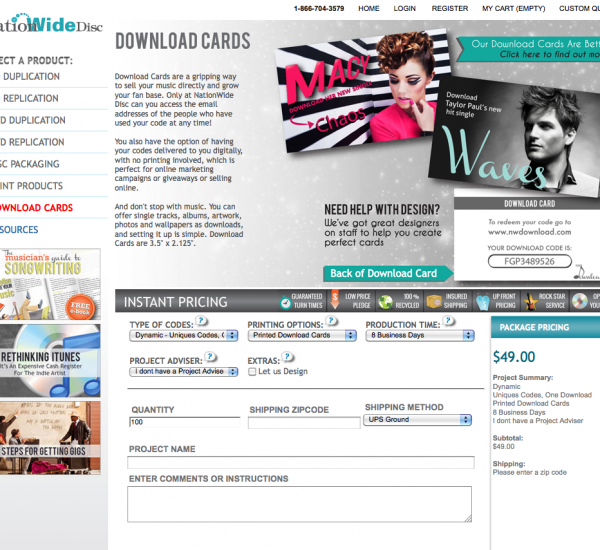
Download cards can be a great way to get your music out to people. But, when your band is choosing cards, you need to choose wisely. Not all download cards are the same.

NationWide Disc recognized that musicians need better download cards, cards with options and cards that help musicians. That’s why they created cards that:

Collect Your Fans’ Email Addresses

How does this work? By logging in to your account, you can instantly access your download stats, including the email addresses of anyone who has used one of your download codes! It’s a simple and effective way to grow your fan list.

The best part? It’s free! There are no setup costs, no annual fees, and no hosting costs. Really…It’s FREE.

Let You Get Creative With What You Offer

You’re not restricted to an MP3; we also accept MP4s, JPGs, PDFs, and zipped files.

This means that, if you want to think outside the box and offer your fans ringtones, artwork, wallpapers, band photos, or full albums, you can.

Need some ideas here? If you’re a boy band with a fan base of enthusiastic teenage girls, take a few official band photos and offer them as phone wallpapers. If you’re a singer/songwriter, try offering a pretty photograph with your poetic lyrics on top as a desktop background, or turn your lyrics into a unique printable piece of art. If you have an iconic logo or kick-ass album art, consider offering that as wallpaper for phones or tablets. Or, take a page out of Coldplay’s playbook and offer downloadable copies of hand-written lyric sheets.

Use Them To Market and Sell Your Music In-Person and Online

We give you options. Get your codes printed on physical cards, or have the codes delivered to you digitally.

Physical download cards can be sold (which we’d recommend for a full album and, perhaps, for singles) or given away (for example, included with a purchase or handed out to fans after a show). Download codes can be shared with your fans online (think “To access this fan-exclusive single, visit NWdownload.com and enter the following code…”).

You can also choose between Static Codes and Dynamic Codes:

  • Static Codes: This means you purchase one code that has unlimited downloads. This option is great for offering free downloads. You still collect the email addresses, and fans can share your code via social channels or by word of mouth.
  • Dynamic Codes: You can purchase an unlimited number of unique codes. However, each code is only good for one download. This option is ideal for sold codes, where you don’t want the code shared with anyone besides the buyer.

Are Easy And Free

We made it super easy for you to set things up. There’s no hosting, no coding, and no software required. You simply purchase the codes or cards online, log in on the NWDownload site, and upload your file. You can send fans to the site with your download code, you can hand out or sell the cards in person, or you can do both.

NWDownload will do all the hosting for you, and they’ll do it for free.

What can be better than that?

  • Order Your Download Cards or Download Codes
    Order Your Download Cards or Download Codes from NationWide Disc


...Keep Reading

Are Tours the Right Choice for Your Band?

Are Tours the Right Choice for Your Band?

By NationWide Source Estimated reading time: 9 minutes

There are people who argue that bands shouldn’t tour. They cite the wonderful internet, the high price of gas, and better uses of time; they argue that you can build a fan base on social media, distribute your music on any number of websites, spend your “free time” rehearsing, and be A-OK.

I get what they’re saying and where they’re coming from. I’ll even concede that these efforts—social media, distribution, rehearsing—benefit bands.

BUT, I disagree with their argument. There are times that touring is the best move your band can make. It’s simply a matter of understanding what type of tour is right for your band, and why touring is important to begin with. The internet cannot replace a live event, and live events do a great job of creating fans who will actually purchase your music.

Different Types of Tours, and When to Choose Each

Now, choosing the right type of tour for your band can make the difference between a successful tour and a frustrating, expensive headache. Consider tackling the following types of tours in the order they are presented.

The Local Tour

The first type of tour you should tackle is the local tour. This means:

  • reaching out and playing every relevant venue in your area (say, within an hour or so of your home base),
  • booking steady gigs (ideally, several nights a week),
  • packing the house,
  • selling your merch until everyone has it,
  • mastering your set list and performance skills, and
  • gaining the attention of local media (bloggers, papers, radio stations).

If your band is starting out, you should focus on this type of tour.

Once you’ve mastered the local tour, you might feel like your local market has had its fill of you, and staying with those same venues and same crowds becomes less exciting and less profitable (since no one’s buying merch anymore) and feels more like you’re treading water. At this point, you have two options. The first option is to refresh your act: focus on creating and releasing new material to reenergize your fan base. This can do wonders for your fan base and for your own frame of mind.

The Regional Tour

If that isn’t enough, your second option is to plan a regional tour. This has a couple different formats.

You can use your local momentum to branch out to surrounding areas, maybe expanding your reach to venues within five hours of your home base. This needs to be done strategically, to keep from wasting your hard-earned money by driving back and forth. Ideally, you’d do a set of shows in one local area, then move on to the next area and do another set of shows there, and so on. Be sure you maximize each area you stop in.

The other format for a regional tour is picking a large market further away from your home base and playing the heck out of it. For example, if you’re an indie folk artist based in Philadelphia, you might look at booking a month-long tour of Texas. Since you’re traveling all that way, it makes sense to schedule sets of shows, perhaps playing several nights in Houston one week, then Austin and San Antonio for a week and a half, then Dallas/Fort Worth for a week and a half. It’s worth noting that this format of regional tour becomes more difficult with larger groups of people group. It’s a lot easier (and less expensive) to make arrangements for one or two people than it is for six or ten.

Regional tours are great for pulling your band out of its “local band” status and pushing it to the next level. They can also help you catch the eye of bigger media—influential music bloggers, or bigger radio networks, or music magazines.

The Cross-Country Tour

The next type of tour is the cross-country tour, and it’s probably the type that comes to everyone’s mind when they think of a band hitting the road. It’s also likely the type of tour that people say bands shouldn’t take. To be honest, it can be expensive, especially with larger groups, and the risk of losing money is greater. If your band isn’t at the right stage of its career, or if the tour is poorly planned or poorly marketed, it could be a mistake.

So, how do you know if you’re ready? If your band:

  • has mastered the local and regional tour and performing live,
  • is gaining attention on a national level after regional tours,
  • has connections with artists, venues, and media across the country,
  • regularly performs multiple shows a week to sold-out (or nearly sold-out) venues,
  • has merch stockpiled and ready to sell,
  • has new music ready to release and perform, and
  • has a ready resource of booking agents working for you,

then it might be a good time to plan a cross-country tour.

Cross-country tours do require some intense planning and networking. You’ll either need to utilize the tour-planning skills you developed from your local and regional tours plus all of your industry connections and your fan base, or you’ll need to bring someone on board to help plan it, or both.

We’ll get more in-depth on how to plan a tour in a future article. Now that you know the types of tours available and when they apply, we’ll address why touring, on any level, is important.

Why Touring Matters To Your Fans

It might be tempting to throw a swanky music video up on your website, retweet a fan or two, and sit back to strum your guitar, but, if that’s the extent of your willingness to connect with fans and get your music out there, you probably won’t go far. Retweeting your fans might give them a momentary thrill, but that thrill pales in comparison to what a good live performance can give them.

If you’ve been to a great concert before, you know what I’m talking about here. Great concerts are experiences. They leave fans with the permanent memory of standing in a room with dozens (or hundreds, or thousands) of other fans watching a band perform, feeling the music vibrate through their body and the crowd, singing along to the chorus as the lead singer thrusts the mic out toward the audience, shaking hands with the band at the merch table, taking home a memento at the end of the night. A great concert is something you tell your friends and family about in the following days and weeks, something you relive with fellow attendees when you get together, something you tell your children about years down the line, something you close your eyes and relive anytime that band’s music comes on. Great live performances are something attendees carry with them for the rest of their lives.

For all their glory and convenience, the internet, distribution options (digital or physical), and social media can’t compete with great live performances. Since your fans can’t always travel to see you, it’s up to you to take the opportunity to them… whether that’s on a local tour at a venue 45 minutes away, or on a national tour to a city that’s a seven-hour flight away. Thus, the need for tours.

Why Touring Should Matter To You

Just like the internet, distribution options, and social media can’t live up to live performances for your fans, they can’t give you what live performances can. Yes, you might get a little rush from recording a song, releasing it to iTunes or SoundCloud, and watching the download or play count slowly tick up. Yes, it might be a source of income for you. Yes, you can interact with fans online. No, you shouldn’t abandon the internet, distribution, or social media altogether.

You also shouldn’t use these tools—that’s all they are, really—to replace actual interaction and performances.

First, rehearsing or recording in a studio—with multiple takes and all the mixing and mastering and scrubbing and perfecting—doesn’t give you the skills and experience that live performing does. There are no retakes in a live gig. You get it right or as close to perfect as you can on the first take. The crutch of being able to do something over again is gone; you either stand or fall. If your band is going to make it, this is one place where you prove that.

Live performances are also an ideal opportunity for your fans—the people on an adrenaline rush after a once-in-a-lifetime show—to buy your merch. If you wow them with your act, they’ll want something to remember it by, and they’ll be more than willing to support you (especially if you’re at the booth selling and signing merch). If you’re touring with new music (which you should be), there’s at least one product that they won’t already have. If they are new fans, odds are they won’t have much of your stuff at all. If you’re setting out on tour, regardless of the tour type, you should have merch with you; if you send people to your site, you lose that opportunity to make a sale. If you send them to third-party sites, you lose out on both opportunity and profits. In what universe does it make sense to tell eager supporters to wait or shop elsewhere?

Lastly, but perhaps most importantly, touring gives you a connection to your fans. Live performances bring you face-to-face with fans. You meet the people who love and enjoy your music. You meet the people whose purchases put food on your table. You watch them from the stage, dozens (or hundreds, or thousands) of fans standing in a room, swaying to your music, singing along. You watch them from the merch table, as they come up to shake your hand and buy a little piece of you to take home and cherish. That’s something that the internet and social media can’t replicate.

That’s why it’s important that your band gets up and gets out there—across town, across your region, across the country. That’s why you should care about touring.


...Keep Reading

Following Inspiration

Following Inspiration While Writing

By Julian Keaton Estimated reading time: 1 minute

“Every time I start a new spoken word piece, I get inspired by something completely unrelated that hits more.”

—Julian Keaton

I saw the above quote in a tweet from one of our guest authors, Julian Keaton, and I couldn’t help but share it.

Sometimes, when you’re writing one thing, inspiration strikes and pulls you in a completely new direction, compelling you to write something entirely different.

This is exactly why it’s a good habit to write regularly, with or without an inspiring topic in mind. You never know what subject, phrase, or word will move you to something greater.

That burst of inspiration doesn’t mean that your initial subject—the one you sat down to work on in the first place—is worth abandoning. It might be rubbish. It might be gold. Or, it might continue to inspire you in the future. Whatever the case, set it aside, and come back to it later.

But… in those moments when you’re suddenly inspired and that inspiration hits deep, cling to it, and follow it wherever it takes you.

That’s the best way to make music that moves and inspires others, the best way to make art.


...Keep Reading

Let My Guitar Do The Talking… With My Friends

By Rocky Athas Estimated reading time: 0 minutes Less than a minute

Written by: Rocky Athas

I am thrilled to announce the US release of Let My Guitar Do The Talking, an all-instrumental album that I am proud to say is all guitar, all the time. Please click on the video below for a preview.  Enjoy!

LMGDTT

Also, this album is available for purchase, in digital or physical format, exclusively in our new online STORE.


...Keep Reading

You Want a Fan For Life? - Gaining Life-Long Fans

You Want a Fan For Life? Here’s How You Do It

By NationWide Source Estimated reading time: 5 minutes

One of the artists we work with has been in the music business for years, and he has an established yet growing fan base. He’s worked with record labels in the past, but for a number of reasons he has ended that relationship and gone off on his own. This artist recently dropped by to visit with us after returning from a short whirlwind tour with well over 50 performances.

After hearing about one spectacular show after another, we asked him what his favorite moment was.

He thought for a minute, then shared with us this story:

He was working his merch table after a show when a teen came up to buy a CD, digging in his pockets for every last bill and coin he could find… and still coming up short. Way short.

Our artist noticed the crushed look on the teen’s face, asked how much he had, and discreetly made a deal.

The teen was elated, to say the least, and the smile on the teen’s face is our friend’s most treasured memory from an incredible trip.

While it was a very brief encounter, it’s probably not something either party will forget anytime soon, and it’s an awesome story to hear him tell. Better yet, there are a couple of lessons to be learned from this:

1. Make Yourself Accessible

Fans love personal attention from their favorite artists. You don’t have to hang out on social media all day or share your private phone number with your fans to be accessible. You just have to make an effort to connect with them.

Tips for Connecting With Fans

This artist regularly does just that. Over the past year, he’s launched a new website with pages for fresh content and places for fan interaction; he also stepped up his social media presence to better connect with fans. He does a phenomenal job of replying to, or at least acknowledging, fans’ posts and comments. Because of his international fan base, this sometimes includes translating his comments into a fan’s native language. He regularly shares quick videos, a free ringtone, or pictures from the road with his fans; while the shared items are nothing fancy, his fans love them.

His efforts to connect with his fans in-person are also strong. Like many musicians, he’ll sign autographs or do post-show meet and greets.

It’s important to note where he was in the above story: at his merch table, selling CDs and interacting with fans. Early in his career, he never would have been caught at his merch table. He was convinced that artists were supposed to be mysterious, deific beings that were above the masses, and that selling merch was for groupies, managers, or… well, anyone but the artist. (For what it’s worth, he’s not the only artist we’ve heard share this concept.)

At some point in the not-so-distant past, he had a change of heart; he realized that fans want someone who cares about and appreciates them, someone they can relate to, interact with, and reach. So, he swallowed his pride and started working his merch table.

The results have affirmed his decision. Not only have his sales increased significantly (it’s safe to say he made as much from merch sales on this short tour as he did in the past few years from his record label), but his interactions with fans have become much more frequent and, like the above story, meaningful—both for him and his fans.

2. Make the People a Priority

You can be the most talented musician ever, but if you ignore your fans and make them feel like you only want them for their money, you won’t be left with many fans. With no fans to buy your music and come to your shows, you won’t have much of a career.

So, what does it look like to make your fans a priority? Well, it doesn’t mean giving everything away; you have to make a living, after all. It doesn’t mean taking song requests and polling the masses on every decision you make. It doesn’t mean that you become obsessed with your social media stats, analytics, and gaining traffic.

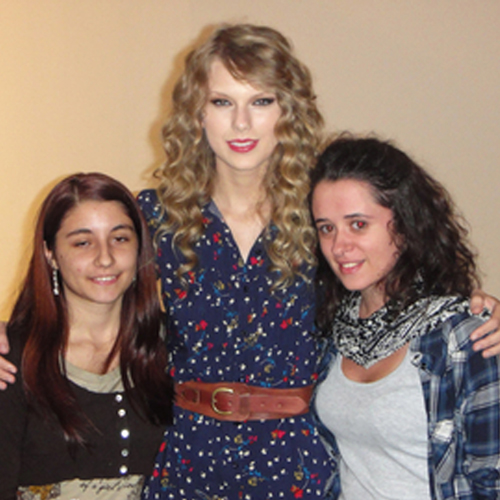
Photo Cred: Taylorswiftweb.net

It does mean making eye contact while performing, considering them when ordering merch, sending out exclusive sneak peeks to your followers, and shaking hands and signing autographs after a show. For example, Taylor Swift has mastered the meet and greet. She gives up a few moments of her time to give her fans a moment they will never forget.

It also means going the extra step to connect with them, and remembering that they are people just like you, not numbers and dollars. This can include doing what our artist did and cutting the occasional deal.

Now, merch sales are literally what pay our artist’s bills; he depends on that income, and he knows it. Discounting merch all the time simply isn’t an option. So, while he knew sales had been going well, he also knew that every penny adds up and makes a difference. He could have said no.

But he didn’t.

Our artist wanted to make his fan’s day. He wanted that connection with the fan. He didn’t make the deal for good press coverage or out of greed after quick calculations on the potential lifetime value of a fan. He did it quietly and out of genuine affection for his fan base. To him, that was enough, and it was worth the small one-time hit on his profits. To the fan, it was a once-in-a-lifetime encounter.

That kind of mindset—where you make yourself accessible to your fans and you make your fans a priority—has made a big difference for our artist, and it is what can lead you to long-term relationships with fans and a lasting music career.


...Keep Reading