



















Source Local
Understanding Music Copyright—Streaming, Music Videos, and Licensing

Understanding Music Copyright—
Streaming, Music Videos, and Licensing

By David Frazee Estimated reading time: 8 minutes

written by: David Frazee

I know how important copyright is, and I know that it can also be completely confusing and overwhelming… so I’m breaking it down and going through it, bit by bit.

This is the third article in the Copyright series. If you missed the first and/or second article, please take a moment to go back and read them before continuing this one.


Stream Digital Versions (Audio only)

You know some of your fans are all over the streaming services, such as Pandora, Spotify, and XM radio. While you don’t want to put all of your music on there (since they won’t buy it if they can stream it for free or almost free), you are interested in offering two songs off of your newest album—one is an original, and one is a cover.

But streaming is a bit more complicated than it seems, and you might have no idea what rights are involved with putting your music out there. The good news is I’ve done some digging for you.

Streaming companies gain a license from musicians to play the recordings; the particular license depends on whether the streaming service is interactive or not. An interactive service—such as Spotify—allows the user to select the exact songs they listen to. In that case, the company would have to obtain the right to “digital performances of sound recordings” from the copyright owner. On the other hand, non-interactive services—like Pandora or XM Radio—provide a pre-programmed or semi-random combination of tracks; with these services, users cannot control exactly what song plays or when. These services need a “statutory license.” SoundExchange is a service authorized by Congress to administer statutory licenses.

Additionally, streaming digital music is considered a public performance, so the services need to obtain performance rights to perform underlying musical composition.

So, to stream music online, you will likely need to transfer the underlying performance rights in the musical composition and the right to the digital performances of your sound recording to the service providing the streaming.

Unless you have given up some of your rights, you have the right to place your own music online or on the radio.

If you have not already created a digital version of a song someone else created, you will need a mechanical license to create that sound recording in digital form and to stream that song. Again, most copyright owners use the Harry Fox Agency to manage this interactive streaming license. Additionally, you will need a public performance license for the musical composition, and you will need to pay the performance fees to the correct PROs. After acquiring the proper rights from the original song owner or publisher and creating your version, you will need to give the service the right to the digital performance of your sound recording.

Creating a Music Video

In an effort to promote your new album, you’ve taken the best songs—the one with the killer hook, and the crowd pleaser—and come up with crazy-awesome concepts for a music video. You’re ready to start production, but you want to make sure you cover all the bases first.

When you create a music video of your original songs that is not being live streamed, your reproduction, distribution, and synchronization rights come into play. “Synchronization” is a special kind of right not precisely defined by law; that said, it is generally understood to be part of your reproduction rights and comes about anytime visual images are placed with your music.

To get your music video online or on TV generally requires you license the company or service a portion of your rights. To start, this will include both some sound recording (because you are not performing live) and musical composition rights (because your music and lyrics are still being played). Since companies will want to cover all their bases, the contract you enter with the company will likely be over-inclusive for what is actually required. Often this will include the right to reproduce the video, distribute the video, display your band name or CD cover, perform (or “play”) your work for public viewing, and derivative rights, to prepare derivative works. You may be thinking, “what are derivative rights, and why do they need them?” Derivative rights allow the company to adapt or change the music video—usually to fit their programming and produce the show for viewing—without infringing your copyright. It is more common with television programs than online services.

In terms of songs someone else created, you need two things to legally distribute your music video of a cover song: a mechanical license and a synchronization license. Why do you need two licenses? Your music video has an underlying audio track that exists as a separate file from the final video. That audio track technically requires a mechanical license (to create the recording and distribute it; the Harry Fox Agency handles mechanical licenses. But, in order to make a music video and align that recording of someone else’s song with any moving images, you need a special license called a “synchronization license.” This is obtained from the musical composition rights owner—likely the artist’s publisher. To find the publisher, you can look the song up on the PRO’s (BMI, ASCAP, or SESAC) website; find and contact the owner/publisher; and request to negotiate a synch license. One thing worth noting: since you can also obtain the mechanical right from the owner/publisher, you might be able to obtain a “sync license” that includes all the necessary reproduction and distribution rights you need for your video… meaning you wouldn’t need a separate mechanical license.

What does this mean, practically speaking? That hit song that everyone and their brother is covering online—those artists either obtained the proper licenses (which can cost a pretty penny, depending on the song) or they did it illegally. And doing things illegally has a range of repercussions ranging from your account being penalized to legal action. Even if everyone else seems to be doing it the wrong way, is it really worth risking your reputation, your online presence, your finances, and your career?

Song Placement: TV Shows, Movies and Commercials

Your music videos’ view counts are climbing by the minute, and your new album is trending on social media and climbing the charts (congrats!). You’ve had two emails come in—one from a company wanting to use your cover of a song in a television ad, and one wanting to use your original song in a movie.

Let’s start with your original song and the movie. The rights you might have to give up depend on whether the movie company is using a pre-recorded version of your song or is asking you to record a new version for the movie.

If they want to use a previously recorded version of your song, they will have to obtain a synchronization license and the sound recording license (called a “mast use license”). The mast use license is acquired from whomever owns the rights to the sound recording–likely you or your record label. Anytime your music is placed with moving images, a sync license is required from you and/or your publisher. The sync license should cover your performance royalties from the showing of the movie; this means the producer will submit a “cue sheet” to your PRO and the authorized broadcasts will be granted only to companies registered with your PRO. The license might also include a mechanical license, since they will likely want to release, reproduce, and distribute a soundtrack with copies of your song… and you want to get paid for those copies!

If you are recording a new version, you will likely have to give up sound recording rights, display rights, distribution rights to the work that results, the right to reproduce copies of that recording, as well as any derivative works resulting from that recording. Seems like a lot to give up, but it is pretty standard.

This is important: if you have already recorded a version of your song with a record label, be sure you do not need their permission to use the previous recording or to record a new version of the song for this new use.

Now, for licensing the cover song. Whether it’s a movie, a music video, or on television, anytime you want to place someone’s music with moving images, you need a synch license. If you already have a music video and obtained a synchronization license from the artist’s publisher, you might think you’re covered. Think again. Since this is a different use, the sync license will most likely need to be negotiated again. Additionally, performance rights to the underlying musical composition need to be obtained from the proper PRO and fees paid accordingly. Hopefully, the ad producers will take care of this for you!

So far, we’ve covered the most common Copyright issues. Let me know if there are additional topics you’d like me to address by leaving a comment below… and be sure to check back and find out more!


Disclaimer: The above article is not legal advice; is it not intended to, nor can it, replace professional legal advice in any way. It is only intended to provide a short guide to basic legal terms and practices in the music industry. In your own interest, consult with a copyright attorney before entering into any contractual agreement or taking any action against copyright infringement.


...Keep Reading
Understanding Music Copyright—Live Performances, Recordings, and Sales

Understanding Music Copyright—
Live Performances, Recordings, and Sales

By David Frazee Estimated reading time: 7 minutes

written by: David Frazee

I know how important copyright is, and I know that it can also be completely confusing and overwhelming… so I’m breaking it down and going through it, bit by bit.

This is the second article in the Copyright series. If you missed the first article, please take a moment to go back and read it before continuing this one.


Performing Live

Let’s say you’ve got your first big gig coming up, and you need a set list to fill 90 minutes. You have a bunch of original content, but you also know that the cover song can really bring in a new crowd. There are a few songs you have in mind, but you’re worried about copyrights. How do you protect your songs, and how do you avoid trouble for doing cover songs?

If you have not given all of your public performance rights to someone else, you have the right to perform your own songs in public. However, because you are performing your songs in public, you should ensure that you have done everything you need to secure your rights to the song (such as filing with the copyright office).

If someone is asking to perform one of your songs, you may be wondering if there is a benefit to granting another artist performance rights. In short, yes. The benefits include the royalties you receive for the use of your musical composition and, of course, exposure of your music to more potential fans. If you have signed some of your musical composition rights to a publishing company, the publisher may have a right to some of your royalties.

If you want to perform a song someone else created, you will need a “public performance license.” There are two ways to obtain this license.

First, you could go to the copyright owner. Likely, the artist’s publishing company administers the licensing for the song, so you will need to find out who the publisher is and contact them to obtain performance rights. Contracts for performance rights negotiated directly with the publisher can vary in a number of ways, but it will be a non-exclusive right (meaning you do not own the song) and, unless agreed to otherwise, you will need to negotiate this right for every song and every performance.

The second, and easier, way is for the venue to go through a Performance Rights Organization (PRO). PROs work with restaurants, concert halls, nightclubs, hotels, and other venues to grant performance licenses. There are three main PROs that copyright owners use to track and issue licenses for performance rights: Broadcast Music, Inc. (BMI); the American Society of Composers Authors (ASCAP); and Society of European Stage Authors and Composers (SESAC). Nearly 100% of recorded artists are registered with one of these organizations. Venues typically (but not always) receive a non-exclusive “blanket license,” which will allow performing artists to use any of the PRO’s songs. It is likely that the venue you are performing at has already obtained the proper license from the PRO and is responsible for making sure the royalties are paid. So, look online for which PRO administers the performance rights to the song you want to cover, and ask your venue if they have the rights from that PRO.

Lastly, and this is important: obtaining the rights to perform the music does not allow you to record your live performance of that song!

Creating Recordings

Speaking of recording… Let’s say you’ve been gigging a while and have developed a loyal fan base—so loyal that they keep asking if you have music they can buy and listen to when you aren’t playing gigs. (Awesome!)

Pumped, you start pulling together your best songs for a recording session. You’ve got eight or nine solid originals, but there are two cover songs you do that get the crowd up and dancing, every single time. You’d love to record those, too. Can you?

As far as songs you’ve created, you have the right to sing, record, and distribute your songs freely (unless, of course, you have given your rights away).

To record your song, you may have to give up some rights. Often, record label contracts will contain a clause that prevents you from recording other versions of your songs without the original label’s permission. The contract might also have you give up some or all of the sound recording rights to that final product. Read all contracts carefully, with a lawyer, before signing! While you may need to give up some or all of your sound recording rights, you should still own the rights to the underlying music.

If another artist wants to record your original songs, granting them recording rights can bring you exposure for your songs as well as royalties.

To legally record your version of songs someone else created, you need to obtain reproduction rights from the copyright owner. Specifically, you need a “mechanical license,” which gives you the rights to reproduce and distribute others’ songs on your own album.

You can obtain this license from the copyright owner through negotiations. Since it’s a complicated and time consuming process to track everyone who wants to use your songs, most copyright owners use the Harry Fox Agency to manage their mechanical licenses. This is a good place to start if you want to obtain a mechanical license.

All copyright owners are given the rights to “first use” of their songs, meaning they get the opportunity to release the first public version of the song. After the song has been published, anyone can obtain a “compulsory license” by providing notice to the copyright owner and following a specific process. This allows you to still legally record the song, even if you’re having trouble obtaining a mechanical license from the creator or original artist.

Please note that a mechanical license does not give you the right to post your version of the song on YouTube. We will get to this later.

Selling Copies

You’ve gotten your songs back from the recording studio—fully mastered and ready for release. You want to order physical albums to sell, since they have good profit margins and some of your fans like buying merch at shows (they’ve asked, repeatedly, if you have any CDs). You’re also interested in selling digital versions of the album and individual songs—including those cover songs.

Manufacturing and selling songs you’ve created incorporates your reproduction (copying) and distribution (selling) rights in both sound recording and the underlying music and lyrics. If you use a record label, you may have to give away some or all of your sound recording rights. In doing so, you likely give them the right to distribute and reproduce copies.

Also, by publishing your music to the public, others can now obtain a compulsory license to reproduce your music now. The benefit is of course the money you received in exchange for these rights.

Now, let’s talk about legally manufacturing and selling songs someone else created. As discussed above, you need a mechanical license to create and sell your new songs without infringing the copyright of the songs you covered. If you are working directly with the copyright owner, make sure you obtain the right to “distribute” the cover song; otherwise, you may have the right to use the musical composition in a new recording but cannot do anything with that recording.

As discussed previously, the easier method of selling your cover songs is to obtain a “compulsory license” by providing notice to the copyright owner and following the specific process laid out in statutes.

There is something else to consider: digital versus physical copies. These are two very different mediums, and the music industry rightfully makes a distinction. You can obtain the right to sell permanent copies in either medium by obtaining a mechanical license or a compulsory license, but having the right to one medium does not mean you have the right to the other. The Harry Fox Agency has two different forms; make sure you have obtained the right license!

There’s one more thing worth noting on mechanical licenses: they are for a set number of specific sales (for example: 1,000 CDs, or 10,000 downloads) and will need to be renewed for additional copies.

Next in the Copyright series: Streaming, Creating Music Videos, and Licensing Music. Be sure to check back and find out more!


Disclaimer: The above article is not legal advice; is it not intended to, nor can it, replace professional legal advice in any way. It is only intended to provide a short guide to basic legal terms and practices in the music industry. In your own interest, consult with a copyright attorney before entering into any contractual agreement or taking any action against copyright infringement.


...Keep Reading
Understanding Music Copyright— You Have the Right To…

Understanding Music Copyright—
You Have the Right To…

By David Frazee Estimated reading time: 6 minutes

written by: David Frazee

“I wish I had known that education is the key. That knowledge is power.”

—Mary J. Blige,
interview with Oprah Winfrey, 2006


As an independent musician, the more knowledge you have about the music industry, the better off you are. This means you need to learn about the industry, including your rights as a songwriter and performer. Not taking the time to learn about legal matters might seem easier up front, but in the long run, learning a few basic principles about your rights can be extremely empowering.

If you haven’t taken the time to learn about your rights, you’re in luck, because I’m going to cover them here. Even if you are familiar with your rights, brushing up on something this important is never a bad idea.

I know things can get complicated quickly when it comes to legal issues, so I’m going to break them down for you and explain some basics you should know.

What Can You Protect?

In the music industry, there are two main protectable elements: musical composition and sound recordings. The law intentionally protects these elements separately, and I’ll explain why in a little bit.

Musical composition refers to the underlying music (and lyrics, if applicable). They arise whenever someone wants to use your music or lyrics. This includes sampling, covering, performing your songs live, and even streaming your music online. Most importantly though, this is the part of your rights that publishing companies find valuable.

As a songwriter, you are thinking of music and lyrics all the time. So, at what point do you have musical composition rights? Say John sits down one day and finally writes sheet music for the music and lyrics he has been working on all week. A day or two later, he decides to record his song and saves it as an MP3. A week later, he decides he to play the song at his next gig. Under the law, musical composition rights arise automatically at the moment you “create” the music. But, there’s a caveat. There needs to be an element of “permanence” to the creation for the rights to arise. It does not require publication or an actual recording on a CD. In our example, John couldn’t just keep the music and lyrics in his head. He had to write them down on something intending it to be permanent. In this case, his musical composition rights would have been formed when he wrote the sheet music.

Sound recording rights only arise from the actual placing of the musical composition and lyrics on a record, CD, MP3, or other object. Sound recording rights come into play whenever someone wants to copy, distribute, or use a previously recorded version of your song. This can include demo recordings or anytime you have placed your music (or someone else’s composition that you have obtained the rights to) on any medium (CD, MP3, etc.) by any method, regardless of whether or not you release the song to the public.

What do you have to do to get this right? Like musical composition rights, sound recording rights arise automatically when you record your music. Take John in the previous example. Until he recorded his song and saved it, he did not possess any sound recording rights. However, he did not have to play the song in public for that right to arise. For sound recording rights, it is not the song but the sounds recorded on the medium of the author’s choice that are protected.

You don’t have to file any paperwork with the copyright office to get musical composition or sound recording rights. Additionally, copyright fees can quickly add up if you file every time you have a song idea. Many independent artists look for ways to minimize this cost. If you’ve done some research on filing, maybe you’ve heard of an alternative called the “poor man’s copyright.” Here is how it works: in a sealed envelope, send yourself a CD (tape, etc) of the recorded music (and the copy of the sheet music) in the mail. Once it arrives, you DO NOT open it. Some states may recognize this as proof that you own the copyright on the date stamped by the post office.

So, if you don’t have to file, why file at all? To better protect your work.

Let’s say someone uses your music without your permission, and you want to stop him or her or recover revenue from his or her use. To do so, you’ll probably have to take the matter to court. Here’s where filing with the copyright office makes a difference. First, you can only file a civil lawsuit in federal court if you have filed with the copyright office. Second, in an infringement lawsuit, you have to prove you own the rights to the songs and that the other person had access to your music to copy it. Third, it is unclear if the poor man’s copyright will stand up in the federal courts.

While I understand the desire to wait or save some money, filing with the copyright office prior to getting involved in a legal dispute makes it easier and less costly to defend your rights.

What Protections Do You Have?

The US Copyright Act provides creators—which includes songwriters—with six exclusive rights. They are:

  1. Reproductions—the right to produce copies of the copyrighted work
  2. Derivative Works—the right to prepare new works based on the original copyrighted work
  3. Distributions—the right to distribute (by selling, renting, leasing, or loaning) copies of the work to the public
  4. Public Performances—the right to perform the work publicly in person
  5. Public Displays—the right to display the work publicly
  6. Digital Performances of Sound Recordings—the right to perform publicly via digital audio transmissions (as opposed to in-person performances); i.e., playing the audio recording for an audience (in person or online)

Now, a songwriter can retain all six of these rights for himself. Or, he can give them away (to publishers, record labels, manufacturers, distributors, other artists, and so on). The transfer of rights can be any combination of permanent and temporary, entire and partial. It’s worth noting that the six rights can be handled separately, and each right is infinitely divisible. Whether or not you, as a songwriter, choose to give away your rights—entirely or partially—is up to you. Know that giving away the wrong rights (or the right rights in the wrong way) can result in lost income . . . but so can clinging to all of your rights at all times. We’ll get to that in more detail later.

Lastly, I mentioned that composition and recordings are protected separately. Here’s the reason: not all six of the above rights apply to sound recordings, but all six do apply, at one point or another, to musical composition. The rights that come into play depend on how the music is being used.

Over the next few articles, we’ll look at how your rights come into play in a few scenarios: Live Performances, Recording, Selling Copies, Streaming, Creating Music Videos, and Licensing Music. Be sure to check back and find out more!


Disclaimer: The above article is not legal advice; is it not intended to, nor can it, replace professional legal advice in any way. It is only intended to provide a short guide to basic legal terms and practices in the music industry. In your own interest, consult with a copyright attorney before entering into any contractual agreement or taking any action against copyright infringement.


...Keep Reading

Struggling to Hit the Notes? Perfect Vocals in 5 Steps

Struggling to Hit the Notes? Perfect Vocals in 5 Steps

By Anna F Estimated reading time: 7 minutes

Don’t hate me, but it seems that the life of a serious vocalist—whatever your genre—is less the Hollywood portrayal of all-night partying (and all that comes with such a scene) and more of self-control and pampering. I mean, the things it takes to really care for the vocal instrument seem, ahem, a little nerdy—or boring, if you like. But, please don’t let a little boring deter you, because this is serious stuff. It’s not like you can pack your vocal chords up in a nice little case and put them away for safekeeping, like most instruments.

So, what are some practical ways in which you can care for your voice box (also known as your larynx, which houses your vocal chords or vocal folds)?

Hydrate. With Water.

This step is something that you can do pretty much anytime, anywhere: drink lots of water. The reason for this? The more water you drink, the thinner the mucous on your vocal chords will be, which means less vocal interruption for you.

Make sure you are well hydrated by drinking the recommended 64 ounces per day. If you have an affinity for dehydrating liquids (such as alcohol or caffeinated beverages), you’ll need to up your water intake even more; a good rule of thumb is to drink at least as many ounces of water as you are the dehydrating beverage in addition to the daily recommended amount. That’s a lot of water! To help get you in the habit, have a water bottle (or two) with you at all times, especially when you’re performing.

Another great way to keep your vocal chords hydrated is to steam. You can do this by using a facial steamer or by boiling a pot of water and breathing in the steam. Do this two to three times a day for about 10 minutes, when possible.

Note: steaming can’t replace drinking water. Nice try.

Avoid extremes

Though some suggest drinking hot tea or water before a performance, it’s best to avoid boiling hot water as it can cause inflammation, especially on already fatigued vocal muscles. Ice water, which causes muscles to contract, is not your friend either, particularly after you’ve warmed up or during a gig, as it can significantly reduce your vocal range.

So, what do you do? Ideally, stick with lukewarm water. If you do drink tea—I like Throat Coat Tea—try heating the water and removing it from heat right before it boils. This way you get some warmth without doing damage.

Use Your Inside Voice

Like extreme temperatures, extreme vocal volumes can put a real strain on your voice. Over time this strain can lead to vocal nodules (nodes). These nodes are the bane of a singer’s existence, and it’s one of the major things we’re trying to avoid with all this vocal care talk. Nodes do not heal easily, so it’s best to prevent them, if possible.

So what are these extremes of which I speak? You’ve probably guessed that yelling and screaming aren’t good for your precious vocal folds. (Though, you can be trained to scream properly, if that’s the sound you’re going for.) At the other end of the spectrum, whispering can also be too demanding on your vocal folds, especially if they are already overworked and in need of rest.

So, what’s a singer to do? In your everyday socializing, try to be aware of the general decibel level of your surroundings. If you’re in a crowd, you may not realize that you’re speaking at a higher volume because everyone else is too. Sometimes those situations can’t be avoided, but when you can, speak at a normal volume.

It’s the same when you’re rehearsing and performing. Over-singing is not good. You’ll want to communicate with your sound engineer until you get a good monitor mix. You have a part to play in your mix as well. When you’re singing, you’ll want to make sure you’re close enough to the mic to kiss it. When you’re doing your mic test (testing 1, 2, 3), sing at the same volume you would during your performance so that your monitor mix will be accurate. And, speaking of monitors, in-ear monitors are ideal. Yeah, yeah—not everybody likes they way the feel or sound. However, if you have access to them, it’s a great idea to get used to them. Either way, without some kind of well-mixed monitors, the decibel level of the epic music being played around you can cause you to sing louder unnecessarily, resulting in vocal fatigue and strain.

Lastly, resting your voice before gigs is ideal, when possible.

Warm Up & Stay Warm

For all you athletic-types out there, you know that before you start your workout, you need to warm up. You don’t want your hammy to cramp up. It’s the same with your voice. Before you begin rehearsing your set list, it’s a good idea imperative that you warm up your vocal chords. Your muscles need to stretch and warm gradually; you’re not made to suddenly go from inactive to highly active. To prevent injury (i.e. the afore mentioned nodes, swelling, laryngitis, etc.) and increase vocal range, stability, and expression, you’ll want to warm up those vocal muscles and practice correct breathing.

If you’re not sure where to begin, it’s ideal to have a professional vocal coach’s direction with breathing exercises and other warm up techniques. If you’ve had some coaching before and just need something to guide you at home, there are plenty of vocal exercise CDs, videos, and websites out there. I’m a personal fan of Vocal Warm Ups & Exercises by Christina E. Branz. Whatever you choose, you want exercises that will help you breathe correctly and stretch your vocal range with walk ups and downs.

Once you’ve done your vocal exercises, you want to stay nice and limber vocally. If you’re singing in a cold climate (whether outside or in a highly air conditioned venue), it’s not a bad idea to have a scarf handy—a trendy one doubles as a fashion statement, killing two birds with one scarf. Another way to stay warm is to continue your breathing exercises.

And remember, your drink of choice for vocal health and optimal range should be lukewarm water.

Beware of Allergens

Smoke, smog, mountain cedar, milk. Whatever the cause, anything that increases your allergic response—mucus production, people—can impede the quality of your vocals. Sometimes severely.

If you can avoid smoggy and smoky areas, do it. If not, for environmental allergies—as well as seasonal allergies—I like to use a nasal saline rinse (i.e. NeilMed Sinus Rinse, SinuCleanse, etc.) to wash away pollen and pollutants, reduce sinus swelling, and thin out mucus (I know, I know. Snot is gross. But it’s a reality.) There are also slippery elm lozenges, other herbs, and over-the-counter meds that soothe sore throats and help control seasonal allergies, but it’s probably best to consult a doctor before starting a new medication.

If you know your sinuses react to dairy, red wine, or any other food or drink, it’s advisable to avoid those a few days prior to your performance. If you do indulge, never fear. You can always use your sinus rinse and herbs. And, as always, drink lots of water. (Have I mentioned that yet?)

Lastly, and not to be bossy, but… don’t smoke. That’s a completely avoidable nasal, sinus, and lung irritant, among other pesky health issues (i.e. cancers of various kinds). You may be going for that husky vocal timbre, but at what cost? Okay. I’m not your mom. I’ll step down off my soapbox.

These five steps are so easy to implement that you really have no excuses. Go for it. Pamper yourself. Take care of that voice of yours, and it might just keep working for you for years to come.


...Keep Reading

How To Get 20 Million Views: Taking Note of Meghan Trainor

How to Get 20 Million Views—Taking Note of Meghan Trainor

By NationWide Source Estimated reading time: 11 minutes

Two months ago, Meghan Trainor was an unknown songwriter. Even today, she isn’t a big, established artist… at least, not yet. But, if her first single’s smashing success on YouTube is any indication of the future of her career, she will be.

Trainor, a 20-year-old singer-songwriter, is the artist behind the single “All About That Bass.” The catchy pop tune stands tall on its own merits, but the accompanying music video is pure brilliance. And audiences seem to agree. The video, which was released on June 11, already has over 21 million views. Not too shabby for an artist’s first single.

So, what’s the big deal?

You Could Learn a Thing or Two from Trainor

This performance stands out because it has hooks in the video as well as a social message that connects with a large number of fans, not to mention that it also creates a little controversy. The hooks have to do with the unusual way that Trainor portrays herself and the other performers in the video. Not just the fact that they are happy with their size and shape, but some of the unexpected things that happen in the video. They also turn the tables on “skinny” people by using humor, casting, and choreography to make their point.

Take a moment to view the video. I’ll wait.

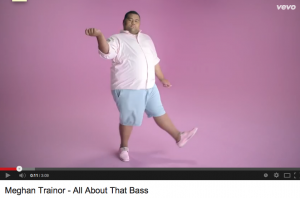
Done? Good. I bet you noticed Sione, an example of casting brilliance. He is over the top with his dance moves, and he adds a dimension of depth and fun to the video that has helped to propel it into a huge number of views.

Still from "All About That Bass"

After viewing the video, are you compelled to share it with someone else? If so, then you begin to see how a video can go viral.

Note that it does not matter why you want to share it, just the fact that you do. This important point is quite often lost on musicians who make their career in music. Launching a video that is well done, but not compelling, is not enough. By compelling, I mean: what does the viewer feel compelled to do after seeing your video? If the overwhelming answer is to share it with friends, then you have a winner. Otherwise, as a good friend of mine would say, “You have a double handed death grip on a loser”. The world is full of music videos that go nowhere, and they cost just as much to produce as a compelling video. Learn to let go of the loser before you start… or do what it takes to turn it into a winner and then hang on tight.

The song “All About That Bass” by itself probably would not create the kind of buzz necessary to get 21 million listens. It is the entire package—the song combined with the video—that knocks it out of the park.

But let’s face it: video can be expensive. It would be fair to say that an inexpensive songwriting/performing/video-creation endeavor could easily cost tens of thousands of dollars. On the other hand, indie musicians are a very creative group used to working with very few resources. So, why not figure out a way to write and shoot a compelling video without a huge budget? It takes a combination of talent, flexibility, planning, funding, and desire to make all the parts work together smoothly, even more so on a small budget. It is not for everybody.

Let’s take a closer look at Trainor and her video; then, we can explore what indie artists might do to leverage their music in this same way.

What Trainor Does

Trainor writes about a very of-the-moment issue (body image) and has a positive message.

Body image issues are nothing new, but they have become a much more public issue in recent years.

Social media sites have turned into a battleground over women’s bodies. Memes proclaim that “nothing tastes as good as skinny feels”, incredibly thin models are lifted up as ideals (after being photoshopped into even more idealized versions of themselves), and women with “extra” weight are publicly ridiculed for their weight and their choices (in clothing, in food, in living). On the other side, there is backlash against “thinspiration” and excessive photo editing, heightened awareness about the dangers of eating disorders, and encouragement to be healthy and to love yourself as you are.

And that’s where Trainor’s message lies. She sings:

“I see the magazine, workin’ that Photoshop. We know that shit ain’t real. C’mon now, make it stop. If you got beauty beauty, just raise ’em up, Cause every inch of you is perfect, from the bottom to the top. Yeah, my mama she told me don’t worry about your size… I know you think you’re fat. I’m here to tell you every inch of you is perfect from the bottom to the top.”

Now, Trainor is, admittedly, not a size two. The girl has some curves. She also doesn’t appear to be unhealthy or overweight.

But her weight and shape aren’t the issue, nor are they the focus of her message. Her message lies in her acceptance of her body for what it is. It’s not a skinny beautiful body. It’s not a fat beautiful body. It’s simply her beautiful body. And that message is something that girls everywhere—maybe people everywhere—need to hear. And, as an artist, Trainor does a good job of leveraging this topic by producing a compelling song/video combination.

She stirs up a little bit of controversy.

If you read the public comments on Trainor’s video, you know what I’m talking about. There are a surprising number of hateful comments on a video that has such a positive message. (Well, maybe not surprising, if you’re used to the internet.)

But don’t assume that some negative comments mean Trainor and her message are unpopular. Less than one tenth of one percent (0.001%) of the people viewing the video have taken the time to comment on it publicly—some comments are good, some are not. And for every “thumbs down” on the video, there are almost 22 “thumbs ups”.

Most importantly, a huge number of people have been compelled enough by the video to share it with others. That is all that matters.

Every part of the video—the concept, the casting, the styling, the shooting, the editing—is extremely well done.

The video’s concept is simple: reinforce the song’s message by showing people comfortable in their own skin having fun and loving themselves—regardless of their size, shape, or age. There’s no complicated storyline to confuse the viewer, nor is it simply just another music video of a performer singing their latest release on a stage.

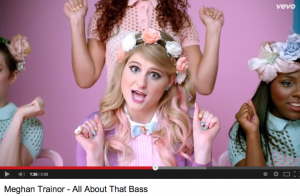
The casting is impeccable. Trainor’s message isn’t limited to one group; it’s for everyone. It’s appropriate, then, that the people in the video are different sizes, shapes, ages, and genders, and they all look like they’re having fun, dancing and shaking whatever they have (or don’t have).

Still from "All About That Bass"

What This Means For You

Trainor is 20, and she’s new. She seems to be pretty talented (especially considering she had a songwriting contract at 18 and an artist contract at 20). She has a label that is obviously willing to invest in her, and she has an extremely talented team working with her.

Your situation is probably different. You might be starting your career in music, or you might have been at it for a long time. You’re likely talented and creative and have music ready to release or that could be re-released with better promotion. You probably have a loyal local fan base, but you’d love for it to be bigger. You’re probably wondering how to branch out—how to get bigger and better gigs along with more visibility.

Given that you’re in a different situation than Trainor, what on earth could she and her video possibly teach you about your career? Plenty.

Songs that strike a chord with you will probably strike a chord with others.

In a behind-the-scenes video, Trainor says, “My producer and I wanted to write a fun song… Why not do a song about loving yourself and loving your body? Because I don’t think girls love themselves as much as they really should. I think girls will really relate to it.” In an interview with the Today show, Trainor says that this is an issue she has struggled with personally. That personal experience and conviction help Trainor come off as a credible source on the subject, which means it’s easier for her fans to relate and connect with her.

What does this mean for you? Well, first, you don’t need a team of professional, award-winning songwriters to write a good song. You can leverage your own life experiences, just like Trainor did, and create music that reflects who you are.

Second, you should try writing about something that resonates with you on a personal level. Pick a topic that moves you, or an experience you’re intimately familiar with, and tell the story in a way that takes listeners along for the ride. If you connect with the song, it increases the odds of your listeners connecting—both with the song and with you.

Most importantly, consider whether that connection will cause your viewers to share the video. Get creative with the process, and be sure to create a hook, something in the video that will make fans take action. Without a hook, it will not work.

If you want a second opinion, try playing the song for the rest of the band, an impartial friend, another musician, or a songwriting group. Be open to their feedback and criticism, and genuinely consider what they have to say. Even if you don’t make the changes they suggest, the advice might come in handy on future songs.

You don’t have to be a superstar to get lots of good attention.

Before this release, Trainor was relatively unknown. She might have had a small local following, but she certainly wasn’t a household name. So, how did she get so many views?

Simply put, Trainor thought outside the box—with her message, her styling, and her casting. Her positive message is on a topic that few artists address. The styling of Trainor’s video is surprising (in that it’s rather different from most other videos out there), but it’s wholly appropriate for the song. In Trainor’s video, Vine sensation Sione makes an unexpected appearance, which helps create a hook for fans of the video because of his unique style. Sione’s 440,000 fans (yes, you read that correctly) on Vine probably headed over to check out Trainor’s video, and I can guarantee that some of Trainor’s viewers headed over to Vine to find out more about the dancing man. Both artists benefited from the collaboration.

That type of collaboration doesn’t take a label or tons of money. More importantly, thinking outside the box doesn’t take a label or tons of money. To be a successful independent artist, you must be creative, flexible, and resourceful; a ton of money to fund your project is not required to make this work.

This might mean you tell your song’s story from an unexpected angle. In Five Seconds of Summer’s video for “She Looks So Perfect”, the characters in the video strip down to their underwear. This in itself is a little surprising (but fits with a line in the chorus). What is unexpected is the type of people who strip down: highschoolers, a store clerk, a middle-aged mom, a cop, a grandmother, a pair making eyes at each other in a diner. Basically, everyone but the young and fairly attractive band members. It’s not just young, fit, beautiful people stripping. It’s everyone. This is the hook for an otherwise unremarkable video that now has over 67 million views.


As I said at the very beginning of this article, Meghan Trainor isn’t a big, established artist… yet. I think she’s incredibly talented, and I think she has a talented team helping her. I’m extremely curious to see how she follows up on this first single. Only time will tell.

As for you, the indie musician with your own style and talent and career, I want to know what you think of Trainor’s video and what you’ve learned from it to use in your own career. What’s your next move?


...Keep Reading

Hard Work Alone Won't Prevent Costly Mistakes

Hard Work Alone Won’t Prevent Costly Mistakes

By Rocky Athas Estimated reading time: 9 minutes

written by: legendary guitarist Rocky Athas

When I started my career as a guitarist, I was focused on being able to play guitar all day, every day, at every possible opportunity. I was young and excited to live the life of a musician (truth be told, I’m still excited about playing, writing, and recording music). I thought that if I worked hard, I’d make it, and everything would turn out okay. While I’m proud that I lived by that standard and worked my ass off, time has shown me that the theory is flawed. Yes, it’s incredibly important to build a solid foundation on hard work… but real success requires something more.

My years of hard work would have gone much further sooner if I had known a few things up front. When I was young, I knew little of how the business side of music really worked. I did not know what my rights were, and I trusted the people I worked with. Surely they had my best interest at heart…

My lack of awareness and naivety resulted in a number of headaches and heartaches. I’m not too proud to admit that I learned these lessons the hard way. I’m a bit wiser now.

What surprises me today is how much things have remained the same. Even though new tools and technologies are available to musicians, we still face many of the same challenges I faced years ago. Now, I want my fellow musicians to be able to turn their passion into a sustainable business (which happens to be my personal goal). I also know how big a difference real wisdom gained through experience could have made in my early career. So, I’ve decided to share some of my experience with you.

To all musicians—young and old, novices and pros, local legends and road-weary warriors, solo artists and band members, rock stars and country crooners and rappers and everyone in between: please, let my mess be a message to you.

Early Times were Good Times… Mostly

In the 80s, I was hired to play guitar with Black Oak Arkansas. For those unfamiliar with the group, BOA was one of the top 5 touring rock acts in the 70s. They earned three gold albums and sold close to five million records from 1972 to 1976. BOA’s frontman, Jim Dandy, was a huge influence on later acts (like Van Halen frontman David Lee Roth). Bands that are legendary today—like KISS, Bruce Springsteen, and Aerosmith—all opened for BOA. Given the band’s status, I was more than happy to be a member.

When I joined BOA, the group had an attorney that also acted as their manager. They had also signed a record deal with a label and had received a sizeable front, to be used for recording an album. Not one penny of that front money was disbursed to the musicians; it all went to studios, engineers, lawyers, and other professionals that the label hired.

As happy as I was to be in the band and to be recording, I was thrilled when they asked to use five of my songs for one of their albums. Songwriting was not part of my compensation agreement with the band, so I was entitled to receive royalties for my songwriting. I was very excited about this new opportunity.

Getting Paid is Not So Easy

Of course, getting paid for the songs would’ve been nice. That’s right. Even though five of my songs were recorded, I didn’t get any money. Not for writing the songs, not when they were played, not when they were recorded, and not when the albums were sold. No royalties whatsoever.

Now, to the band and the record label’s credit, it wasn’t their fault that I wasn’t paid. As unbelievable as it may sound now, BOA had trusted everything to the manager/attorney that had been hired to handle the band’s business, and we focused on making and recording music. After all, it made perfect sense to think that a manager who was also an entertainment attorney would do a great job representing us as the musicians of BOA. The rub came because the manager was also our attorney, which created a conflict of interest. A good attorney is focused on the best outcome for the people they represent. When that same attorney represents himself as the manager of the band as well as the personal interests of the musicians in the band, it creates a problem.

At the time, none of us understood the conflict of interest that had been created by allowing our manager to also represent us as our attorney. After all, we were famous because of our music, not our business degrees.

Lesson learned: never allow your manager to also be your attorney.

One of the business aspects handled by this manager/attorney was the distribution of income from mechanical and royalties payments; these came from the record label and were to be distributed to the songwriters. And… well, he handled it, wholly and completely. If we asked about payments owed to us we were told “all the money was used to offset expenses”, that nothing was left for us. However, we were never told what or how much those expenses were, and we were never given statements to review and reconcile. In retrospect, I now realize that if our manager had not also been our attorney, we could have gotten to the bottom of this problem.

My patience began to wear thin. I was all about creating music and performing, but I found it difficult to focus on the music I loved. Was I getting screwed by the very people I trusted? All I needed was a little cooperation and clarity, but after a number of failed attempts to resolve the problem, I became even more frustrated. It appeared that our manager/attorney was not able to provide the information that I needed to see. Details showing how the money was spent and what royalties were paid were not available to me.

Very frustrated, I decided to leave the band.

It Just Gets Better

Sadly, the story doesn’t end there. A few years later, I was out shopping with my wife, killing time while she did her thing. I was perusing the many CDs offered in this huge retail chain store when I saw a brand new release—a greatest hits album for BOA. Curious, I turned it over and looked at the track list and credits. Sure enough, two of the songs that I had written were on this new album… and I had NO idea! Again, my songs had been used without compensation, and this time they didn’t even bother to tell me about the release!

As you can imagine, this discovery really ticked me off. Instead of walking away like I had before, I hired my own lawyer to find out where my royalty payments were and who was holding them up.

It turns out that the record label had paid my royalties all along… straight to the BOA manager/attorney, just as I had suspected. These were the royalties that were supposed to be disbursed to the songwriters. That was, after all, how our contract had been written. So my new lawyer went after the band’s old manager/lawyer, trying to get my royalties back for me. Sounds easy enough… except the old lawyer had died a year or two earlier, and everything was tied up in probate.

After spending a good chunk of money to find and recover my royalties, my new lawyer told me this: it would likely cost more money in legal fees to sort through the probate mess than I was actually owed. Of course, we had no way of knowing how much I was owed unless we pursued the matter further. So, did I spend more money to recover an unknown amount… or did I let it go?

I let it go.

This means that the only people making money on those five songs were the manager/lawyer (and whoever inherits any fortune he might have left behind)… not the band and not the songwriters (including myself).

Lessons Learned

There are several morals to this sad and embarrassing story.

First and foremost:  Be careful who you trust, and only trust what you can verify, and never use your attorney as anything but your attorney.

Second: You’re never too big to be swindled, misled, or mismanaged.

Third: Take responsibility. I am ultimately responsible for the situation I was in. I signed a contract I couldn’t verify and I was forced to trust those I was working with—this led to lost opportunities and an unknown amount of lost income.

To this day, I do not know how much money I lost to the pocket of that lawyer, and I’ll probably never know. It was an expensive mistake, but it hasn’t been a complete loss. I’ve learned that my music career is really MY business, and that no one but myself is responsible for it.

In light of that, I’ve worked hard to educate myself on aspects of the business that I have ignored in the past. Going forward, I won’t make the same mistakes. And I never sign anything that I don’t fully understand. You cannot expect others to do the difficult stuff for you if I you are unwilling to do it for yourself.

My hope in writing this article is that you don’t have to learn these painful lessons firsthand. So, listen up. Be smarter than I was. Don’t blindly let someone else handle things—royalties, sales, anything—for you. Pay as much attention to the business side of your career as you do to making and playing music. Don’t let your hard work—your writing, playing, and recording—be for nothing. Hard work is very important, but being involved and caring about the mundane details of your own career in crucial.

Want to know more about me? Check out my new album or biography or find me at a show near you. I’d love to meet you!


...Keep Reading

The Struggle Against Obsession

The Struggle Against Obsession

By NationWide Source Estimated reading time: 8 minutes

The cursor sits there, flashing impatiently, daring me to fill the page with words that mean something. I have a vague concept in my head, but it shifts when I try to see it more clearly.

I start writing and get a few lines down, then backspace to delete them. They weren’t quite right. I repeat this process a few more times. Nine, to be exact.

I drum my fingers against the desk again, frustrated. I’m tempted to move on to another topic, or to stop trying for the day. This is what I do. I write. So why is it such a struggle today?

Because I’m obsessing over it. I’m so focused on finding the best way to start the article and the most logical way to lay it out and the ideal story to include that I’m not making any progress. I’m getting in my way and preventing myself from accomplishing the task at hand. It’s frustrating. Moreover, it’s difficult to overcome.

But it’s not impossible to overcome. I just have to stop obsessing on getting it right the first time and let the thoughts flow. I can go back and rewrite it later, as long as I have something to work with. If I keep obsessing, I won’t have anything to rewrite.

The cursor still flashes.

I sigh and slowly start typing the thoughts floating in my head, praying something coherent forms.

I don’t delete this time.

The Creative’s Struggle

I can confidently state that I’m not the only person who has experienced writer’s block. I think that, at some point in their life, every person has struggled to find the right words.

Nor is this struggle—this obsession with perfection that prevents progress—unique to writing.

I’ve seen it in musicians.

Yes, in the more obvious instances, with songwriting. The songwriter languishes, much as I do, over how to best express the thoughts in his head, and he struggles with fitting the words into a melody. He has notebooks full of nearly complete songs, each abandoned in a moment of frustration and shelved for a later date. Over the years, he has completed a few songs, but most wait, unfinished.

I’ve seen it in other ways, too.

I hear musicians talk about their recording process. They work hard for years, saving up money from gigs to pay for THE BEST studio, producer, and audio engineer. They spend a small fortune—enough to buy a house, in some places—on the recording process, and then they sell their music for $10 a CD, or $.99 per song. If their recording costs were $50,000, they’ll need to sell 5000 CDs to break even on recording alone. It’s not an impossible number of sales, but it is a big goal.

Now, their music sounds wonderful… but I can’t help but wonder what would have happened if they hadn’t obsessed so much over the quality of the recording and had released music over those years, instead of waiting. Would more-frequent releases have kept their fans interested? Would creating a recording budget based on the size of their fan base and anticipated sales have turned out better for them than setting the budget according to their dreams? Would investing less in the process up front result in bigger returns on each investment, allowing them to work their way up the quality chain over time? I’m not suggesting that they record it on their phone in the garage to save a few bucks. But… surely there is a better way.

Another artist recently told me that his next album has been years in the making. He’s not so obsessed with which studio does the recording as he is with how the songs sound. He’s been performing these songs for a few years, and he’s been in the recording process for over a year… but he’s can’t quite get the songs to sound the way he wants them to. So, every few weeks, he heads back to the studio to tweak one song or another. Most people—non-musicians, at least—probably won’t be able to tell the difference between the versions, but he refuses to release it until it’s perfect.

I can’t fault him for wanting to put out a quality product. It’s his right, after all. The music is his, and the music reflects his talent, commitment, and professionalism. But… at some point, it doesn’t make sense to keep going back… does it? At some point, you have to accept the recordings as exceptional instead of truly perfect. Right?

It’s not just recording that musicians obsess about.

I’ve seen artists hold up projects for months by focusing on minor graphic design details that are, when it comes down to it, entirely preferential and won’t be noticed by the majority of the population.

I’ve seen artists who are so focused on not letting an opportunity pass them by that they become overzealous. They flood inboxes with every song they’ve ever written, instead of submitting just their best material, or they reach out to their contacts too frequently to follow up on submissions or openings. Their “just checking in” messages start driving away managers, publishers, and booking agents before the artist even gets a fair shot. Doors lock shut before they were even opened.

I’ve seen artists so tuned in to their web stats that they can accurately spout off their follower counts off the top of their head. They know their ideal posting time per platform, and they make sure that they have content ready to release at those times. Google Analytics is always running in an open window on their laptop, ready to be refreshed; it’s like a stock ticker. They spend days fine-tuning their keywords, trying to bump their website ranking up a notch. All this effort means they’re pretty connected to their fans (as much as you can be, through social media), but that’s hours a day that they aren’t spending writing, recording, or performing. In other words, that’s hours a day that they aren’t spending as a musician.

On The Plus Side…

If I can say one thing about these talented, driven musicians, it’s this: they care about their career, about their craft, about their music. Caring is a good thing; I’d much rather have a musician who cares immensely than one who couldn’t care less (and those do exist, but that’s a separate article).

And what they care about—releasing complete songs and quality recordings, creating products that visually represents their quality music, pursuing opportunities to advance their career, optimizing their web presence, and connecting with fans—is inherently good.

The problem lies, then, with how much these artists care. It’s to the point of obsession. They are so focused on perfection, in one form or another, that it grinds everything down to a standstill. If left unaddressed, the obsession starts to hurt them, to choke the life out of their career.

And that’s the last thing they want.

Getting Past Obsession

If you’re in this camp, this group of obsessive musicians, you might be wondering how you can break free from that struggle.

First, it helps to remember that you’re human, which means perfection isn’t attainable. (That might take some of the pressure off your shoulders.) Stop trying to live up to some unattainable inhuman standard, and simply focus on being the best you possible—flaws and all. Your flaws are just as much a part of who you are as your strengths.

You know that catch in your voice when you sing the last verse of the sad song on your album? Stop trying to get a flawless take without it. Keep it in there. Your voice catches because you get emotional, and that emotion is something fans can connect with. (Side note: If I have to choose between a technically flawless but emotionless performance and a heartfelt rendition with a few catches in the singer’s voice or minor errors, heartfelt wins. Hands down. Every time.)

Second, remember that art—including music—is subjective. Not everyone will love what you do, and you’ll always be able to find someone, somewhere who has an opinion on how you could have done something differently to improve. Know that this isn’t true for just you. It’s true for all artists.

Third, keep the big picture in mind. If you find yourself obsessing over the pantone color and opacity of the drop shadow on your album liner, or whether or not you need a skosh more reverb on that one track, or why your cousin’s neighbor’s ex-boyfriend stopped following you on Twitstabook, take a step back. Ask how this piece that you’re struggling with fits into the grand scheme of things. What is the long-term effect that this has on your career? Are there better uses of your time? Does it really need attention, or is it actually good enough to let go of?

I don’t want you to stop caring about your career, about your craft, about your music. I love that about you.

But, I don’t want your career to suffer. At all. Especially not because you spent so much time, resources, and energy caring too much about things that, in the end, didn’t make as big a difference as you thought they would.

I want you to find balance. Keep caring, but don’t let it hurt you. Keep striving to improve, but know that perfection is unattainable. Set those crazy high goals, but throw in realistic, attainable steps to help you get there. Pay attention to the details, but don’t forget the big picture.

So, I wrote this article.

And if I can stop obsessing enough to finish this article—flaws and all—you can stop obsessing, too.


...Keep Reading

Publishing Deals: A Songwriter's Dream and Dilemma

Music Publishing Deals: A Songwriter’s Dream and Dilemma

By Cliff Goldmacher Estimated reading time: 8 minutes

Written by: Cliff Goldmacher

If you’re a songwriter in the early stages of your career, the idea of being hired as a staff songwriter for a publishing company is akin to winning the lottery. It’s the Holy Grail you dream of finding. It means industry recognition and validation of your talent, and it carries the promise of cuts, movie placements, and other exciting possibilities.

However exciting a deal may be, it’s important to keep in mind that entering into a relationship with a publisher is serious business. As with any business relationship, it’s essential that you, as the songwriter, understand what you’re giving up as well as what you stand to gain by signing over any of your copyrights to a music publisher.

What is a Publishing Deal?

In general terms, a typical publishing deal involves the assignment of some part of the ownership of your songs to a publishing company in exchange for a monthly payment, known as a draw. The publisher might also use their industry relationships to provide co-writing opportunities, or they might use members of the publishing company’s staff to pitch the music to their industry contacts.

(I’m aware that there are many variations on this arrangement, such as no draw in exchange for giving up less ownership of your copyrights to the publisher. But, for the sake of this article, I’m going to paint in broad strokes.)

As with any arrangement, there are potential benefits and potential drawbacks, which I’ll address here.

The Pros

Advantages of a publishing deal include:

  • A Draw – Committing to a full-time career in music is hard, especially if you don’t have money coming in to pay the bills. If you’re just getting started and don’t have money coming in, the monthly draw provided by a publisher can ease that burden. Some draws are large enough to allow you to write full time; most are more modest, which results in you splitting your time and income between songwriting and a part-time job.
  • Demo Budget – Making high quality recordings of your songs is not cheap; having a publisher foot the bill for these recordings can help out quite a bit.
  • Song Pluggers – These are employees of the publishing company whose only job is to find opportunities for your songs.  Having a team of staffers dedicated to this task means you can focus on writing music.
  • Clout and Connections – The credibility that comes from signing with established music publisher is a powerful thing. It can open doors to meetings, co-writes, and powerful industry connections. Moreover, the publishing companies rely on their relationships with record labels, producers, artists, and a variety of other music business decision-makers. Those relationships take time to build, and they can be key to landing placements. For a new songwriter who hasn’t had the opportunity to network much on his own, this can make a big difference.
  • Validation – The validation that comes from a publishing deal is what most beginning songwriters long for. If you’re in the early stages of your career, you’re most likely writing songs behind the scenes and working in obscurity. You might not have received praise and recognition from anyone in the industry. In addition to being nice to hear, I’ve found that validation leads to an improved work ethic and, occasionally, inspiration.

The Cons

This is where I’d recommend paying close attention. I know the idea of being able to write songs and have your publisher take care of all the details is an appealing thought, but the reality is a bit more complicated. This is a business, and it helps to remember that a publisher is giving you something in order to get something.

  • Your draw & demo budget are essentially loans. The money that makes up your draw and your demo budget is money that the publisher will recoup from your share of the rights as soon as your songs start generating income. Additionally, even after you’ve paid back the money they invested in you, the publisher will continue to own the rights to your song (whatever percent you signed over) and make income from it. It’s also worth noting that the publisher usually owns the recording they paid for you to make; this means that there is no master fee payment for you, the songwriter, if that recording ends up placed in a film or on TV.
  • Your songs still have competition. Even though the idea of a song plugger working to get your songs heard is comforting, the reality is that, in most publishing companies, there are many more signed writers than there are pluggers. In other words, while your songs are your top priority, they may be among the hundreds (or thousands, if you count the back catalogs of most publishing companies) that the overworked song pluggers have to consider for every pitch opportunity.
  • Validation is NOT enough. As a songwriter, I understand how good it feels when someone in the industry tells you they love your songs. In and of itself, this is not enough of a reason to give away your publishing. As a writer, you should be working constantly on your craft, using resources like song critiques, songwriting organizations, and your peers for feedback; if you’re doing this, you’ll know when your songs are good, and you won’t need a publisher to tell you so.

Your Options

My intention is to empower, not discourage, you by showing that a publishing deal isn’t the only (or best) answer to your songwriting prayers. Ultimately, the most sustainable career as a songwriter is built by learning to do things for yourself.

Here are some steps to get you there:

  • Be your own publisher. You don’t need an established publisher to publish your songs. It’s a relatively simple proposition to start your own publishing company through one of the performing rights organizations (ASCAP, BMI, and SESAC). A simple phone call to one of these three organizations can get you started.
  • Put yourself on a regular writing schedule. If you want to be a professional songwriter, act like one. Set aside regular times to write, and treat it like a job. Folks in the working world don’t skip work because they “don’t feel like it”; neither should you.
  • Demo your songs. Develop a relationship with a professional recording studio. When you’re absolutely certain you’ve got a song that’s ready for prime time, spend the money to make a broadcast-quality version suitable for a variety of uses, from pitching to artists to placement in film and TV. And speaking of pitching…
  • Pitch your songs. Actively look for opportunities for your songs. It’s one thing to write a good song and have a great demo, but if no one hears it, it can’t possibly generate any income for you. This isn’t the glamorous, romantic part of the business, but I promise you, the overwhelming majority of successful songwriters—even those with publishing deals and song pluggers—spend a lot of time pitching their own material. You need to do everything in your power to get your songs heard.Also, as I mentioned above, no one will make your songs a priority more than you will.
  • Network. Another less-than-pleasant reality for the gifted, introverted songwriter is that there is no substitute for the relationships you make in the industry. Get out there and meet people. This doesn’t mean you have to be fake or stay up until 3 a.m. drinking every night (unless you like that kind of thing). It does mean that you have to find opportunities to interact with the decision-makers in the music industry. I recommend attending music conferences, songwriter festivals, and some of the events sponsored by organizations like the Nashville Songwriters Association International (NSAI) or the Songwriter’s Guild of America (SGA).
  • Sign an admin deal. If you’re starting to get some cuts and placements for your songs and the subtleties of copyright law, royalty statements, and licensing feel like too much to keep track of or negotiate, you might consider signing with a publisher to administer your copyrights. In other words, instead of giving away ownership of 50%-100% of your copyright, give a copyright administrator 15%-25% to “mind the store” while you’re taking care of the other stuff. If you’re making money from your songs, you’ll have no trouble at all finding an experienced publisher to administer your copyrights.

Again, for the sake of simplicity, I’ve kept this article and the terms of a publishing deal very general. In reality, deals range from basic copyright administration all the way to full ownership of your publishing, and there are reasons for and against all of these arrangements. Music publishers provide a valuable service in our industry, but signing a publishing deal isn’t always your best option.  If you’re considering a deal, be absolutely certain you understand what you stand to gain (beyond the simple validation of your talent) and what you’re giving up to get it.

In the world of professional songwriting, there is no one way to achieve success. Regardless of the path you take, the more you understand and can do on your own, the better off you’ll be.


...Keep Reading

Making It Without a Record Label

Making It Without a Record Label

By Rocky Athas Estimated reading time: 11 minutes

written by: legendary guitarist Rocky Athas

I’ve been playing my guitar professionally for over thirty years. In that time, I’ve played or toured with a number of notable artists and bands, including: Al Green, Van Morrison, Foreigner, Peter Frampton, The Kinks, Creedence Clearwater Revival, Buddy Miles, Stevie Ray Vaughan, Mick Taylor of The Rolling Stones, Mick Fleetwood of Fleetwood Mac, Kansas, Black Oak Arkansas, Joe Bonamassa, Three Dog Night, Cheaptrick, The Cars, Joe Walsh, .38 Special, Bo Diddley, Steppenwolf, Steve Miller, Gregg Allman, John Mayall, and B.B. King.

Needless to say, I’ve got some incredible stories; I’ve also gained a good bit of insight. I’d like to share a little of that here, especially since I hear about talented musicians struggling to “make it” in the new world of music we live in today.

Making It—The Long and Bumpy Road

When I first started my music career, I spent all of my time developing my craft, developing my technique, and writing songs. I also played every gig imaginable—thanks to a club owner who “wanted to try something new” and my well-intentioned manager, this included a week-long surprise stint competing with exotic dancers for the audience’s attention. Like I said, every gig imaginable.

DefiningSuccess_Inset1

There were definitely bumps in the road, and there were days when the struggle to convert my passion into a financially viable career seemed impossible to overcome. Despite the bumps, I persevered. Giving up wasn’t an option for me. Music was my passion, and I knew I’d never be happy with another career. All I wanted was to be able to pay my bills by doing what I loved: playing my guitar.

In the dark days, hope and passion kept me afloat, and perseverance moved me along. Fortunately, my hard work and perseverance began to pay off. I was playing my guitar and paying my bills; as a bonus, I was having fun doing it! I loved the music, loved the people I played with, and loved performing. Looking back, life was good. At this point, I should have felt like a success, but I didn’t. In my mind, something was still lacking.

At the time, the musicians I considered successful were those who had been signed to labels. They were releasing records and touring on a label’s dime, not their own. Talented musicians and bands were offered recording contracts. If you weren’t with a label, it was because you weren’t good enough.

Needless to say, that’s how I defined success. That’s how every musician I knew defined success. That’s what I needed to feel like I had “made it”.

After years of hard work, a day came where a label whispered in my ear the sweet nothings musicians dream of hearing: “We’ll put out your brilliant albums.” “You’ll be in stores everywhere.” “We’ll send you on tour!” The promises kept coming, and I was sold. I quickly signed their paperwork. I finally felt like I’d made it!

Almost Paradise

For a while, things were great. The label footed the bill for just about everything up front. They handled all the scheduling, ordering, distribution, and marketing. I was playing great gigs, releasing new albums, and going on tours. Again, I loved the music, loved the people I played with, and loved performing. I felt like a success.

But… life with a label wasn’t quite what I dreamed.

Over the course of my career, I’ve been in various bands as well as on my own, and I’ve worked with a few different labels. To be fair, each of them had their strengths and their shortcomings. The fact that I had to deal with the shortcomings surprised me, even though I knew other musicians who were in the same boat.

While with a label, I was so far removed from manufacturing, distribution, and marketing decisions that I barely knew what decisions were being made, let alone had any input on those decisions. I’ve had labels tell me what music I could release and when I could release it. I had to work the way they wanted me to work or not at all. And, to top it all off, I almost lost all of my rights to the music I had created.

I’ve been with labels that had absolute control over my bookings, which sounds nice until they stop booking shows and don’t respond to phone calls. Scheduling shows or releasing music on my own would have caused a breach of contract and even more of a mess. If getting the label to respond about releases or bookings was hard, getting accurate sales records from them was even harder… which made verifying or fighting their claims that I owed them money nearly impossible.

As worrisome as these issues were, I dismissed the nagging thoughts and kept playing. I told myself that, since I was signed with a label, I’d made it. I’d be okay. After all, I wasn’t the only one going through it; my fellow musicians were in the same boat. That’s just how it was; there wasn’t another way… Right?

Redefining Success

One day while on tour, I met a musician whose spectacular guitar playing blew me away. Thoroughly impressed by his talent, I asked him which label he was with. His response was not what I expected.

He wasn’t with a label, and he did not want to be signed.

It turned that he had rejected every label offer that came his way since starting his solo career. He wanted to be independent. His philosophy was simple: you don’t need a record label to have people to enjoy your music.

DefiningSuccess_Inset3

This was different than anything I’d heard musicians say before. I’d always associated talented, successful musicians with labels. Yet, this guy, with all the talent in the world, was happy to be independent, and he was doing well. Really, really well. The guy had millions of fans across the world (currently millions on one social network alone). He spent his time writing the music he wanted, recording and releasing it when and where he wanted, and touring the world to play it for his fans. He was personally involved in all aspects of his career, from writing the music to selling his merchandise directly on his website. Yes, he had help, but he was involved and in charge.

All of his involvement and work paid off. Without a label controlling what he did, he was free to take his career any direction he wanted, and he had the knowledge and network to make it happen. And, without a label to take its cut of his profits, he actually made a good living doing what he loved; there was no scraping by or making ends meet. In short, he’d really made it.

And how was I doing after signing with my label? Not so well.

So, shortly after meeting a musician who was thriving out on his own, I decided to walk away from my label.

Ch-Ch-Changes

Walking away from my label has been a bit of a struggle. I’ve had to step up and do things myself that, for years, were done for me, often without me even considering what was going on. When I start to feel overwhelmed by all there is to do, I remind myself of my talented friend’s example—he had achieved success without a label, and so could I.

Since leaving my label, I’ve started recording new music. This means finding the studio and producer, scheduling the time, making travel arrangements, and footing the bill myself. I’ve built up a nice network of contacts over the years, and I enjoy getting to choose exactly who will be involved on my projects.

In terms of booking shows, I’ve been blessed with some incredible opportunities, and my show schedule is pretty full… but not so full that I have no time to write and record. That full schedule has led to some wonderful publicity and interviews, which is great as long as you do something with it; so, I’ve had to learn a bit about PR. I’ve also had to find and hire photographers, graphic designers, and videographers to create product packaging, promotional materials, and music videos.

I’ve had to find manufacturers, order my merchandise, and figure out where to sell it. Very few retail stores still sell music on site, and even then they tend to promote only the biggest names and the hottest new acts. Many online retailers either won’t take you without a label or distributor (who happily takes a large cut), or expect to get a large cut of the proceeds themselves, or both. After years of only getting a tiny cut of the profits from my work, those options weren’t very appealing. So I focused on selling music in person at shows, and that’s gone very well so far.

Speaking of “online”, the internet wasn’t even an option when I first started playing music. There weren’t websites, online retailers, social networks, or streaming services. It’s an entirely new way of thinking for this seasoned musician… but it’s something I’ve had to tackle.

I had to create, manage, and update a website; fortunately, this also gave me the option of selling my music on my own website (in addition to live shows) and retaining all of the profits. No longer was I giving up large chunks of the income that my music produced. Another big plus for me is making a real connection with my fans; when they purchase my music online, I actually know who they are. When I have sold music in the past, I was often not told who purchased it; the retailer kept that information from me. It is very difficult to create a lasting relationship with a fan if you do not know who they are or how to contact them!

I have also created various social media profiles to connect with my fans, and I regularly update them with new content (often linking back to my site for the full post or video). And I’m working to convert those fans from likes and followers on social networks to full fledged relationships with complete contact information on my own site. I can think of many artists that struggle to communicate effectively with fans on social media sites; their posts are just another blurb scrolling past the fan’s homepage, often going unnoticed. Since these fans represent my best opportunity to sell new releases and attend my shows, I am very interested in connecting with them.

DefiningSuccess_Inset4

I’ve definitely had some help along the way—friends and family, kind fans that want me to succeed, and hired pros who can do what I can’t—but I haven’t sat back and let others do for me, without me. I’ve been in the trenches right along with them, watching and learning and then doing it for myself as much as possible. It’s been overwhelming at times, but I persevered, just like I did when I first started playing.

The good news? It’s starting to pay off. I’m writing and recording the music I want, playing with phenomenal musicians, and performing to wonderful crowds of fans. I’m connecting with those fans online and at shows. I’m selling my merchandise. I’m able to pay my bills by doing what I love: playing my guitar.

I’m starting to feel like a success.

Why Am I Telling You This?

I know how I defined success years ago. Having traveled that path and now traveling the one I’m on, I humbly admit that I was wrong. I wish I knew then what I know now, but I can’t change my past.

I can, however, help others avoid the mistakes I made.

Every day I hear talented musicians pining for a record deal—from up-and-coming young artists to old pros who have been burned by labels before. I see their hunger for that definition of success; I hear it in conversations with them, in their posts online, even on those reality TV shows. Yes, record labels can do a lot, and you might be able to sign better contracts than I did. You might be savvier than I was.

But, you might not need a record label, and you might be better off without one.

Today is the best time in the history for making music as an independent artist. There are so many tools available that simply didn’t exist before. Moreover, it’s truly fun to be an independent musician, evolving without any strings to tie you down and hold you back. Yes, there’s a lot of work involved. But for me, the hard work is so much more enjoyable knowing who and what I am working for!

Want to know more about me? Check out my new album or biography or find me at a show near you. I’d love to meet you!


...Keep Reading

What To Do AFTER You’ve Finished Writing a Song

What To Do AFTER You’ve Finished Writing a Song

By Cliff Goldmacher Estimated reading time: 7 minutes

Written by: Cliff Goldmacher

Whether you’ve spent ten minutes or five months working on a song, there’s a sense of satisfaction and relief that washes over you when you know, without a doubt, that it’s done.

But… now what? Time to kick back and relax? Or, maybe you’re headed out to celebrate with friends. Not so fast! If you think your work is over when you’ve finished writing the song, you’re sorely mistaken.

Finishing a song is a victory, but it’s not the final step in the process if you want your music to generate income for you. Here are six steps that you can take after finishing a song to help you transform your songwriting into a profitable business and position yourself for opportunities that may arise.

Finalize Your Lyric Sheet

Once your song is done, it’s a great idea to create an accurate, final lyric sheet.

You should write out every word of the song exactly in the order it’s sung. Yes, this means avoiding shortcuts; no writing “repeat chorus.” Writing everything out reduces the chance of error, omission, or confusion and makes it easier for demo vocalists to accurately read the lyrics as they sing the song.

How you format the lyric sheet can also make a difference for the vocalists. I’d recommend indenting your choruses to make them easily distinguishable from your verses and bridge. I’d also ensure that your lyric all fit on one page; you might have to single-space the lyric, combine shorter lines, or decrease the font size to do this (but not too small). If you still can’t fit your entire lyric on one page, you might seriously consider additional editing.

Lastly, you’ll want to include all the pertinent information about your new song:

  • The date of creation (D.O.C.)
  • The name of the writer (or writers, if you co-wrote the song)
  • The publishing information
  • The performing rights organization (PRO) you belong to

Including this information on a lyric sheet means the information is at hand when you submit it to a record label or music supervisor. If you need an example, my lyric sheets look like this:

©3.1.12 Cliff Goldmacher, Famous In France Music (BMI)

Create A Definitive Rough Recording

Now that your song is done, you’re going to need a recording that captures its melody, lyric, and chord changes. As I’ve mentioned before, there is no Grammy for best rough recording; a simple guitar or piano and vocal recorded directly into your smartphone or laptop is perfectly acceptable.

This recording is useful for a couple of reasons. First, it will prevent you from forgetting how your song goes. This may sound silly to those of you who’ve only written a few songs; but, as you begin to write more often and start to build your catalog, you’d be amazed at how quickly these little buggers can erase themselves from your memory. Second, if you choose to take your song to the next level, this recording will serve as reference for the demo vocalists and session musicians.

Schedule A Demo

Speaking of bringing your song to the next level: it’s time to decide if this song is currently worth a further investment of your time and financial resources. If we’re honest with ourselves as songwriters, we have to admit that not every song we write is worthy of a demo. However, if you believe that this particular song is genuinely ready, it’s time to record a demo.

Since you’ll be presenting this to the music industry at large, the quality of your recording will reflect your talent and your dedication to your craft. This is not the time to hope that music business professionals will be able to “hear through” your rough recording. So, unless you’re prepared to spend the necessary time and effort learning to sing, play, and record your own songs at the highest level, I’d recommend using a professional recording studio, a trained demo singer, and at least one session musician. Yes, that means investing more money in your song, but—in this case—it’s probably best to leave the recording to the pros. You can spend your time writing more music.

Whether you work with a studio or go the DIY route, I would be sure to obtain two high-resolution versions of your song: one with vocals, and one without. Instrumental versions of your songs are great to have, and this is the best time to get one!

Catalog Your Mixes

Ideally, the recording studio will have provided you with high-resolution files of your song. It’s important that you know how to embed necessary metadata (the song title, copyright details, contact info, and so on) and how to convert the high-resolution files (like .wav files) to lower-resolution files (like mp3s, which are easier to email). Both of these steps should be doable in iTunes or similar programs; instructions for your specific program can be found online. While these may seem like daunting tasks, they are important skills to learn. Think of them as preparing your product for shipment and including your return address.

You’ll also need to store the files where they’re both safe and easily accessible. This way, when an opportunity presents itself, you’ll know exactly where to find them. I can’t think of anything more depressing than an artist, label, or publisher asking for a copy of your song, and you not being able to find it.

Create A Backup

Now that you’ve got your songs and all the accompanying information properly labeled and stored, it’s time to set up a reliable backup system. Learn how to back up your computer to a separate drive or cloud storage system. Remember, it’s not “if” your hard drive—with all your rough recordings, lyric sheets, and finished demos—fails, but “when”. My motto is: if it doesn’t exist in two places, it doesn’t exist.

Under no circumstances should you go without some kind of backup. That’s simply a recipe for a catastrophic event.

DON’T brush this off as an unnecessary step or a waste of your time, and don’t put it off until you have x number of songs finished. Make it a part of the process for each and every song. You made a significant investment to write and record those demos, and your songs themselves are irreplaceable; why wouldn’t you want to protect them?

Pitch Your Song

I know this sounds obvious, but once you have a finished demo of your song, you can’t expect if to make money if it just sits on your computer. You have to get your music in front of people!

While I was a tiny bit guilty of this early in my career, it still amazes me how many songwriters make little to no effort to get their songs out there. They make a variety of excuses, too. “But I create music… I’m not a salesman!” To these musicians, selling music might as well be selling dirt. It lacks all the charm and creativity that they associate with being a musician. It might not be exciting, but it is essential if you want to make a career as a songwriter.

Other songwriters, who are willing to promote their music, tell me, “I don’t know where to start.” I’ll admit that it can be a bit daunting figuring out who is looking for what you’ve got, so I’ll give you a few places to look. Start with reputable pitch sheets, such as Song Quarters and Row Fax, which can provide you with the information you need… for a fee. You could also turn to organizations like Taxi that will do the pitching for you… again, for a fee. If neither of those options appeals to you, your best bet is to get out there and meet the decision-makers yourself. Travel to New York City, Nashville, or Los Angeles; attend music conferences and workshops. There are opportunities to network if you’re willing to look for them. (When networking, be sure to avoid these common mistakes!)

As I said at the beginning of the article, completing a song is a victory. It’s a remarkable accomplishment! Don’t ever forget that, and don’t think I’m saying otherwise. I’m simply saying that, if you want a career as a songwriter, it’s not the last step… but the above six steps will help you get there.


...Keep Reading