
















Source Local
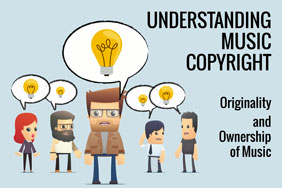
Understanding Music Copyright: Originality and Ownership of Music

Understanding Music Copyright: Originality and Ownership of Music

By David Frazee Estimated reading time: 11 minutes

written by: David Frazee

You’ve just finished writing a new song, and you think your band should play it at your next gig. After you play the song for the other band members, your lead singer comes up with a great a bridge and your bassist suggests some great chords. You make those changes and run through it a few times. Your drummer’s friend, who was just hanging out, suggests that you pick up the tempo. After he leaves, you try it, and it takes the song to the next level.

Who is the author(s) of the final song?

This is one of the first question in any copyright lawsuit, and it is an important question because only an owner (or “author”) is endowed with the initial rights that come with a song, as discussed in my earlier articles.

There are two things that you should know:

  1. what can you copyright, and
  2. who are the authors of the final song

Since I am willing to bet that, when a great song idea comes to you, you do not stop and contact a copyright lawyer before writing it down or playing it for your band, let’s cover these basics before you begin writing your next song. Let’s get started.

To Be Copyrighted, It Needs To Be Original

Before we cover ownership, you need to be able to identify when you have a work that can be copyrighted. For a song or work to be copyrightable, it must be original. Originality has two ingredients:

  1. creativity, and
  2. independence

The “creativity” required is minimal, but it does mean you come up with something more than minor, inconsequential additions to common phrases. Whether it is the melody, harmony, or rhythm, you need something to distinguish your music.

Second, you need “independence.” Independence simply means you cannot copy someone else’s work. It must reflect your own contributions and thoughts.

creativity + independence = originality
originality is needed for copyright
copyright is a sign of ownership

Seems easy enough, right? It’s not always so clear cut; your subconscious can trick you into thinking you did not copy someone else’s work when you really did. This happened to singer and songwriter Michael Bolton. Bolton had grown up listening to artists like the Isley Brothers, who had created and copyrighted a song titled “Love is a Wonderful Thing”. Nearly thirty years later, Bolton unintentionally created a hit song of the same title and with a similar sound. Even though Bolton was convinced that he had not copied the Isley Brothers’ song, the court ruled in favor of the Isley Brothers, saying Bolton’s subconscious had tricked him into thinking he wrote an original song. The unintentional trick was not enough of an excuse, and the jury awarded the Isley Brothers all profits from the song and some of the album profits (for a grand total of over $5 million). Yikes!

To avoid originality problems, try playing the song for someone else to see if they think it sounds similar to anything they’ve heard before.

Why is Ownership/Authorship So Important?

The author is the person who actually created the work, who translated an idea into a fixed, tangible expression. This process of creating and fixing entitles the author to copyright protection.

Because of the rights that come with ownership, it’s a key topic during many copyright lawsuits. Reasons for this include:

  1. Unless you agree to other terms, co-authors are given equal ownership in the resulting work, regardless of how much originality and creativity they actually contributed.
  2. A co-author is permitted to continue recording and performing the song without fear of infringing the copyright. This generally applies even if you leave the band or the band splits up.
  3. One co-author can agree to give other performers (or companies) a non-exclusive license to play and record the song without obtaining the permission of the other authors. However, the only way to give away the exclusive rights of the song to another would be to get permission from all the co-authors.

As you can see, there are huge benefits to being named a co-author, as well as huge benefits to maintaining sole authorship. Unless details are set ahead of time, things can get pretty messy in court.

To avoid these issues, many bands enter into a contract with each other called a partnership agreement. The agreement can address how to split songwriting income and how to decide authorship when only one or few members help write the song. Additionally, they can prevent one co-author from providing a non-exclusive license to another without the other authors’ consent. You should consult with a copyright attorney before signing or entering into any partnership agreement with your band members to protect your rights.

Determining Who Owns the Copyright

Now that you understand what can be copyrighted and why copyright is so important, let’s discuss ownership, namely how to know if you own the song solely or share ownership with someone else. We’ll assume you didn’t have a partnership agreement, and we’ll use an actual case to illustrate this issue.

Sole Ownership

During a recording session for his hit song “Izzo (H.O.V.A.),” Jay-Z was joined by a guest, Demme Ulloa. While she was visiting, Ms. Ulloa spontaneously created and began singing a countermelody to the song. Jay-Z heard the countermelody. Ms. Ulloa left the studio with an agreement that she would get credit if Jay-Z decided to use the countermelody, which he did decide to do.

Jay-Z had created the song. Logically, he would be the sole owner. However, that countermelody throws a wrench in things. Had it not been used, Jay-Z would unquestionably be the author of the song. But it was used; furthermore, their agreement didn’t discuss ownership or authorship… just credit. After Ms. Ulloa discovered that Jay-Z had used her countermelody, she filed a lawsuit against Jay-Z and other defendants, claiming she was a co-author of the song.

So, does Jay-Z now have to share ownership of the song with Ms. Ulloa?

Let’s go back to our criteria for ownership: it must be copyrightable, so it must be original. Like a melody or rhythm in a composition, countermelodies generally can be copyrighted on their own, separate from the song’s other parts. Even though Ms. Ulloa’s countermelody was based on the original underlying melody, the court said it contained enough originality to be copyrightable.

However, having something that is copyrightable did not automatically mean that Ms. Ulloa and Jay-Z were “co-authors” of the song. For Ms. Ulloa to share in ownership, her situation must qualify as one of the exceptions to sole authorship:

  1. the joint work exception, and
  2. the work created for an employer exception

It was over these exceptions that Jay-Z, the other defendants, and Ms. Ulloa argued during the lawsuit. Let’s look a little closer at them.

Joint Ownership

The Copyright Act defines joint work as “a work prepared by two or more authors with the intention that their contributions be merged into inseparable or interdependent parts of a unitary whole.”

For joint ownership to be present, the individuals involved must intend to be co-authors of a song. This is more than simply working together; it’s the intent to be co-authors of a copyrightable work.

In the Jay-Z case, Ms. Ulloa claimed that she was a joint author in “Izzo (H.O.V.A.)” because she added a countermelody. After Ms. Ulloa sang the countermelody for Jay-Z, they discussed the possibility of incorporating it into the work. However, she did not sign a contract or discuss any terms beyond receiving credit as the vocalist (if her countermelody was eventually used). The court decided that Ms. Ulloa’s claim for authorship had no basis because there was no evidence that Jay-Z intended to share the authorship of the track with her. Briefly working together was not enough to show the needed intent.

Interestingly enough, you can be co-authors with someone you have not even met. While it may be easier to conclude a joint work has resulted if the authors have met in person or know each other, it is not a requirement. All that is required is the authors intend their work to be joined with the work of another.

How does joint authorship work with people who haven’t met? Imagine a musician, John, composes some new music; John takes that music to a publisher to find someone else to add lyrics. The publisher buys John’s music and asks Lauren, who John does not know, to compose lyrics to accompany John’s music. Although John and Lauren had never met before, when their work is merged into one song, they become joint authors in the final composition. This is because both understood and intended their work be joined with another person’s work.

Employee-Employer Relationships

US Copyright Law also molds an exception for employees hired to create songs for their employer, called “work made for hire.” Instead of staying with the author, the author’s employer owns the rights to the work. Generally, this occurs because the author signed a contract (containing a clause to that effect) before the song was created.

Here are two examples of “work for hire”:

  1. Let’s say John is hired as a writer and composer of advertisement jingles at ABC, Inc. The copyright for the jingles John creates will likely not be John’s but will belong to ABC, Inc. This meets the work for hire criteria, specifically “work prepared within the scope of employment.” It is John’s job to create these jingles; it is why he was hired.
  2. Now, say ABC, Inc. wants to place the same advertisement in Spanish. They hire Ben on a limited basis to translate the work. Even though Ben altered the lyrics, the copyright to the Spanish version remains with ABC, Inc. This is the second category of the work for hire exception, called “specially commissioned work.”

While different, both derive from the same concept: you can give away your rights to a song before you even write it. So, if you try to claim it as your own, it is stealing your employer’s property.

Now, there are exceptions to the “work for hire” concept. Let’s say that, while employed writing jingles for ABC, Inc., John wrote songs for an album. His employer would not own these songs unless the employee contract John signed gave ABC, Inc. rights to the songs in addition to the jingles.

Now, back to the Jay-Z case. Jay-Z argued that Ms. Ulloa was an employee because she signed a tax form with his company. To Jay-Z and the other defendants, this was enough to make the countermelody company property. However, the court did not agree. Even though Ms. Ulloa was somewhat inexperienced and filled out a tax form, the court found that she independently possessed the skills necessary to produce an original work and had only filled out the tax form to contact the defendants.

Wrapping Up

Now that you have some basic concepts, let’s go back to the scenario that started this article.

As we discussed, the most important question is whether you and your band intended to be co-authors at the time you wrote the song. Chances are the court will find that you intended to be co-authors with your band members, especially if you have co-authored songs in the past.

However, if you and your band have a written agreement that the authors are only the members that contributed copyrightable work to the song, then you, your lead singer, and your bassist at the very least will be co-authors. Remember, unless your agreement says otherwise, each member who contributed to the song will have equal ownership regardless of how much originality and creativity they actually contributed. However, if you and your band previously decided all songs created by band members were the bands collectively, each member will have an equal ownership in the song regardless if they contributed to the song at all.—

But what about your drummer’s friend who suggested you take the songs up tempo? More likely than not, your drummer’s friend is not going to be a co-author because his suggestion is not going to be considered “copyrightable.” Additionally, like Ms. Ulloa in the Jay-Z case, there is no evidence that you or your band intended to create the song with your drummer’s friend.

Disclaimer:The above article is not legal advice; is it not intended to, nor can it, replace professional legal advice in any way. It is only intended to provide a short guide to basic legal terms and practices in the music industry. In your own interest, consult with a copyright attorney before entering into any contractual agreement or taking any action against copyright infringement.


...Keep Reading
Taylor Swift, Spotify, and the Musical Food Chain Myth

Taylor Swift, Spotify, and the Musical Food Chain Myth

By AOXEN Estimated reading time: 9 minutes

by Doria Roberts
© 2014 Doria Roberts/Chatterbox Blues

“The most common way people give up their power is by thinking they don’t have any.” –Alice Walker

I cannot tell you how happy I am that the conversation about Taylor Swift and Spotify is happening. Maybe people will start listening to what independent artists like me and my peers have been saying for years now.

A little background…

For those who don’t know me, I’ve been a indie musician by choice for 22 years. In 1999, I was chosen to perform at Lilith Fair and quit my day job the following Monday. I attracted several major labels, but ultimately, I walked away because I felt the industry was not going to be supportive of me, the business model was almost laughable for a new artist with little leverage and an insidious law called the Work For Hire Copyright Law had been passed that year, which prevented copyright ownership from reverting back to artists and remained with record labels in perpetuity. Like, that means forever. Luckily, Sheryl Crow and Don Henley went to Capitol Hill and had it repealed, but, by then, I was determined not to be become a cog and had committed to my full time life as an artist.

And, you know, I had good run of it…

Fast forward to 2008 when everything was crashing. I don’t think people think of artists being affected in a failing economy, but we were. Gas prices were sky high as were flights so expenses went up and venues started paying less because fewer were able to come out to the shows because they were broke, too. And, for the first time in all my touring history my American dollars lost value going into Canada. It was sobering to say the least.

In the years preceding this, I saw a slow but very deliberate decline in my music sales, which was more than just supplemental income, it was nearly half of my income. So, I stopped touring full time to assess the situation and come up with solutions.

The only solution I found that allowed me to stay true to who I am an artist was to stay put—which brings me to today.

Life As An Artist Now

Like clockwork, once or twice a week since I stopped touring full time in 2008, I get asked when I’m coming back to XYZ. And, like a broken record once or twice a week, I’ve had to say I can’t afford it. I’ve had to explain that not only have physical CD sales been down, but also the digital money I used to get from legal downloads all but disappeared. Instead of getting weekly payments ranging between $200-$750 from my distributor, I started getting an average $11.36, once a month from all streaming services combined. Yes, $11.36/month is what I get from all of them. That is not a sustainable business model for a truly independent artist.

While carefully building and maintaining a social media connection with my fan base and doing mostly one-offs in some of my bigger markets, I decided to do a full regional tour in 2012. And, while I am grateful to the people who came, I had miserable turnouts at most of the shows. In Buffalo, where the temp dropped to 30 degrees that night, I cleared $14 once the door was split with the venue. In Philadelphia, where I started my career, I lost upwards of $1,500-2,000 on one show because only 12 people showed up. It was the night of the Presidential debates, something I couldn’t have known when I booked the show months before. But, I still had to pay the venue, their door person and sound person, pay my band, pay for their hotel room and mine for three nights so we wouldn’t have to stay in NYC, paid for their flights (along with baggage handling fees for my cellist’s cello), my rental car, gas and food for myself and the band (breakfast, lunch and dinner). Same with DC where the venue wouldn’t even allow me to officially charge a door fee and where some people (my fans included) opted not to pay one even as a requested donation.

This is my reality and the reality of the many artists you care about.

I’m sorry if you think so, but music is not free. It costs money to make and it costs money to support via touring. It’s a “life cycle”. This “life cycle” is how I used to get my CDs out and how I used to see my fans two to three times a year in some places. It worked like this: Fans would come to my shows, they and their friends would buy my CDs, and then I made another CD and went on a another tour, and so forth and so on.

Simple.

All the money I made went to bills, touring, promotion and creating new music and so I had to keep my overhead low. No new cars (I had and still have my ’78 Volvo that I bought for $600 in 1996), no new shoes or clothes and I lived in a small 425 sq ft apartment for 12 years. 12 years. That’s how I did it. It’s not a sob story. It’s not a mystery or a marketing ploy. I am a working class artist. There is no rich-uncle-wizard-behind-the-curtain type situation here. This is how it goes when you make tough decisions to be true to your life and your life’s work. I have no regrets.

But, I’m seeing a lot of chatter about Taylor Swift and her supposed “greed”. If you’re saying it, you’re probably saying it because Taylor is already wealthy. But, what about artists who aren’t? If you or your friends are indeed one of those people, I challenge you and them to go to work for a year, bust your butt, do a good job (maybe even a great job) and then accept half of a year’s pay (or less) from your boss. I further challenge you to pay your bills and keep your other financial commitments from that pay all while keeping your enthusiasm for your job—which is kind of essential for you to even do your job.

Go on. I’ll wait…

As indie artists, for all intents and purposes, our fans control our careers, the ebb and flow, trajectory and course. For example, if I hadn’t raised enough via Kickstarter to do my last project, a tribute CD to folk legend Odetta, there wouldn’t have been a new CD to this day. Period. No new CD in eight years even though I was able to release six projects on my own before that and have enough music for about four or five full length CDs right now.

Another example: I haven’t been back on the road since 2012 because I assume my fans don’t want to see me or can’t afford to see me in NYC, Philadelphia, Washington, DC, Buffalo, NY and Charlotte, NC. Because of that, I can’t take a financial chance on Chicago, Seattle, Portland, Boston, San Francisco, Los Angeles, Austin and the like. And, just forget Canada, France, Sweden, Japan or Australia altogether. I’ve remedied this by doing online shows on a platform called StageIt and this has allowed fans as far away as Vancouver, Taiwan, Germany and Boise, ID to see me play. It works, but it isn’t ideal.

The point is, we haven’t just “given up”. It’s not that we don’t “want to” do it anymore. It is, painfully and honestly, simple math that mostly prevents me and others like me from doing what we do.

Think About This For A Minute

Before the comments section gets flooded with snarky retorts, like “get a job”, I will say this:

First, I have a job, one that I’m fairly good at and one that I’ve had for 22 years (or over half my life).

And, second, what if Bob Marley or Bob Dylan, Kurt Cobain or Joni Mitchell or Mozart, Frank Zappa, Joan Jett, Diana Ross, Prince, or Aretha Franklin had actually listened when someone (undoubtedly and repeatedly) said to them, “get a job”?

What would your life look like?

What happens to the first dance at your wedding to that special song, the one that made you realize you loved her? Or, the song you hum to your baby because it’s the only one that makes him less fussy? What would you be distracted by in an elevator ride with your creepy co-worker who wears the same shirt every day? Or, what would you focus on when a dentist is drilling a hole the size of the Grand Canyon in your head? And, how, pray tell, would you know when Jaws or Jason or Darth Vader is coming so you can yell your futile warnings at the screen?

Okay, granted, those last few examples sound frivolous but they’re serious considerations to make when you consider how music plays an integral and inseparable role in your life, from the mundane to the momentous. How it can be both ubiquitous and precious. That’s something to protect. That’s something to respect.

How To Make The Future Better

I want to tell you something: as a consumer and a fan, you are at the top of this food chain, not the bottom. You are not subject to the whims of popular culture; you are the arbiter of it. If you want to see less “fluff” in the music industry, if you want to see your artists remain authentic, creative and prolific beings and, if you want them to come back to your hometowns:

  1. Start buying our music again. Digital, hard copy, doesn’t matter, just pay for it. If you can pay $4 for the coffee you’re only going to drink once or $15 for a blockbuster movie you’ll see once, you can pay $9.99 for something meaningful that you’ll have forever.
  2. Stop using streaming services that only pay us $.0006 per listen if you don’t already own our music either via a legal download or a hard copy. Educate yourself. If you think the profits that oil companies make are obscene, I urge you to do some digging about what some of these streaming companies are really about.
  3. And, this is important: Set your DVRs on your favorite show nights and go to our concerts. If I had a dime for every time a person told me they weren’t able to make my show because it was the finals of DWTS/American Idol/The Voice, I wouldn’t be writing this post. I’d be sitting in a bungalow in Costa Rica sipping something fruity and delicious.

Simple solutions sometimes require difficult choices.

Oh, and this goes for independent movies, books, indie/feminist bookstores, small venues, and small businesses, too.

Just know this: You have the power to change the cultural landscape around you. Use that power wisely.


...Keep Reading

Different Types of Mastering

By Damon Mapp Estimated reading time: 3 minutes

written by Damon Mapp

You’ve been gearing up for this new release for months. On top of the time it took to write and refine the songs, you and your band have spent countless hours rehearsing, testing the songs at shows, and playing every chance you’ve had to save up for the production of this project. Now that you’ve wrapped up at the recording studio, you can finally relax. It’s done… right?

Well, not quite. It’s time to dive into the last phase of finishing your album: mastering! This phase includes a final polish (adjusting volume, EQ, leveling, compression, spacing), adding the CD Text, submitting the content to Gracenote, and more.

If you read my last article, you should know that there are differences between recording, mixing, and mastering. But, did you know there are different types of mastering? Maybe you did. If not, though, don’t worry. Today, I’m going to explain two different types of mastering: stereo mastering and stem mastering.

Stereo Mastering

Stereo mastering is the more common of these two types of mastering. It’s the final polish before mass production and distribution.

For stereo mastering, you take your final mixdown (or stereo track) that the mix engineer has produced, apply balance, EQ, and compression (if necessary), and tweak any other tonal enhancements or deficiencies that the track may have before it reaches its final place: on store shelves, on your merch table, or online for digital distribution. This mastered track is normally louder, punchier, and more articulate than the mixdown.

Stem Mastering

Compared to stereo mastering, stem mastering takes things a little further and offers more options to a mastering engineer. That’s because a stereo master starts with just two tracks (the left and right of the mixdown), but a stem master consists of the separated elements of a track.

I know, I know; some of you are saying, “Now I’m really confused. What do you mean separated? I thought we took care of all that in the mix process!”

Well, I’m glad you asked! For this type of mastering, things happen a little differently, starting in the mixing stage. Each stereo element—drums, bass, synths, lead vocals, background vocals, and sometimes other instruments—is recorded or bounced out as a group. For example, you can bus all of your drums—you know, the kick, snare hats, etc—to one group or bus during the mixdown process. After the drum bus gets EQ’d and compressed, it is re-recoded to a final mixdown track, which is known as a stem. Repeat this process for all of the other elements in the mix, and you’ll have stems for vocals, synths, bass, and so on. These stems are processed and recorded by the mix engineer and then given to the mastering engineer.

When working with stems, the mastering engineer has access to levels on the stems the mix engineer has created. This means that instead of trying to balance levels within one stereo track, the mastering engineer now has access to the separate stems, which can be processed independently of each other. In stereo mastering, if you made an EQ change in the bass region, it would affect the entire mixdown. But if you make that same change on just the drums stem, it would only affect the drum stem, leave the bass on the rest of the song as-is.

As you can imagine, this gives the mastering engineer incredible flexibility in maximizing the sonic potential of each separate stem.

So which one is better?

That is a decision for you, your band, and/or your mix engineer to make. My suggestion is to try both and see which one sounds better to you. They both have their technical advantages and disadvantages, but I will tell you what I always tell artists and musicians: use your ears!


...Keep Reading

Website for Musicians: A Vital Tool

By NationWide Source Estimated reading time: 10 minutes

There’s something I’ve noticed lately, and it’s so frustrating that I can’t ignore it anymore. I have to say something, so I’m going to say it here.

Websites should have a purpose.

I know it seems obvious, but—judging from the abundance of ineffective, uninformative websites out there—people haven’t gotten that memo.

What I’m Talking About

Let’s say you go to a retailer’s website, and the website simply has their logo floating above a pretty background (or not) with a tagline below. In addition, they have several links that direct their customers to visit other sites to learn more.

The Case for Effective Websites: Example A

And… that’s it. No “About the Company”, no photographs, and no products to browse. No hours listed, no ability to search for a location near you, and no contact information. It’s just a landing page with almost no information on it, less a logo and tagline—a halfhearted confirmation of the retailer’s mere existence. How strange, and how frustrating, would that be for you, a potential customer? How crazy would a company have to be to present themselves like this? Could they really be that clueless?

If the above example looks extreme or comical, trust me, I know. But, the thing is, I see websites like this every day… from musicians. This annoying and nonsensical phenomenon is rampant in the independent musician market. Musicians are guilty of having ineffective and uninformative websites.

I can’t tell you how many times I’ve looked up a band’s website only to see their logo, a piece of album art, and links to social media, third-party retailers, and everywhere else they can think of. No real content. No biography, no tour schedule, no discography, no samples to listen to or videos to watch, no mailing list sign-up, no merch for sale, and no chances for income.

As a potential fan, it’s frustrating and annoying. For the band, it’s a bunch of missed opportunities. It’s time to change things.

The Purpose of Your Website

As I said at the beginning, websites should have a purpose. Some websites have several purposes. Since you’re a musician, your website should tell visitors about you, your career, and your music. The site should be designed to capture the fans’ interest. You want to create a desire in the fan to connect with you and purchase your music.

Signature Elements of an Effective Website

Samples of Your Work

We’d like to hear your music. After all, it’s what you do, or aspire to do, for a living; it’s why we’re here. So, share your music with us!

How you go about doing this is really up to you. I would recommend showcasing your best music videos, offering full-length samples of your music, and always giving the fan an opportunity to purchase what they like. Which leads us to the next point…

Product For Sale

Your website needs a product page that offers your music and your other merchandise for sale. Don’t send fans from your website to iTunes, Pandora, Spotify, YouTube, Soundcloud, or other similar websites to purchase or hear your music! If they choose to purchase your music on iTunes, fine, just don’t send them there when you could have made the sale yourself.

There are a few reasons this makes sense:

1. You keep as much of the profits of your hard-earned work as possible. You might have to give a small cut to the credit card processor or pay a little extra per month on your website, but you’re not giving up 30% or more  of each sale! That difference adds up quickly, and the regained profits can be used as needed on future projects, new gear, touring costs, or as actual income.

2. Your store is just that: your store. It specializes in your product, which means your customers aren’t seeing ads for other musicians and bands or links to other artists’ merchandise. This means there’s almost no chance that they’ll buy less of your product because they’re now also interested in this other person’s product but don’t want to spend more. Why? Because there is no other person competing for their attention!

3. Operating your own store means you get to learn who your customers are. To get the product, customers will have to give you some of their information: name, email address, phone, and maybe mailing address. Compare this to third party retailers, who might tell you that someone with the zip code 02134 bought your song. By running your own store, you can see where interest in your music is growing, and you know who to contact and how when you decide to book a show there!

Running your own store means figuring a few things out: you need to decide if you want to offer only digital downloads, physical merch, or both. You’ll also need to find merchandise manufacturers (if you don’t already have them), keep track of inventory, fulfill orders in a timely manner, and find an affordable option for selling your merch.

The Chance to Support You Financially

Funding your music career is a complicated task. However, there are options available to you today, like crowdfunding, that weren’t available ten or twenty years ago.

In terms of raising funds, the question you should ask yourself is the same as it is for selling your product: do you want to have control over this crucial element of your career, or do you want to hand it off to a third party site that will market other musicians to your fans, take a cut of your profits, and potentially withhold your fans’ contact information from you?

Personally, I believe the best funding methods are tied to your productivity on an ongoing basis instead of a one-time fundraising goal. In this scenario, fans become patrons of your art by contributing a small amount every time you create a significant piece of content. Not only does this mean your fans get access to your new content and feel invested in your career, but this arrangement motivates you to continue creating your art and, with enough support, can provide a nice steady stream of income. If 500 of your fans contribute just $1 for every piece you create, and you create 2 pieces a month, that’s an extra $1000 a month just for doing your job as a musician and creating new material. Scale that up in the number of contributors, the size of their contributions, or both, and you can see how this can make a big impact.

If you’re interested in setting up this system on your own website, contact our staff for more information.

A Thorough Band Biography

The bio should give press, new industry contacts, and potential fans a good idea of who you are, where you’re from, what you and your music are like, and where you’re headed.

Now, keep balance in mind. You aren’t writing your autobiography or band memoirs, so keep it concise and on topic. Press and industry contacts can always ask for more details if they want more details. However, that doesn’t give you an excuse to skip a bio altogether or cut it down to the bare bones. While you don’t need to start with each band member at birth, you might want to name all the band members, talk about how your band formed, mention where you’re based, discuss how you developed your unique style, highlight notable concerts and tours, and include past releases.

I’d recommend sharing a collection of professional, high-quality band photos and snippets of past press praises here, too. Both compliment your biography nicely.

Your Schedule and Contact Information

First, list your schedule of shows. Tell visitors where you’ll be (venue, city, and state) and when (date and time) so they can come see you play live! Make it even easier for them to find you by linking* to the venue’s website or location on a map.

In addition to listing your schedule, you should have a contact form where fans and visitors can send you questions (such as “Do you think you’ll have a show in Austin anytime soon?” or “Do you know when this product will be back in stock?”).

Recognize that your visitors and fans aren’t going to stop by your website every day. To save them some trouble of having to dig up the dirt on you, it’s a fabulous idea to let visitors and fans sign up for a mailing list; this lets you send them updates directly. (Note that a mailing list is only good if it’s put to use; otherwise, it’s just one step above a phone book.)

Along the lines of a mailing list is social media. It’s a way to get your info and updates in front of your fans without them needing to constantly visit your website. So, by all means, list your social media accounts and encourage fans to follow you there to stay up to date, but don’t treat those accounts as more important than your official website or mailing list. Think of them as mini-websites intended to build interest and funnel visitors back to your site. You own your website, and you own your mailing list. You have no control over social media; it could change or disappear at any point, and there’s nothing you can do about that.

Easiness

Your website should be easy to find. This means no crazy spellings of your URL; it should match your or your band’s name, if possible. It might also mean brushing up on SEO and keywords. This means links to your website should be easily available in all emails and social media profiles. You might even consider advertising, but we can get into all of that in a future post.

Your website should be easy to browse, with clear navigation that is both easy to locate and effectively descriptive.

Your website should be easy to read; this means keeping graphics, colors, fonts, and sizes in mind. It means leaving some empty space so that your content can breathe and doesn’t overwhelm visitors. It also means keeping mobile and tablet views in mind, since web browsing on desktop and laptop computers continues to lose ground to more-mobile options.

Need Some Help?

Most everyone needs help from time to time. Designing or redesigning a website can be a difficult task if you don’t know how to proceed. Understanding and making the right choices is hard. Some of the choices you will be faced with might seem easy, but be careful; it is easy to step in the wrong direction. Our staff can help; just leave us a comment or email us. We’d be glad to offer additional insight or answer specific questions.

Now, if you’ll excuse me… I think I’ve got a little website updating to do.


* Note: All outbound links should be set to open in new windows. You want to make things easy, but you don’t want people to accidentally leave your site and never find their way back. It’s often an easy change to make, but doing so varies from one website-building platform to the next.


...Keep Reading

Recording, Mixing, and Mastering—What’s Really Going On?

Recording, Mixing, and Mastering—What’s Really Going On?

By Damon Mapp Estimated reading time: 4 minutes

written by Damon Mapp

As an audio engineer, I constantly meet people, including clients, who have no idea what the differences are between recording, mixing, and mastering. They might have heard the terms before, but they usually can’t correctly describe what each term means. For those not in the music industry, that’s both understandable and acceptable. However, for those of you in the music business, whether you’re an artist or a manager or an engineer, you need to know what those terms mean.

So, let’s get started.

Recording and Tracking

First, here are some basic definitions for you: recording is the process of capturing sounds, and a recording session is one instance where this happens (as opposed to a live performance).

A standard recording session involves multiple musicians, instruments, and vocalists. So, for the sake of this illustration, we’ll say your band has a drummer, guitarist, bass player, keyboard player, and two vocalists. Now, you could record everything on one microphone… but the drums might overpower the vocals, and the keys might blend into the bass line in certain sections. Recording everything together is like playing entirely unplugged; it can work, but most bands perform miked and plugged into sound systems to provide their audience with a good and balanced audio experience. That same option exists with recording. Instead of recording everything through one microphone, you can record each element separately to its own track in the workstation or mixer. This approach, which is called tracking, lets you (or, more likely, your audio engineer) go in later to perfect the balance of sounds.

Note that I said each element, not each instrument or vocal. That’s because some instruments consist of multiple elements, each of which will need its own mic. For example, a standard drum kit might have a mic for the kick, snare, floor toms, rack toms, cymbals, and high hats. This allows you to create a much more precise sound in the next phase: mixing.

Mixing

Mixing is taking the individual elements that were recorded as separate tracks in the workstation or on tape and adjusting their levels and tones to create the right balance. Remember when I mentioned that, without separate mics (and their resulting tracks), the drums might overpower the vocals? That’s a balance issue, and mixing allows you to prevent or correct that.

With mixing, you can ensure that certain tracks aren’t overbearing or piercing or, at the other end of the spectrum, too soft and buried by the other elements. You also apply EQ, compression, editing, and effects if they are needed or desired.

Once the mixing is complete for a track, the engineer saves a “mixdown” of the song, which is turned into an album in the next stage: mastering.

Mastering

Like the mixing process, the mastering process involves finding balance. However, instead of balancing elements within a song, you’re balancing the different songs into a cohesive album. This involves:

  • Balancing the level and tonal settings (EQ) of the songs
  • Controlling the dynamic range (how loud and quiet each section is) for the right musical blend of variety and power
  • Editing the “tops and tails”—the beginning and ending of each song—and the gaps to create a compelling sequence
  • Fixing any outstanding problems from the mix, if possible
  • Protecting your content by including PQ information, UPC/EAN codes, ISRCs, and CD Text
  • Creating finished files that are ready for manufacturing and/or distribution

Mastering is an important part of the process that many artists overlook or undervalue. It’s more than just cranking up the volume, which is what many artists request. It requires a big picture approach and an eye for detail. Without both efforts, the finished album isn’t… well, it isn’t finished.

With today’s technology, it is becoming increasingly easy to record and mix in your bedroom or home studio. While this can be a viable option (which I will elaborate on in a future article), I honestly recommend hiring a professional audio engineer for your recording project. In addition to having the gear and software, a good engineer and studio will have proper room acoustics, training, experience, and an ear for what they do. Those valuable tools aren’t acquired easily, nor are they sold on store shelves.


...Keep Reading

Taking Note: Taylor Swift and Spotify

Taking Note: Taylor Swift and Spotify

By NationWide Source Estimated reading time: 5 minutes

We like to stay up-to-date on music industry news. It would be foolish not to. We get daily reports from a number of websites and news conglomerates, and there are certain terms that we track. This can mean that when something big happens, we hear a lot about it in a very short window of time.

Yesterday, we heard a lot.

What Happened?

Simply put, an artist chose to remove her back catalog from a streaming service.

It probably happens quite often, although not nearly as often as artists announce that their music is now available on streaming services. But, judging by the flood of news bulletins in our inbox and trending topics on social media and legit news sources, yesterday’s announcement was a little different and a big, BIG deal. So, what is the difference?

Well, the artist in question is Taylor Swift.  And the streaming service? Spotify.

That’s right. Spotify has neither Taylor’s newest album, which debuted last week and was never offered on the streaming service, nor any of her previous albums available for its users.

Whether or not you personally are a fan of her music, it’s hard to deny the enormous success and even larger fan base that Taylor has. If those fans can’t get Taylor’s music on Spotify, they might start looking somewhere else for Taylor’s music… which could be cause for alarm for Spotify and could explain their efforts to bring her back.

There’s abundant speculation about why Taylor Swift has removed her back catalog, including an alleged effort to boost her label’s sales figures before the label makes itself available for purchase. We don’t want to speak for the songstress, though, so we’ll allow her words from a recent article in the Wall Street Journal to speak on her behalf:

“Piracy, file sharing and streaming have shrunk the numbers of paid album sales drastically… Music is art, and art is important and rare. Important, rare things are valuable. Valuable things should be paid for. It’s my opinion that music should not be free, and my prediction is that individual artists and their labels will someday decide what an album’s price point is. I hope they don’t underestimate themselves or undervalue their art.”

Taylor, we couldn’t agree more.

Why You Should Care

We’ve said before how we feel about streaming music, but we’ll say it again. It’s great for fans, since they get often customizable and sometimes unlimited access to music for free or almost free. Based on the fact that Spotify and Pandora have struggled to turn a profit, and that Pandora attempted to have Congress enforce lower payments to artists, we’d be reasonably safe to argue that streaming services are an unprofitable, unsustainable business model. Yet, these services are still around. How are they surviving? Well, someone is picking up the financial shortfall. And that someone is every musician who gives his or her music away on these services.

Yes, those are the same musicians who spend hours writing the music and lyrics, weeks rehearsing and perfecting the songs, time and money recording, mixing, and mastering the album, and then pay more to market and promote their newest releases. Musicians—whose gifts and talent result in the product (music) that streaming services need—are paying to get their music on the service, only to wait on hundreds of thousands of streams (if not more) to recover their investment. While not free, the payments to musicians are so low that the music might as well be free. Additionally, since streaming also impacts their ability to sell music to fans, musicians struggle to recover financially.

Why do musicians give away their product for almost nothing? We hear a lot of reasons: In hopes of exposure. Because everyone else is. Because it’s what is expected by their fans. Because their labels make them. Because they don’t think there’s another way.

But there is.

What You Can Do

We think it’s insane that musicians let others profit off of their hard work while they struggle to make ends meet and debate continuing what they were born to do. It doesn’t have to be that way.

Like Taylor Swift said, we think that, “Music is art, and art is important and rare [and] valuable.” With that in mind, here are some changes you can make.

  1. First and foremost: stop sending sales and profits to everyone but yourself! Sell your product on your own website, or on a platform that doesn’t rip you off and does share your own customers’ information with you.
  2. Stop giving it away! If you want new listeners to explore your music before they buy (how kind of you!), offer previews of songs (meaning, not the whole song) or music videos on your website. Or, exchange one valuable item for another: one of your songs for your fan’s contact information. If you feel that streaming is a necessary part of your music marketing plan, then try posting just a single song or a small sampling of your work. Hopefully, this limited sampling will whet the appetite of listeners, who will then come to you to purchase your music.
  3. Believe that your music, and the time and energy you’ve put into it, is valuable. You can’t ask your fans to pay for something if you don’t see value in it. They aren’t just paying for a file, whether digital or on a piece of plastic. They’re paying for your creativity, your time, and your energy. If that means nothing to you, it will certainly mean nothing to them.

While Taylor’s motives for pulling her music from Spotify have yet to be seen (if they ever come to light), we can only hope that other artists will see some logic in her actions and decide to take their career and their livelihoods back into their own hands.

The question now is what will you do?


...Keep Reading

Thinking Outside Your Geographic Region | Luke Wade's Webcast

Thinking Outside Your Geographic Region

By NationWide Source Estimated reading time: 1 minute

Last week, we were thrilled to host a webcast concert for one of our local clients, Luke Wade. We brought in a team to run the video and audio for him, opened our doors, and enjoyed the evening with Luke’s friends, family, and fellow musicians… as well as his fans watching live from around the world.

It was a great way for Luke to connect to existing and new fans who aren’t quite local enough to see him play in person. The Q&A session, eye contact with the main camera, and live audience contributed to the sense of a cozy, intimate performance. Which is good, because that’s exactly what it was.

Luke’s doing another webcast this coming Monday, and we know he’d be thrilled if you tuned in!

Videography by Cameron Smith. Audio Engineering by Damon Mapp.


...Keep Reading

Taking Note: Communicating with Fans

How To Find and Keep Fans: Taking Note of Shakey Graves

By NationWide Source Estimated reading time: 8 minutes

­Often, communicating with fans is like walking a tightrope. If your balance tips ever so slightly to one side or the other—too frequent, too seldom, too polished, too sloppy—you lose them. They get annoyed, or forget you, or feel like they’re being spammed with smarmy marketing, or just don’t take you seriously. Finding that happy middle ground is a struggle.

So, when I saw an artist put out an amazing letter to his fans, I sat up and paid attention. Then, I decided to share it with you.

About the Artist

We’ll take a minute to introduce you to Alejandro Rose-Garcia, aka Shakey Graves. Understanding who he is as an artist makes it easier to understand where he’s coming from in his fan communication.

Shakey’s music is a fusion of folk, blues, and rock, at once familiar and distinct. His lyrics—packed with emotion and evocative imagery, and weaving fantastical stories—capture basic elements of humanity: love, lust, hope, despair, bitterness, folly, rage, regret. His voice is haunting and soft one moment, then rich and impassioned, then gravelly and road-weary.

The same shifts in his voice are reflected in his songs, which slip from one tempo and dynamic to another. He changes pace and volume, dropping off just when listeners think the song is about to peak, then building it all up again. What a way to keep listeners’ attention!

Most musicians sing or play an instrument, or do a little of both. But this guy? He takes it to a whole new level. Often playing as a one-man band—handling the guitar and vocals and a (likely homemade) kick drum/tambourine combo, conveniently packaged in an old-fashioned hard case suitcase—Shakey brings his music to life. He embodies it, far more than any other musician I’ve ever watched. As he carries out these four parts of his songs, his body sways, his hands slide, his fingers press, his head nods, his legs dance, and his feet tap. There’s not a single part of him that isn’t contributing to the performance. It’s mesmerizing to watch.

To recap: he’s young and talented, he’s pretty damn unique, he knows when to drive it home hard and when to gently caress with his music, and he can handle four parts at once. Impressive.

In July of this year (late July, appropriately), Shakey sent an email to his fans. Calling it a newsletter or press release doesn’t do it justice. “Love letter” might paint a better picture. EDIT: The letter is no longer present on his site, be we discuss the importance of it below.

Know Your Audience

There are two ways that Shakey does this.

First, the letter is intended for an audience already familiar with Shakey. He wasn’t trying to reach people who hadn’t heard of him, he wasn’t trying to impress the general public, and he wasn’t trying to make a pitch to a team of venture capitalists about the profit margins and sustainability of his career. He was simply reaching out to people who had supported him previously.

These are people who had attended his shows, people who had bought his music, people who likely listened to his songs until they knew every dip, crescendo, tambourine crash, guitar lick, and hushed lyric. Some are intimately familiar with his work; some are likely just casual listeners. But none are strangers, and all are supporters.

He addresses that audience with an appropriate degree of familiarity. By no means is it a formal letter or a lifeless sales pitch. Like a letter you’d get from an old friend (if people still sent letters, that is), it exudes personality, a sense of shared history, and camaraderie. Not only is his tone casual and friendly, but he directly acknowledges the role that the reader has played in supporting him.

Second, he actually knows his audience. He knows their names and email addresses, knows that they’ve purchased his music before, knows that they are likely more interested in updates from him than some random person on the street. They aren’t random likes or followers on some social media network (although many probably do like or follow him); they are actual contacts. At some point (likely the point of sale) he gained each fan’s contact information. That is extremely valuable data, and requesting it was an incredibly wise move for him to make. Putting that data to use (by sending this letter) was an even wiser move.

Tell Your Story

Shakey’s songs tell stories. His lyrics paint pictures, and there’s a natural ebb and flow that his lyrics, dynamics, and tempo build. Those same characteristics are present in the first half of his letter.

The beginning of his letter focuses on expressing gratitude and fortifying the previous connection that the reader had with Shakey’s music. He thanks the reader, reminds them of their previous help, and then says exactly why he’s thankful for their support: “[it] has allowed me to survive,” “[it] has been essential in my understanding of what is most important as I navigate this terrible and glorious industry,” “[it is] enabling artists like me to help lead that charge.”

The next paragraph tells readers what Shakey has been up to. He launches into his story with words suggestive of bar stool retellings of epic legends: “Since the days of recording Roll the Bones in various living rooms on questionable equipment…” It’s a fanciful way of saying “I know my first album wasn’t necessarily recorded or produced as well as it could have been,” and it segues nicely into his next thought: “I turned my Austin home into a studio.” So, that’s what he’s done with the money from supporters! Good! Not that questionable living room recordings don’t have a charm of their own, but converting your home into a proper studio shows a good amount of dedication to your craft. That implied dedication is confirmed by the final thought of the paragraph: he has new material.

Take Care of Business—Without Being a Gold-digger

This letter isn’t just to thank supporters and wax poetic about their shared history. (Although, personally, I don’t have a problem receiving those letters from him.) Nope. Shakey has a purpose for writing, and he is sure to include it.

Shifting to the present tense (and out of storytelling mode), Shakey announces that he has a new album in the works. He discusses the album’s anticipated release date, its merits (full platform, bigger sound, more collaboration), where it can be ordered (with a link), and why it should be pre-ordered (there’s a digital download as an incentive). He also lists new tour dates (again, with a link), hoping that fans interested enough in his music would be willing to come see him perform.

It’s a lot of information to present to fans in two short paragraphs, but the way the words pour out and rush each other along suggests that the writer was brimming with excitement over finally being able to share this huge news with others. Like someone who’s ridden a new rollercoaster and gushes to his friends about how awesome it was and how much fun they’ll have when they ride it together, he’s thrilled about this and wants to share that feeling with readers. That excitement keeps this announcement from reading like a smarmy, greed-driven, lifeless, and boring sales pitch.

Be Yourself

If you’ve seen him perform, watched video of his concerts, or read his updates on his website or social media profiles, it’s hard to get the feeling that Shakey’s an elitist musician. He seems pretty casual, down to earth, and genuine, full of admiration for fellow musicians and with a healthy mix of humility and confidence in his craft. His letter reads the same way.

There’s a good dose of Texas slang: “Howdy, y’all”. To keep things casual, he uses informal, even improper, language: “I really really really couldn’t have done this without your support.” By sharing his personal feelings, the letter has a sense of intimacy and sincerity: “from the bottom of my heart”, “allowed me to survive”, “I am thrilled”, “I hope you are as excited as I am”, “You keep me flexible, motivated, and sane (ish)”, “for that I am forever happily in your debt.” There’s a bit of self-deprecating humor in his jabs at his previous recording process and, at the end of the letter, his sanity. However, the acknowledgement of changes in the industry and his efforts to “lead that charge” erase any doubt of him being another industry lemming; there’s fire and passion in his blood, and a good head on his shoulders.

Argue with the style or errors all you want. The letter comes across with life in it… specifically, the life of this Shakey Graves persona. That’s hard to do, yet so important.

Please don’t mistake my admiration of his style and music for idolization. I know Shakey isn’t perfect. For example, although I’ve been a fan since the beginning of the year, that July letter was the first contact he’s made since my initial purchase. That’s not ideal. (Although since that letter, I’ve received another, so he’s improving in that aspect!) Nor do I expect his music to be everyone’s cup of tea.

But this letter? Flaws and all, it’s a shining example of striking that balance between commercial and genuine, formal and fun, sincere and stylized. For those reasons, I thought it worth sharing.


P.S. – Shakey, if you happen to read this, our door is open. Fort Worth isn’t too far away from Austin. We’d love to have you stop by!


...Keep Reading
5 Foolproof Ways to Make Music Industry Contacts

How To Network: Five Foolproof Ways To Make Music Industry Contacts

By Gregory Douglass Estimated reading time: 3 minutes

written by: Gregory Douglass

Whether you’re an emerging artist or a seasoned professional, it can feel daunting for musicians at any level to make music industry contacts that are worthwhile. It’s hard enough to know where to begin, let alone make any worthwhile connections. Trust me, I know! So how does one tackle this crazy beast we call music industry networking? Here are 5 Foolproof Ways To Make Music Industry Contacts that will totally blow your mind.

1. Figure out who you truly want to connect with

If you’re like most musicians, you’re networking efforts currently consist of either nothing at all or constantly trying to conquer the world. Neither approach is effective, and both lead to the same dead-end results… so start focusing in on a select few. Ask yourself the following questions:

  • Whom am I dying to work with?
  • Who do I think will really “get” me and my music?
  • Who’s already in my corner?

It doesn’t matter how “connected” a person already is or how “connected” you think they are. So long as every answer to these questions remains in alignment with your goals, dreams, and desires, you can’t go wrong. Sometimes, all it takes is one right connection that changes everything, and then the rest takes care of itself!

2. Reach out genuinely

In any initial correspondence, you want to make a good first impression. First impressions are everything. If you connect with people genuinely, you will never come across as being opportunistic, and that’s very important. After all, people prefer to work with others who they like and trust.

Conferences are great places to network, and after parties are where the real connections are made (a little liquid courage goes a long way)! But any action you take, and circumstance you find yourself in, is an opportunity waiting to foster if you’re open to it.

3. Offer to help

So many artists have only their best interests in mind when they are trying to make new connections. Now imagine how much further you can get by offering to help in ways that might be beneficial to each person you are trying to connect with instead of just begging them to help you? When you approach anyone with “tables turned” in mind, it’s much easier to understand how a person might be more open to correspondence than not. If you are able to contribute value to someone else, they will be far more likely to help you in return.

4. Follow up regularly

You’ve already planted the seed with your offer to help. Now stay on their radar—respectfully, but consistently! Give each connection time to foster. In fact, plan any connection you intentionally pursue as far in advance as you can without any expectation of immediate gratification. There is a time for everything, and even the most powerful connections can take their sweet time before they are ripe and ready to harvest.

5. Don’t burn bridges

I repeat: don’t ever burn bridges with anyone. You never know who really holds the power in ways that could catapult your career! Chances are, a grand opportunity will present itself from someone you least expect when you least expect it. If you let every connection foster through genuine and consistent correspondence with those you care about the most, you will be amazed at what will manifest in your career!

I hope that these tips at least offer a much-needed shift in perspective for the imminent success of your music career. And remember this: while big opportunities may be beyond your control, the lasting impression you leave is always within your means.

You’re a rock star. Never change.

Here’s to your creative genius!

For the video version of this blog, head on over to Gregory’s website, The Creative Advisor.


...Keep Reading
Understanding Music Copyright Downloadable Guide

Understanding Music Copyright—FREE Downloadable Guide

By David Frazee Estimated reading time: 1 minute

written by: David Frazee

Over the past couple weeks, Source has shared three of my articles on music copyright. I know the articles were long, and I know there was a lot of detail in there. I also know how important it is to make sure your rights—and the rights of your fellow songwriters—are protected.

So, to help, I put together this downloadable cheat sheet for copyright and cover songs:

CLICK the above image to open, download, or print!

Note that, should copyright laws change, this chart may no longer be correct. Additionally, if you have questions regarding the legal intricacies of your specific situation, you should contact an entertainment attorney near you.

I hope that this chart and the previous articles give you a good starting point to know your rights and the rights of your fellow songwriters!


...Keep Reading