Tools for Musicians

Essential Podcasts for Musicians

Essential Podcasts for Musicians

By NationWide Source Estimated reading time: 2 minutes

As a musician, you probably spend a large part of your time listening to music: in rehearsal, at your gigs, attending other concerts, relaxing, looking for inspiration, and so on. At some point, though, you might need a little break. A great alternative is to download some podcasts. Not only do these provide a break from music, but they might help you grow as a musician. Here are a few to check out:

Music Biz Weekly

Hosts Micheal Brandvold and Brian Thompson have a good bit of industry experience. Micheal is a freelance music industry consultant who has worked with KISS, Motley Crüe, Britney Spears, Rod Stewart, Ozzy Osbourne, Madonna, and many more. Brian is a managing partner for Thorny Bleeder Records and formerly was the corporate head of music buying and marketing for a national music retail chain. The two put out this weekly podcast covering the latest news in the music business, music marketing events, and music marketing techniques.

Upward Spiral

This podcast is mostly about what is happening in the music industry, so you won’t hear as much about marketing. It will give you a good sense of rising trends or upcoming changes, which should help you stay ahead of the curve.

Music Business Radio

Music Business Radio offers a lot of information straight from the mouths of some of the biggest names in the industry. They certainly know what is going on, and the best way to learn in this industry is to talk to people that have experience in it. Like the other aspects of this businesses, experience trumps book smarts.

Music Gear Junkies

If you aren’t a top level professional, this is a great podcast. The show is geared towards the “Joe Songwriter/Musician” learning how to record their own songs on a budget.

NPR’s All Songs Considered

Hosted by Bob Boilen, this show plays music from emerging bands and musical icons, as well as interview musicians, DJs, songwriters, and so on. Concepts and the general state of music are considered and discussed in true NPR fashion.

You don’t have to limit yourself to music industry podcasts, either. General marketing podcasts may be really helpful and translate well to the music industry. Find what you like and get learning!

When you need a break from your music, what do you listen to? Are there other podcasts you could recommend?


Leave a comment
...Keep Reading
Focus Your Time: Performing vs. Recording

Performing vs Recording: A Musician’s Focus

By NationWide Source Estimated reading time: 3 minutes

Should you start recording or keep performing? This is an inevitable dilemma for any musician who wants to promote their music, but it shouldn’t be a hard one to figure out.

Thanks to the plummeting cost of recording technology, it’s easier and cheaper than ever to record and produce a demo of your music. The rise of social media platforms and online content has pressured many artists into thinking they need music available now. Before you book a studio session or rush off to craigslist to find discount microphones and a bootleg copy of ProTools, consider the following:

Why do you want to record your music?

Are you sending press kits to venues, trying to book shows? Are you sending demos to record companies? Have your fans been begging for recordings of their favorite songs after you rock a show? If you answered yes to any or all of the above, it might be time to think about recording.

Did you come up with your band name last week and finally finish writing your second song today? Don’t even think about recording—yet. It’s just not time. Your sound will inevitably change and, hopefully, improve as you continue honing your craft. Focus on developing and polishing your sound. Keep rehearsing, and take every opportunity to play in front of real people. Build your music portfolio and your fan base. When you have a cohesive, well-rehearsed set that you have played for cheering crowds, you can consider recording.

Can you make the time for recording?

Recording a song well (by yourself or in a professional studio) can take days to weeks depending on the circumstances. It’s a serious time commitment and requires patience and skill to produce something desirable. Can you take time off from work, rehearsal, gigs, and your personal life to get this done?

Who will do the work?

Whether you visit a studio or record your own music, recording can be a frustrating and creativity-killing process, especially if you’re inexperienced. Using a professional studio can reduce some of the stress, but it can also be a pricey investment. Are you willing to take on this task? If not, have you found a studio you can work with?

Keep quality in mind.

While it is important to give fans access to recorded music, do not record your songs on a whim under less-than-ideal circumstances just so you have something to put on your website, MySpace, or BandCamp page. Remember, a sloppy recording can hurt you just as much as a well-recorded demo can help you. If you can’t do it right, it’s probably better to wait until you can.

If, after considering these points, you’re ready to record, congratulations and good luck! If you need more time, don’t be discouraged; you’ll get there soon enough.

Have you made the transition from performing to recording? How did you know the timing was right? What advice do you have for artists considering recording their first album?


9 Comments
...Keep Reading
Follow Your Muse

Follow Your Muse: Music Industry Success

By NationWide Source Estimated reading time: 2 minutes

Following your muse may be the toughest thing for any artist to come to terms with. Why? On the one hand, you like the artists you like; you want to emulate their work as an homage. At the same time, you want to create your own distinct voice and persona.

For new artists trying to get gigs, the balancing act can be tough. You don’t want to call yourself the second coming of Mick Jagger… but if you’ve got the moves like him, why not compare, sing, and strut?

Determine Your Muse

As cutting edge and new and fresh sounding as you think your music is going to be, there’s no question that as soon as you put it out into the world, comparisons are going to be drawn. So get a head start and figure it out yourself. Determining your muse is relatively simple. Who do you like? Whose music does yours sound like? If there’s no exact match (bravo!), then draw comparisons to multiple artists, but be specific.

If you need help with this part, ask trusted others who they think your work is similar to. Then, for a more balanced opinion, tell them who you think you sound like. They’ll either agree, or they will point out why you don’t sound like that artist.

Use This to Your Advantage

If you’re really ready to promote yourself, don’t be afraid to compare. Even Adam Levine, who it’s safe to say is well-established, isn’t too big to compare his moves to his muse, Jagger.

Linking your sound to your muse’s gives venues an idea of who they are booking and the target audience. It lets other bands know if you’d fill out their tour listing well or if you’d just be the same as the other acts. Lastly, if fans of your muse artist see your names linked, they might be willing to give your work a listen, giving you access to an established audience of like-minded fans.

Whether your sound is folk or blues, metal or reggae, pop or skat, rap or instrumental you are going down a road which has been trod before. The best you can do as an artist is follow your muse, honor their inspiring force in your work, and try to carve out your own unique sound from there.

What artists have inspired and influenced your career as a musician? Have you used this to your advantage, or has it hindered you?

See also: 4 Steps to Getting Better Gigs


3 Comments
...Keep Reading
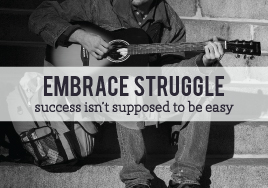
Embrace Struggle

Embrace Struggle: Music Industry Success

By NationWide Source Estimated reading time: 2 minutes

When you first getting going down any road, there are going to be some stumbles along the way. When that road is as subjective, competitive, and lean as being a professional musician, you can count on stumbling, if not falling down completely. If the potholes and ruts in the road to music famedom have let the air out of your dreams, don’t despair. Rather than fight or flee from these challenges, embrace the struggle.

Embrace “No”

Most who hear “no” enough times will simply take that as the final word on the matter. But for musicians who are trying to break into the business, get record contract, get gigs, and find fans, “no” has to be their “modified yes.” Question the person who said it; ask why you were told “no”, find out what they found  off-putting, ask for advice or feedback, and see if you can change their mind.

Wrong Information

If you have sent your query to a music blog, artist rep, or agency ten times and you have never heard back from them, you might wonder if you have the right information. Maybe you are a hip hop group sending out your queries to a classical music reviewer, or maybe you used someone’s Hotmail address when they’ve switched to Gmail. Double check that your sources are a good fit for you and accurate.

Protocol

Again, one of the biggest challenges for a new artist trying to get gigs, get representation, or get reviews is that they didn’t follow the submission guidelines. If a venue sees that its submission guidelines have not been followed, why should they look at your submissions at all? If you can’t find the submission guidelines, send along a query and ask.

Stay Humble

We all think that what we’re doing is amazing. But compare yourself to the work of one of your favorite musicians, objectively, and see what you think. How good are you, really? How much more practice do you need? Even if your performance is solid, try changing things up to see if you can be even better. That missing spark might be a missing member, or a member too many.

As you can see, this flipped-around attitude can lead to growth, to maturity as an artist, to increased opportunity, and—hopefully—to “yes”.

Have you faced rejection in your music career? Were you able to turn that “no” into a “yes”? What did you learn from rejection?

See also: 4 Steps to Getting Better Gigs.


2 Comments
...Keep Reading
Don't Be Fake

Don’t Fake It To Succeed as a Musician

By NationWide Source Estimated reading time: 2 minutes

When you are a musician trying to get gigs or be heard by a larger audience, you need to remember to just be yourself. There are several reasons why remaining genuine is the best path for a musician to take.

Mystery Does Not Equal Trust

If you think that hiding behind lies and contradictory statements and actions creates a sense of mystery about you as an artist, you’re half right. What you’re missing is that band mates and venues won’t want to work with someone who they don’t know and can’t count on. When there are no alternate truths, there is no confusion as to who you are or what you’re really trying to say.

Your Reputation

The label of “phony” can be devastating and difficult to shake, especially if given publicly. While the struggle to rebuild your reputation can be frustrating, try looking at it from their side: when you have been lied to by someone, it’s difficult for you to take them at their word going forward. Your fans, band mates, and critics will all need time to trust you again. Save yourself the struggle and be genuine from the beginning.

Critical Eye

As a musician, you want to sell a consistent image of yourself and your group, then back that up with your actions. If you are going to contradict that image—whether with your actions or by speaking out on a subject—be prepared to take the fall for it. On the flip side, if your actions and words consistently reinforce your image, you might gain some acclaim. Remember: critics are a musician’s best friend and worst enemy.

Emotional Connection

Being genuine is also vital in performing and connecting with fans. Performances should be an emotional ride for fans, but that means you feeling and showing the emotion of the songs you’re performing. Don’t fake it and go to exaggerated extremes, but you should be feeling your own music and sharing those feelings with fans. If you don’t feel your music… you have other problems.

Rather than trying to win your fans or band mates after being less-than-genuine, it’s important for you keep your message as genuine as possible.

In your music career, have you struggled to stay genuine and true to yourself? What has helped you through that struggle?

See also: 5 Important Tips to Help You Get Gigs.


3 Comments
...Keep Reading